

For Littlechild, focusing on culturally centred care is the key to community well-being
Considering Randy Littlechild’s path to health care, there probably was no other way his career could have gone.
“It was just meant to be,” says the 1984 grad of NAIT’s Emergency Medical Technician – Paramedic program. He was the first Indigenous person to earn the credential in Alberta.
During Littlechild’s time at Archbishop O'Leary Catholic High School, biology, physiology and anatomy came naturally to him. “Which shocked the teacher, because I used to joke around in school and then get 98% to 100% on the exam,” he says. “I don't know why, but I sure knew [the material]. That's what got me interested.”
After school, Littlechild entered the military as a reservist, learning first aid and the basics of emergency response as a medical assistant. But it was a bus strike in Edmonton that fully committed him to the career.
One winter in the early 1980s, Littlechild was hitchhiking in town when he was offered a ride by a University of Alberta instructor who was starting a course for operating room technicians. The two got talking, and the instructor suggested Littlechild consider applying to the program.
“I said, ‘Yeah, sure, I wouldn't mind.’” Littlechild applied, was accepted and found his way into local operating rooms, assisting doctors and surgeons with procedures.
It was the start of a career that would see him not just gain medical skills but become a leader in the field of culturally centred, community care. Now, some 40 years later, Littlechild, as CEO of Maskwacis Health Services and cofounder, president and board chair of the First Nations Health Consortium, is more driven than ever to deliver care when and where it’s needed most.
Remover of barriers, catalyst for change
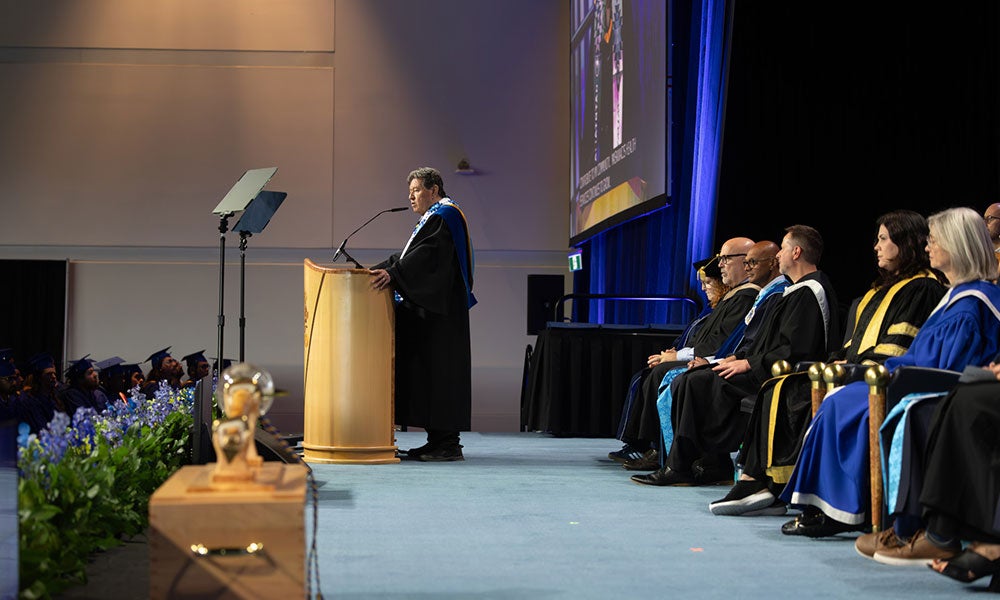
There’s a restlessness in Littlechild’s progression through roles in health care. When he’s seen the need for change, he’s never hesitated to make it happen. That characteristic stands out for those who admire him.
“Randy Littlechild is, above all else, a catalyst,” says Rhonda Laboucan, regional executive director with Indigenous Services Canada. “In an environment often slowed by procedure and precedent, he has consistently demonstrated a willingness to dismantle established barriers to achieve his objectives.”
Early on, that meant career movement and improvement. When Littlechild tired of waiting on orders from OR doctors, he joined the City of Edmonton as an assistant emergency medical tech; they sponsored his NAIT diploma. He’d later lead the charge for higher wages and better working conditions for first responders, prepping him to eventually become the first Indigenous president of the local Canadian Union of Public Employees.
Littlechild’s approach would come to have an even broader community impact.
Not long after NAIT, he helped a friend set up the Maskwacis Ambulance Authority at Samson Cree Nation, neighbouring Littlechild’s home reserve of Ermineskin Cree Nation. It was the first advanced life support service of its kind on a First Nation in Canada. The team shocked local doctors with their breadth of skills, and even ranked highly in national paramedic competitions.
The achievements were typical of Littlechild, a person who is “never satisfied with the status quo,” says Consortium cofounder and CEO Barry Phillips. “His leadership continues to make a difference, his vision for the future inspiring and his dedication to service motivational.”
The best possible choice
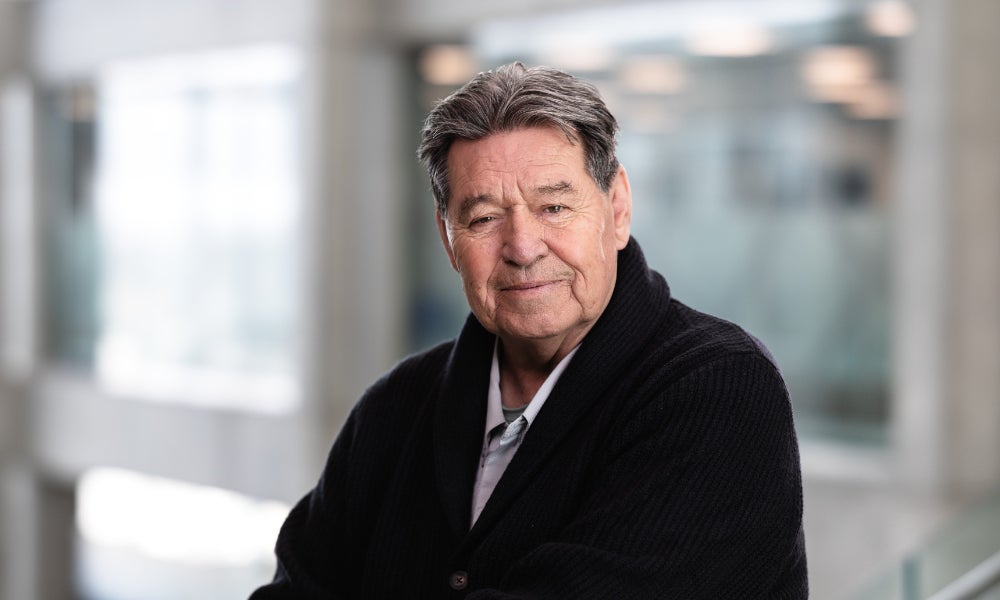
After a back injury in the mid-2000s, Littlechild retired from the City, only to sharpen his focus on culturally centred care. As a child, he’d been a victim of the Sixties Scoop, growing up in an orphanage where nuns substituted catechism for culture. But a new opportunity would give Littlechild the chance to correct another kind of deprivation.
In 2007, he was asked to apply to lead Maskwacis Health Services. It was a simpler organization then, providing services such as home care and primary health to nearly 20,000 residents. “I said, ‘You know what? Let's expand it,’” says Littlechild.
Today, it includes a dental clinic, optical clinic, pharmacy, a lab, and a medical clinic staffed by doctors with various specialties, including diabetes. It’s also growing to include some cancer treatments, eliminating the need for patients to travel for care. And it continues to cover medical transportation.
Littlechild extended the reach of his impact even further in 2017 by cofounding the First Nations Health Consortium. The organization helps Indigenous families throughout Alberta with applications for support according to Jordan’s Principle, a legal ruling to ensure that services available to other Canadians are equally available to Indigenous children and youth.
Overall, says NAIT instructor and Maskwacis Ambulance Authority team lead Jackson Heraid, “[Littlechild’s] work has helped expand access to high-quality emergency care and strengthen community health services in Indigenous communities, leaving a lasting impact on both people and systems.”
Now in his early 70s, Littlechild refuses to accept the status quo, “because I’m helping people.” He sees more services to be developed, and more patients to be reached.
He does look back occasionally and wonder what would have been had he pursued medicine over paramedicine. Littlechild knows he had the talent and aptitude. But when he tallies up the years it would have taken to become a doctor, he shakes his head.
Littlechild knows he wouldn’t have had the patience for it, and believes changes would have been harder to make. For his own sake, and for that of the community he serves, the practical education of his diploma was the best choice.
“And I made something out of it,” he says.
If you enjoyed that article, try these:
Northern Alberta Institute of Technology
Mailing Address:
11762 - 106 Street
Edmonton, AB, Canada, T5G 2R1
At NAIT, we honour and acknowledge that the land on which we learn, work and live is Treaty Six territory. We seek to learn from history and the lessons that have come before us, and to draw on the wisdom of the First Peoples in Canada. Only through learning can we move forward in truth and reconciliation, and to a better future together. Read more
About techlifetoday
Techlifetoday is the source for NAIT alumni and students to discover news about the polytechnic, and insights, advice and inspiration from the NAIT community to help them build successful careers and lead fulfilling lives.
