

Advice on preparation, cooking and cleaning from a NAIT Culinary Arts instructor
As a host, you can usually find a way to manage an extra guest or two at Thanksgiving. But certain uninvited ones can be challenging – especially the likes of Salmonella and Campylobacter, two foodborne pathogens that love poorly handled turkey.
Erin Howe (Culinary Arts ’05) has a plan for them, and it’s appropriately inhospitable.
“When you're cooking for your family and big groups, you want to make sure you're doing it as safely as possible so that you're not putting people at risk,” says the NAIT instructor.
Among the key ingredients for a successful, healthy Thanksgiving meal, which Howe explains in detail below, are preparation, attentiveness and not rushing. The result will be a holiday meal remembered for all the right reasons.
1. Thaw in the fridge
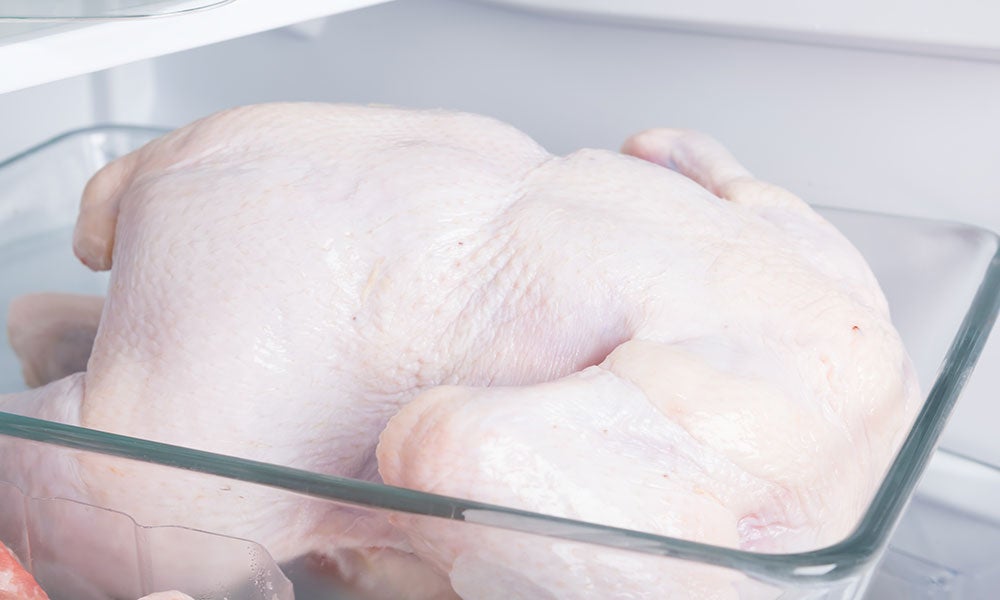
For bacteria, 4 C to 60 C is a broad sweet spot allowing for unchecked growth; for you and your diners, it’s a danger zone where the risk of food poisoning rises. This is why thawing a frozen turkey must happen in the fridge – not on the kitchen counter or in a sink full of water.
This will take time – sometimes, a lot of time.
“A 20-pound turkey can take five days to fully thaw,” says Howe. “In the fridge, it's constantly staying at that safe temperature.” Find a way to make the room for it.
Don’t trust the oven to take care of a spike in the pathogenic population. Bacteria are remarkably resilient. “When we cook the turkey, we are reducing the amount of bacteria, but we're never fully removing all of it,” says Howe.
2. Don’t wash the turkey

If you’ve thawed properly, your bird should bear so few single-celled stowaways that exposure to high heat will cut their numbers to safe levels. There’s no need, then, to wash the turkey before cooking. That’s contamination waiting to happen.
“Running it underwater, you risk splashing your fruit bowl, splashing into your coffee, or wherever,” says Howe.
3. Don’t stuff the turkey
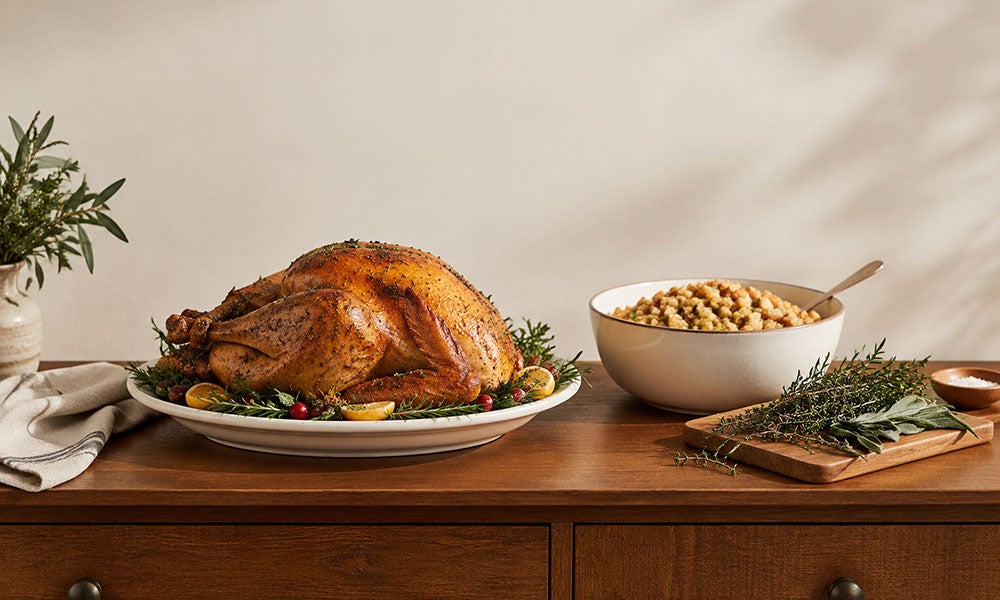
To fill your turkey with stuffing is to insulate the inside of it from heat, making it harder to cook.
“Basically we've just created this nice little pocket of contamination,” says Howe.
Stuffing also leads to overcooking, as the outside of the turkey will inevitably dry out as the centre finally reaches the necessary temperature.
4. Let your thermometer be your guide
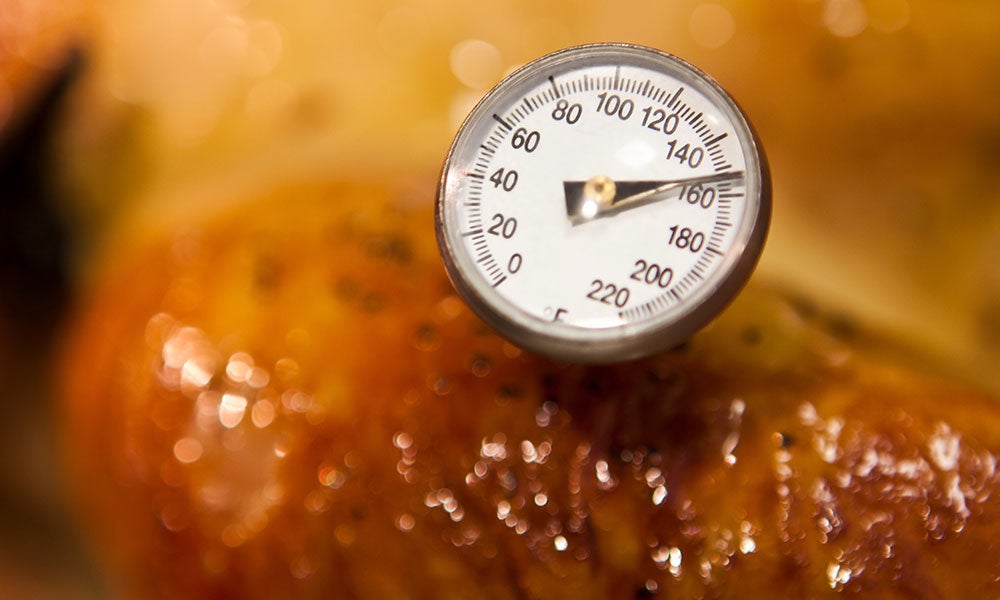
How long will it take to cook your well-thawed, unstuffed turkey? Howe will not hazard an answer. Instead, she defers to what your thermometer tells you, which should be a minimum of 165 F (74 C).
To properly check, insert the thermometer about an inch (2.5 centimetres) into the widest part of the bird. If the legs are intact, that’s the inside of the thigh, says Howe; if it’s deboned, the breast. Make sure the probe doesn’t touch the bottom of the pan.
Other telltale signs of doneness, Howe adds, are a loosening of the joints – the legs, for example, will easily pull away from the body – and the juices of your perfectly cooked, moist bird will run clear. “We don’t have that pink tinge from the blood,” says Howe.
5. Separate your tasks
Thanksgiving is about more than turkey, notes Howe. There’s the stuffing (that's been cooked separately, of course), all kinds of vegetables and, hopefully, pumpkin pie. Bacteria isn’t picky – it will grow wherever you accidentally put it.
“Plan your prep to get that turkey cleaned up and out of the way,” says Howe. After, scrub all surfaces with hot soapy water or, even better, bleach-based wipes. To help minimize her mess, Howe places her cutting board in a baking pan that can then be transferred to the sink.
As an added safety measure, Howe recommends a stepwise approach. Consider processing your turkey one day, then, following cleaning, your other dishes the next, “so you're really separating those two jobs.”
6. Take your time
Like thawing a turkey, good things can’t be rushed. Planning ahead will ensure your Thanksgiving guests leave nourished rather than nauseated. It will also lower the possibility of inadvertently plating turkey jerky rather than perfect poultry.
“Really good gravy can cover some of that,” says Howe, “but not if it's really dry turkey.”
If you enjoyed that article, try these:
Northern Alberta Institute of Technology
Mailing Address:
11762 - 106 Street
Edmonton, AB, Canada, T5G 2R1
At NAIT, we honour and acknowledge that the land on which we learn, work and live is Treaty Six territory. We seek to learn from history and the lessons that have come before us, and to draw on the wisdom of the First Peoples in Canada. Only through learning can we move forward in truth and reconciliation, and to a better future together. Read more
About techlifetoday
Techlifetoday is the source for NAIT alumni and students to discover news about the polytechnic, and insights, advice and inspiration from the NAIT community to help them build successful careers and lead fulfilling lives.
