
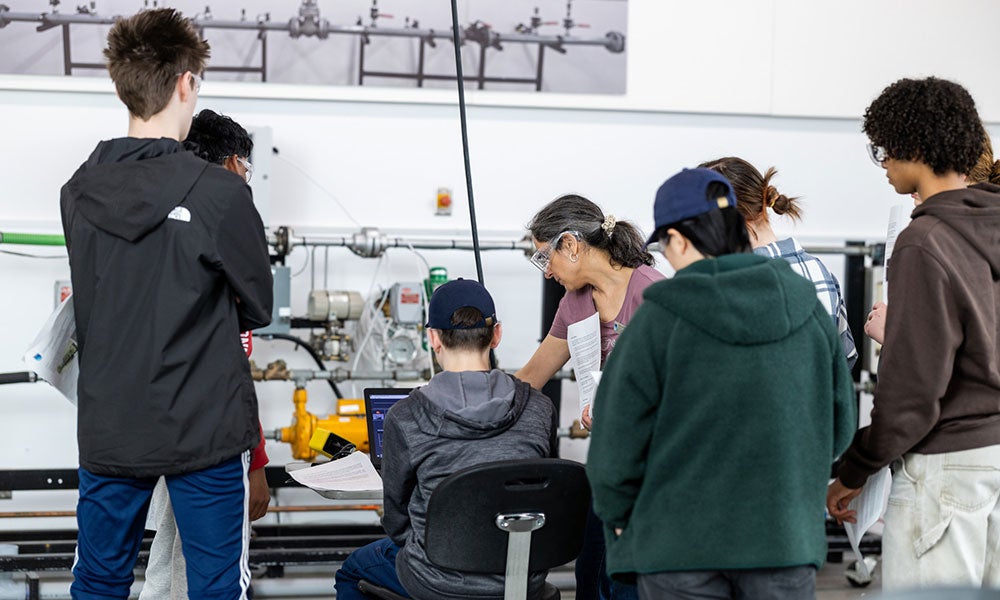
In a Chemical Engineering Technology lab in the basement of the Feltham Centre, six high school students gathered around another sitting at a laptop. A couple of metres in front of them, a wall is mounted with a labyrinth of pipes. At the suggestion of program chair Negar Izadi-Najafabadi, the student at the computer clicked the mouse, and everything began.
A valve among the pipes closed and, with another mouse click, a pump started, simulating the movement of fluid through an industrial plant. The system whirred and rumbled as if in answer to the question that each of the students had come to NAIT to try to answer.
What should I be?
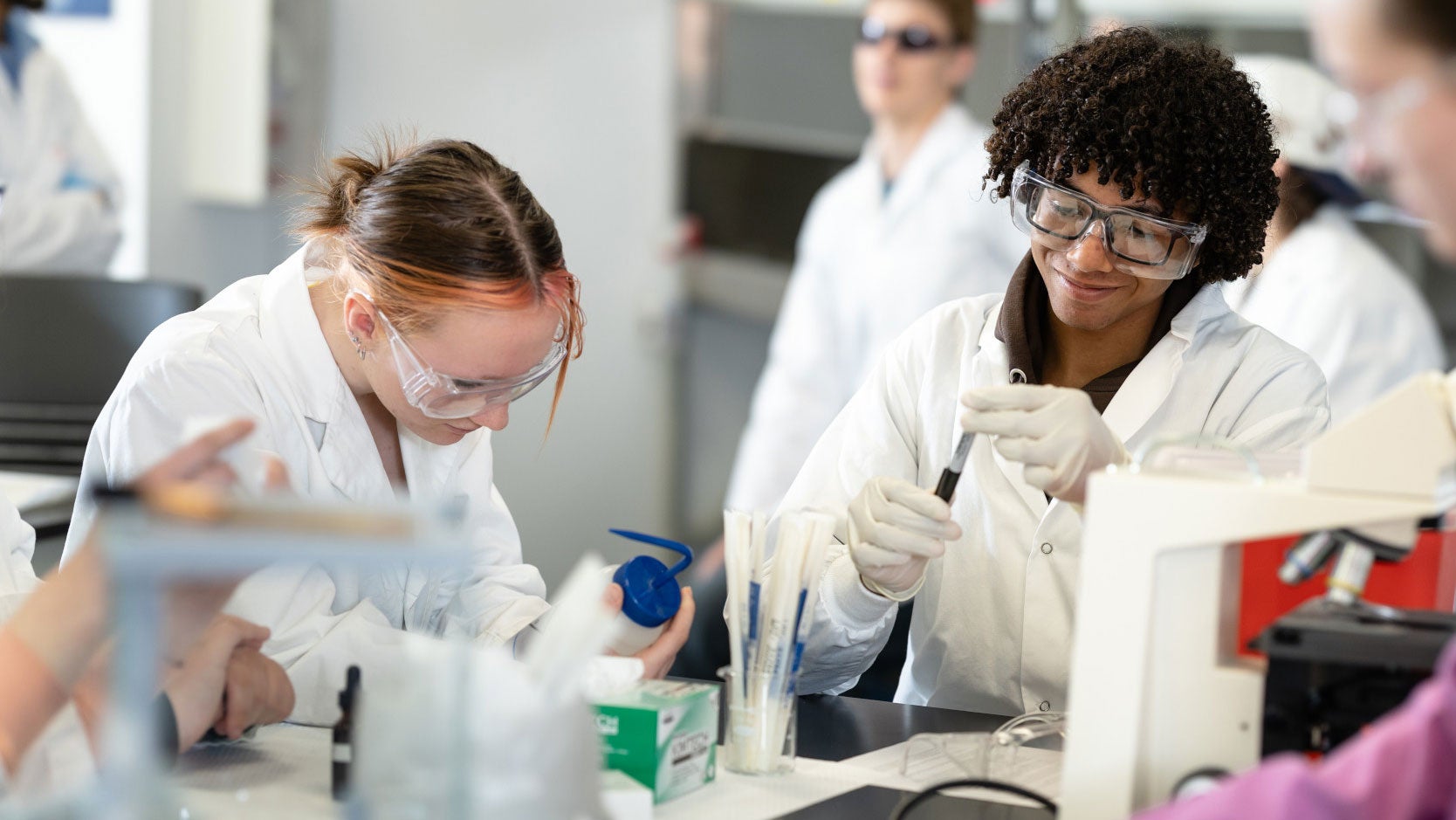
That session was one of nearly 30 held May 5 - 7 for Energy and Natural Resources (ENR) Week, a showcase of 11 NAIT programs from the event’s namesake school. It welcomed nearly 400 students from more than 30 Edmonton and northern Alberta schools.
Compared to the 2025 pilot, ENR Week grew in attendance by almost 25%.
Learn more about programs in the School of Energy and Natural Resources
Mikayla Morrison was in that chemical engineering lab as a returnee from last year. “I wanted to look at different fields because I don't know what I want to do after I graduate,” said the Grade 11 student from Evansburg’s Grand Trunk High School. “I wanted to look into more of the things that NAIT has to offer.”
Classmate Marin Stewart appreciated the opportunity, too. “That’s why we’re all here – to keep our options open,” she said.
As dean of the School of Energy and Natural Resources, Dr. Agatha Ojimelukwe is eager to help young people like Morrison and Stewart with that. During the lunch break, she joined students to explain the hands-on nature of polytechnic education and its potential impact on their future. Her talk was more “did you know?” than sales pitch.
“Knowledge empowers,” said Ojimelukwe. “We're not telling students they must come to NAIT. But we're [saying], ‘You can do anything you want to do. Just make sure you're doing it informed.’”
Canadian Association of Petroleum Producers (CAPP), presenting sponsor for the event (which saw industry participate for the first time) was also happy to help inform. Joining Ojimelukwe that afternoon was Christopher Martin, director of stakeholder engagement and outreach with CAPP. He emphasized the breadth of opportunity the industry has to offer.
“I don't think there's been a more exciting time than right now to be supporting the energy sector more broadly,” he said. “We are cautiously optimistic about the future of our industry, but it's brighter than ever.”
ENR Week is a window into that industry, added CAPP chief financial officer Elmien Wingert. “It really gives [students] that chance to better understand how the industry works, but also what their role could be in the future of the industry,” she said.
Sharing that insight may be more important than ever.
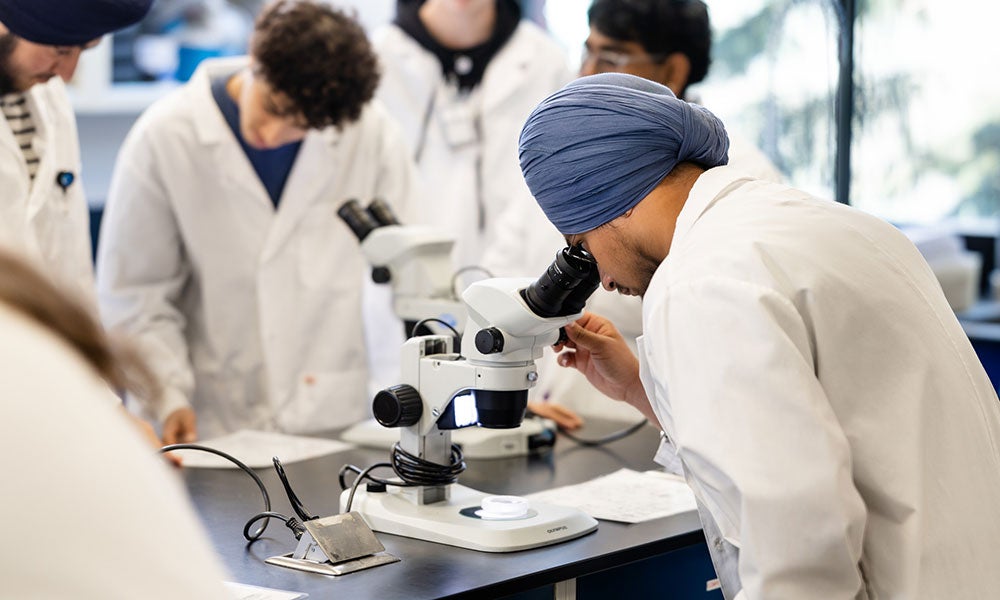
In relation to an aging labourforce and increasingly technical work environments, the C.D. Howe Institute identified a slowing stream of new entrants with skills in science, technology, engineering and mathematics. Several recommendations in its 2022 report pointed toward raising young people’s awareness of opportunities and pathways.
Wainwright High School academic counselor Sandra Grunow did her part by bussing in about a dozen students. It was her second trip to the event.
“When I attended last year, I was just amazed that [NAIT] would have so many experts from the field,” she said. “It was fantastic for the kids to have the opportunity to do hands-on training within the programs.”
Grunow believes that’s meaningful for her community, too. In addition to a healthy agricultural sector, the Wainwright area has hosted oil and gas activity since the 1920s.
“Our focus really is the oilfield,” she said. “So, petroleum engineering, power engineering, electrical engineering – lots of kids will be taking these programs in our community.”
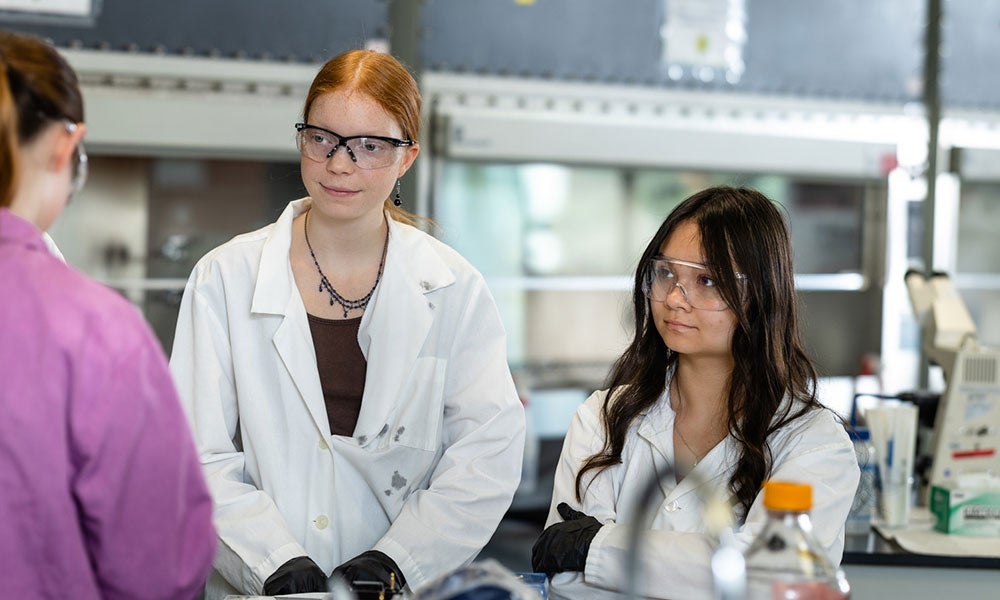
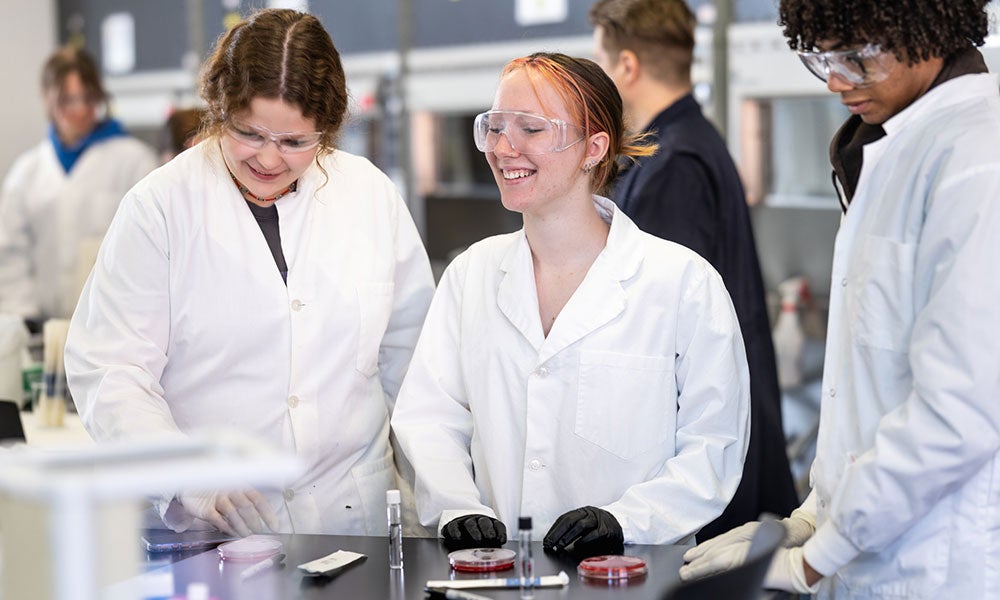
So will students from elsewhere, along with other oilfield adjacent programs. Across campus from the Chemical Engineering Technology lab, Violet Lepitzki and Eva Rode, friends and Grade 10 students from Drayton Valley’s Holy Trinity Academy, attended the Conservation Biology session, where they got their hands dirty characterizing soil samples.
“It’s nice to know that there are lots of science options in the oilfield, and also environmental jobs, too,” said Lepitzki. “It’s helpful to see how … NAIT is on your side in wanting to help you find something.”
As Ojimelukwe suggested, not every student will leave ENR Week with complete clarity about their future. But they may get a little closer, like Rode did.
“Now I know that I definitely want to do something that involves lab work,” she said. “I want to do lab and fieldwork – something that would keep me outside but [that] I can bring to a lab afterwards. I think that would be really fun.”
Mind you, there’s still time to keep exploring. “I wish I could have tried more,” Rode added. “I would like to see all the different paths, all the different programs, to see which one I like the most.”
Luckily for her, and for hundreds of other students, ENR Week will return in 2027, and be open to more students – offering the possibility of an even greater impact.
“I know the results take time because students need to think about it, then go through the programs,” says Ojimelukwe. But she’s convinced the cumulative effect will become obvious.
“It will show up in years, but it is contributing to Canadian prosperity generally, both for the students and for the economy. I'm really excited about that.”
Northern Alberta Institute of Technology
Mailing Address:
11762 - 106 Street
Edmonton, AB, Canada, T5G 2R1
At NAIT, we honour and acknowledge that the land on which we learn, work and live is Treaty Six territory. We seek to learn from history and the lessons that have come before us, and to draw on the wisdom of the First Peoples in Canada. Only through learning can we move forward in truth and reconciliation, and to a better future together. Read more
About techlifetoday
Techlifetoday is the source for NAIT alumni and students to discover news about the polytechnic, and insights, advice and inspiration from the NAIT community to help them build successful careers and lead fulfilling lives.
