
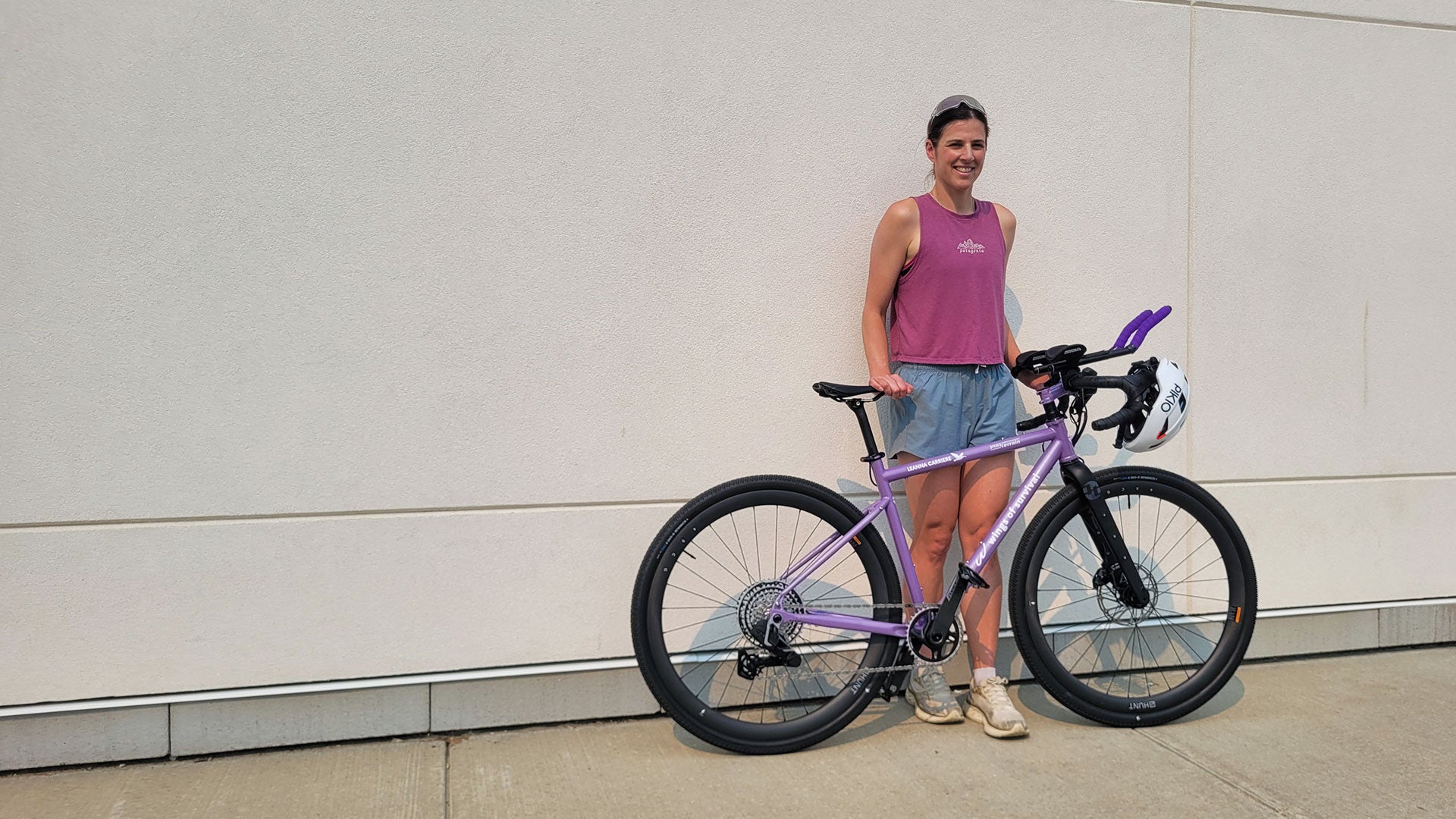
It may seem absurd to try to follow a bird by bicycle, but that’s exactly what Leanna Carriere (Personal Fitness Trainer ’17, above) and her partner, Dr. Timm Döbert, are doing.
Over the next nine months, they’ll cycle 30,000 kilometres, from northern Alaska to Tierra del Fuego, the southernmost part of South America, in an expedition they’ve called Wings of Survival. The bird whose flightpath they’re following is the Hudsonian Whimbrel, “because Whimbrels stay mostly in North and South America and are one of the longest flying migrants,” Carriere says.
What gives someone the sense of purpose and courage to trace the route a bird takes from its overwintering habitat to its breeding grounds, knowing they’ll be riding about 120 km per day through 15 countries?
One things is personal drive. Carriere is a fitness trainer, mother, entrepreneur who cofounded sports nutrition company 7 Summit Snacks, endurance athlete, former Team Canada pole vaulter and is recognized as Canada’s first female decathlete. During the pandemic, she considered adding a new record to her resumé as the first female to cycle the entire Pan-American Highway from Alaska to Argentina.
She shared the idea with Döbert, whom she’d then only recently met, to gauge his passion for cycling. He was happy to ride 30,000 km – if it was about more than an athletic achievement.
“I thought, ‘What can I do? I’m just an athlete or trainer,’ ” says Carriere. With Döbert’s help, she saw another, bigger reason to make a trip of this scale: to draw attention to just how much living things – like whimbrels and humans – depend upon a healthy Earth.
Telling the birds’ story
In response to the athletic challenge, “[Timm] had an idea of connecting flyways and migratory pathways because birds are one of the best indicators of the health of the environment,” says Carriere.
To pull it off, the duo knew they’d need sponsors and partners. But to attract them, they’d have to prove they were serious.
“[Partners] want to see what you can do, so … we cycled across Canada [in July 2024] as proof of concept,” says Carriere. Along the way, they collected data for a study on the resilience of endurance athletes on plant-based diets.
It was also a practice run for Wings of Survival “to see what we need, what works and what doesn’t work.”
Then, in August 2025, they cycled 1,000 km across Canada’s prairie grasslands, considered the country’s most endangered ecosystem.
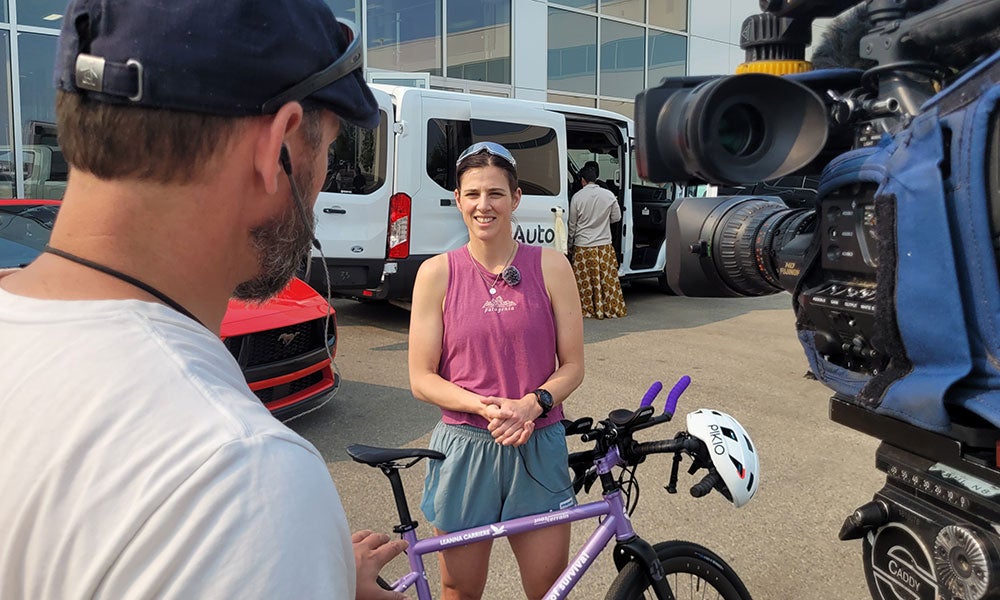
Jody Allair, Birds Canada director of communications, was one of the first people Carriere and Döbert (pictured below) reached out to about partnering. Allair was impressed by their determination and what they considered a “practice run.”
Birds Canada provided support for that cross-Canada journey and will share the story of Wings of Survival on its platforms and with its international partners through Conserva Aves, an initiative to protect at-risk bird habitats internationally.
“Nearly 80% of Canada's birds migrate, many to the tropics, so protecting our shared birds is done by protecting their breeding grounds and non-breeding grounds,” Allair says. “We need to think about full lifecycle conservation across the hemisphere, so Tim and Leanna can help tell that story as well.”
Conserva Aves is helping to support the latest journey, too, alongside a community that has gathered around the duo. Edmonton GoAuto Team Ford provided the support van that is accompanying them. A GoFundMe campaign set up to fund the expedition continues to attract donations.
Even some of Carriere’s fitness connections are along virtually for the ride, largely because of her NAIT education. The business courses of her diploma factored into planning and supporting the expedition.
“I’ve been able to launch some training where I’m accepting 10 online clients who get to see what I’m doing behind the scenes,” Carriere says. “Plus, I will update the training on a weekly basis, and get to keep my foot in the [training] door.”
Motivation to carry on
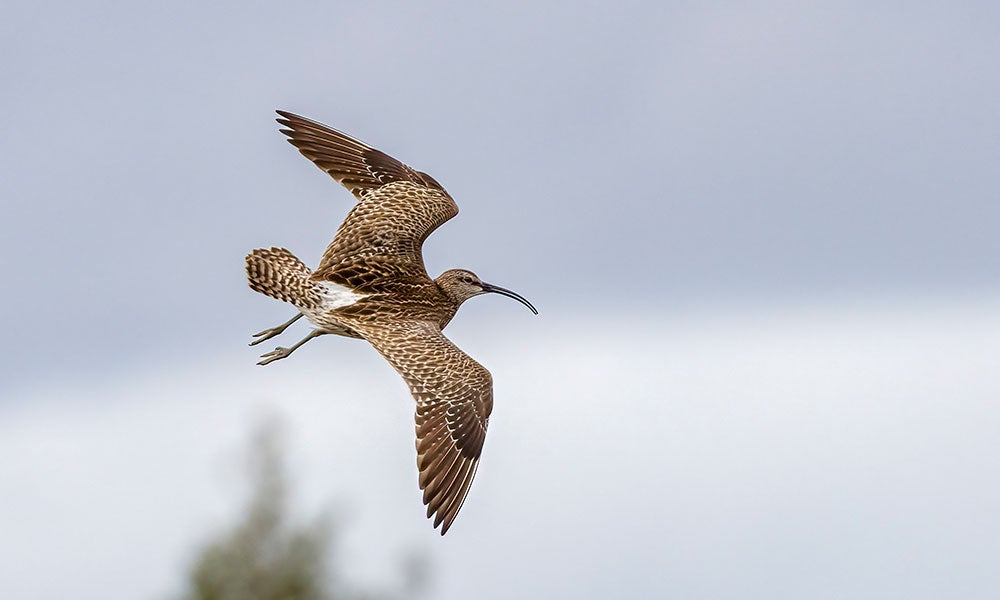
Birds double their body weight in preparation for migration, Allair explains. But they still need stopover sites to refuel along flyways that can stretch 15,000 km and take up to two months to complete.
Unfortunately, those stopover habitats are being destroyed, Allair adds. When birds don't think there’s enough food to stop for, they keep flying.
What’s more, “climate change is wreaking havoc on the timing of insect hatch, so what used to be a very fixed arrival time aligning with an abundance of food, now is misaligned.” All of this is significantly reducing the bird population, as some birds either die on their journey or are too weak to reproduce when they arrive.
For Carriere and Döbert, that’s motivation to carry on through what will, at times, be as gruelling a journey as that of the birds, which they see as the greatest endurance athletes of all.
The point they hope to make is that those birds, whimbrel included, are fragile nonetheless. Like Carriere and Döbert, they may struggle without our awareness, support and action.
“Meeting up with Timm and coming up with this idea,” says Carriere, “was a way I felt empowered to do something.”
If you enjoyed that article, try these:
Northern Alberta Institute of Technology
Mailing Address:
11762 - 106 Street
Edmonton, AB, Canada, T5G 2R1
At NAIT, we honour and acknowledge that the land on which we learn, work and live is Treaty Six territory. We seek to learn from history and the lessons that have come before us, and to draw on the wisdom of the First Peoples in Canada. Only through learning can we move forward in truth and reconciliation, and to a better future together. Read more
About techlifetoday
Techlifetoday is the source for NAIT alumni and students to discover news about the polytechnic, and insights, advice and inspiration from the NAIT community to help them build successful careers and lead fulfilling lives.
