
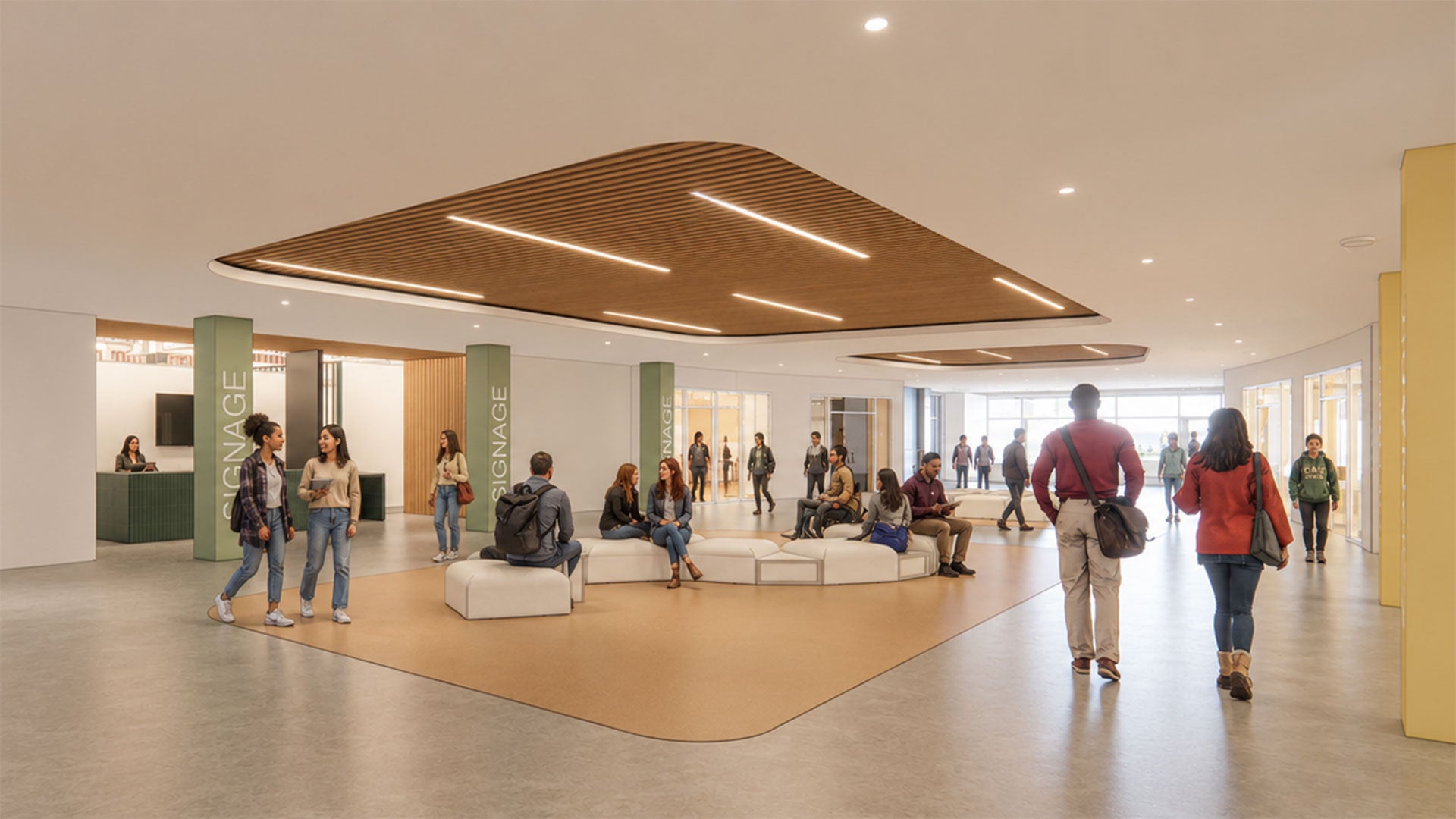
South Lobby becoming “one-stop” shop for academic needs
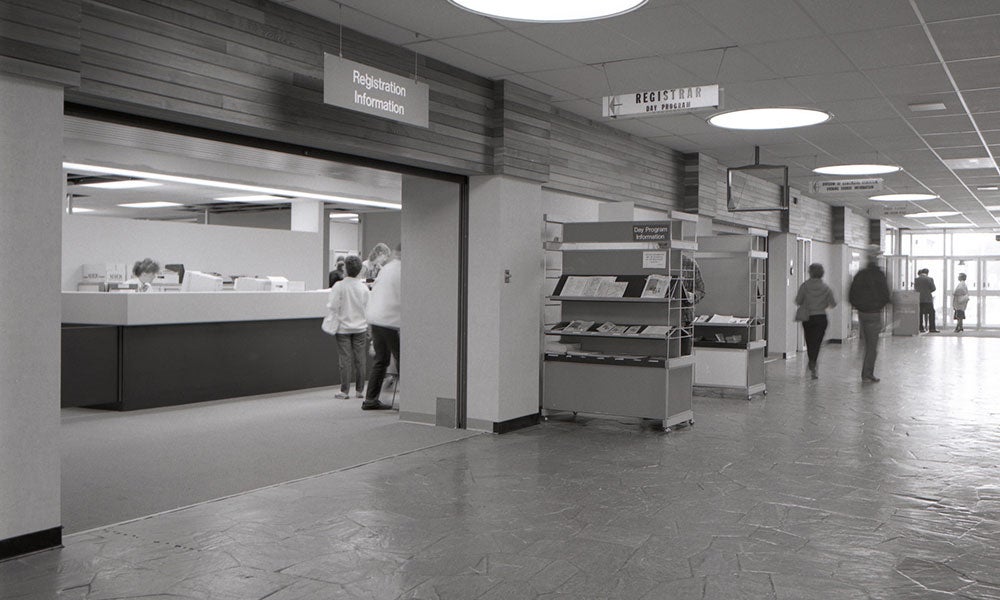
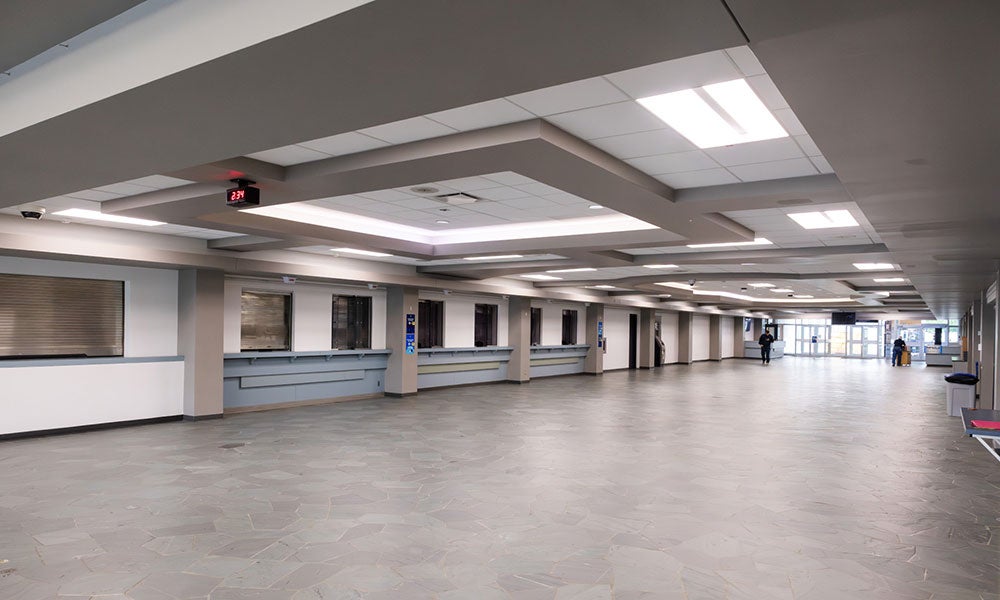
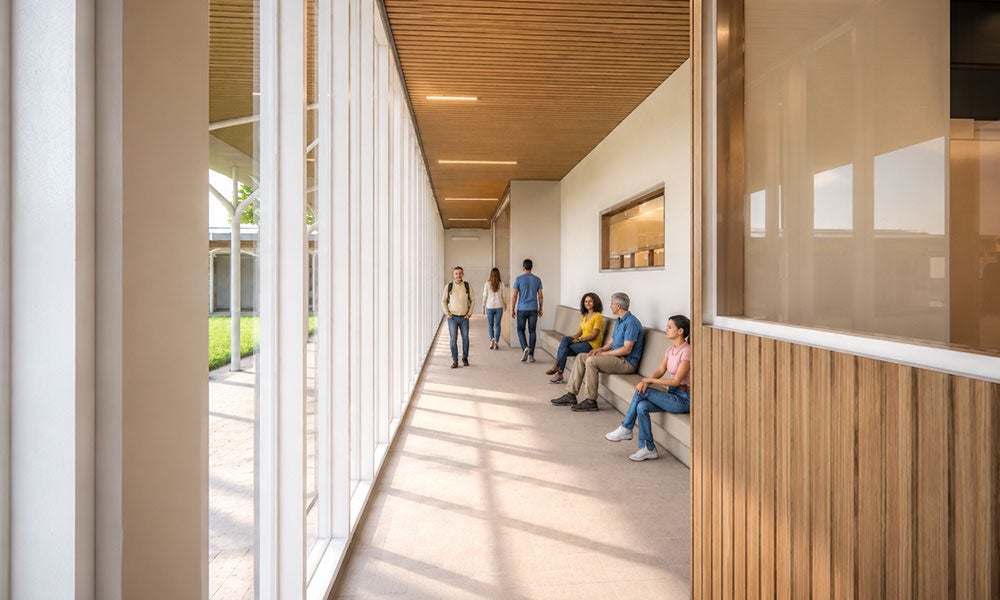
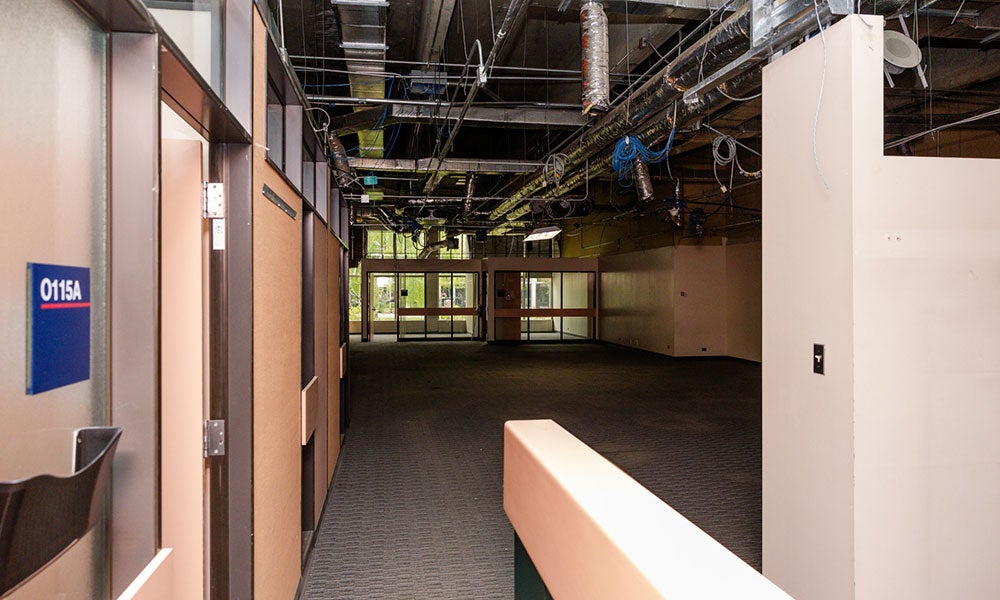
Beyond the doorways of the broad, brightly lit corridor known as NAIT’s South Lobby, there’s a space resembling an on-campus ghost town.
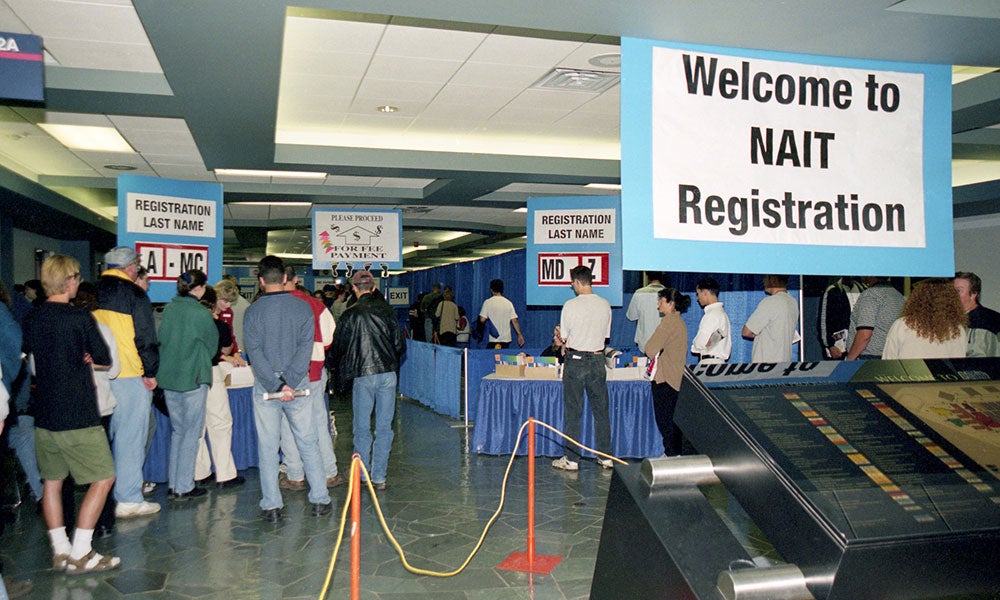
Now a dim warren of former offices and meeting rooms, it was once a bustling centre of student support, a hub designed to meet needs that arise throughout the academic journey. For decades after NAIT opened in the early 1960s, it was the geographic centre of campus, with academic wings stretching roughly evenly in either direction, north and south.
But by the 2000s, that centre was shifting. Buildings such as the Centre for Information and Communication Technology and the Centre for Applied Technology opened to boost the student population, and came to host a growing collection of services, or provide new homes for existing ones. South Lobby began to steadily empty in response.
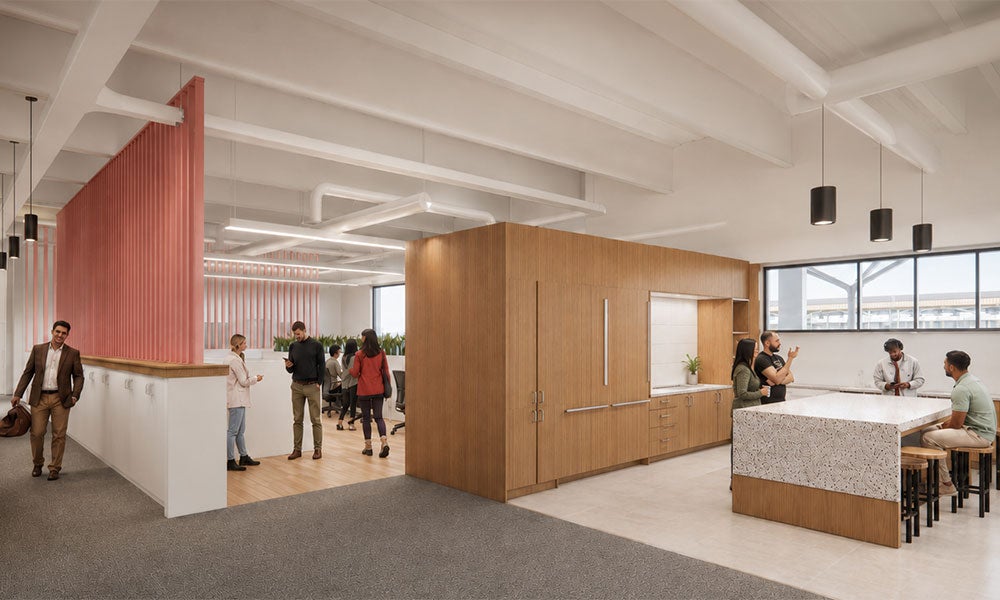
That’s about to change. The previously abandoned South Lobby is now being recognized as a new opportunity to support growth. Renovations have begun in the space – roughly equivalent to two hockey rinks – to rebuild it as a uniquely consolidated student services hub that will stand the test of time. It’s a $12-million project scheduled for completion by fall 2028.
For associate vice-president Students and Campus Life Petrina Ferreira and associate vice-president Facilities Management and Development Eduardo Sosa, it’s a chance to meet students “where they’re at,” physically and otherwise.
“Our vision was [to create] a supported, welcoming space – a one-stop shop where students can go to access services in the best way, and reduce any friction points,” says Ferreira. “This is really important as student volume grows, especially with the Advanced Skills Center coming.”
The epicenter
To point to the Advanced Skills Centre (ASC) is to point to the ongoing development of NAIT generally. When it opens in fall 2030, the 625,000 square-foot teaching facility (as campus’s largest building) will add as many as 5,500 learners to the student body annually, helping to furnish Alberta’s ageing workforce with skilled graduates.
As well, the ASC will effectively reorient the institute along its lengthy north-south corridors. It will be located on the 12-acre site of the former Westwood Transit Garage, north of the original campus. With the NAIT/Blatchford Market LRT station funneling students onto campus from its west corner, the combination once again makes South Lobby a natural NAIT nexus.
“If you take a step back, planning-wise, it is like the epicenter,” says Sosa.
But he and Ferreira recognize that being central to the student experience is about more than location.
The “friction” Ferreira references owes mostly to the frustration students may feel when staff at one service must send them elsewhere on campus to access another. “It's critical that we make sure that we're doing this right,” she says.
That means building for tomorrow’s needs as much as today’s.
“It's not about the building or the structure,” says Sosa. “It's about the user.”
Complexity is a natural byproduct of that philosophy. While key services such as counselling, career advising, learning services, student peer support and more could be permanent fixtures, the renewed South Lobby will be flexible, accommodating needs that will inevitably change over the years or even pivot to meet demands that ebb and flow within a single year.
“We don't want it to be purpose-built and then in five years need to change again,” says Ferreira. “We want to be nimble and adaptable.”
No matter how needs shift, however, accessibility and the goal of connecting students to services quickly and seamlessly will be foundational.
A legacy in the making
Getting it right also means collaborating. Planning, design and to some extent construction are being guided by a steering committee. Among its members, drawn from across campus, is the NAIT Students’ Association (NAITSA), which has contributed $1 million to the otherwise self-funded initiative.
NAITSA president and Bachelor of Business Administration student Lilly Houcher (Management ’25) sees the future South Lobby as “a huge advantage,” making services not just more accessible but visible. “It would, overall, [improve] efficiencies for students.”
What’s more, Houcher sees the potential to use the revamped hub to foster social connection. “There's talk of being able to put on small events in South Lobby that would allow students to then have that community piece, which is really important in mental health, too.”
By the time that happens, though, Houcher will have graduated from Bachelor of Business Administration – Management. But she sees the return of services to the area as a “full circle moment” she’s been pleased to be part of as NAITSA president.
“To know future students will reap the benefit of it, that's the beauty of these roles,” she says.
It’s a legacy in the making, as the committee will continue to work with Sosa and Ferreira to capitalize on the opportunity, and revive a dormant space.
“Our teams in Students and Campus Life are always looking for prime real estate,” says Ferreira. On rare occasions, it’s been there waiting all along.
If you enjoyed that article, try these:
Northern Alberta Institute of Technology
Mailing Address:
11762 - 106 Street
Edmonton, AB, Canada, T5G 2R1
At NAIT, we honour and acknowledge that the land on which we learn, work and live is Treaty Six territory. We seek to learn from history and the lessons that have come before us, and to draw on the wisdom of the First Peoples in Canada. Only through learning can we move forward in truth and reconciliation, and to a better future together. Read more
About techlifetoday
Techlifetoday is the source for NAIT alumni and students to discover news about the polytechnic, and insights, advice and inspiration from the NAIT community to help them build successful careers and lead fulfilling lives.
