
Annual event aims to forge connections for student success (and to have fun)
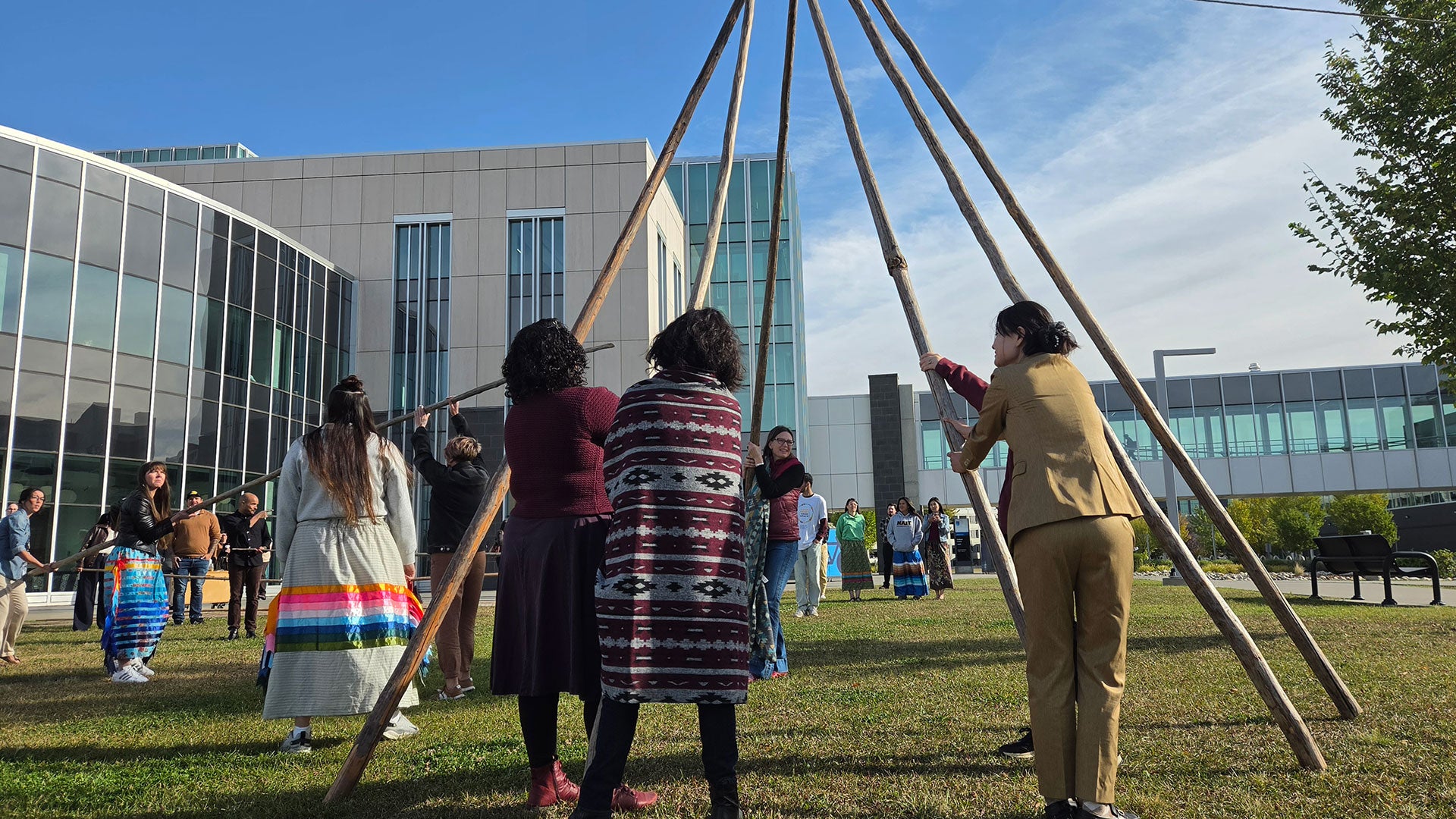
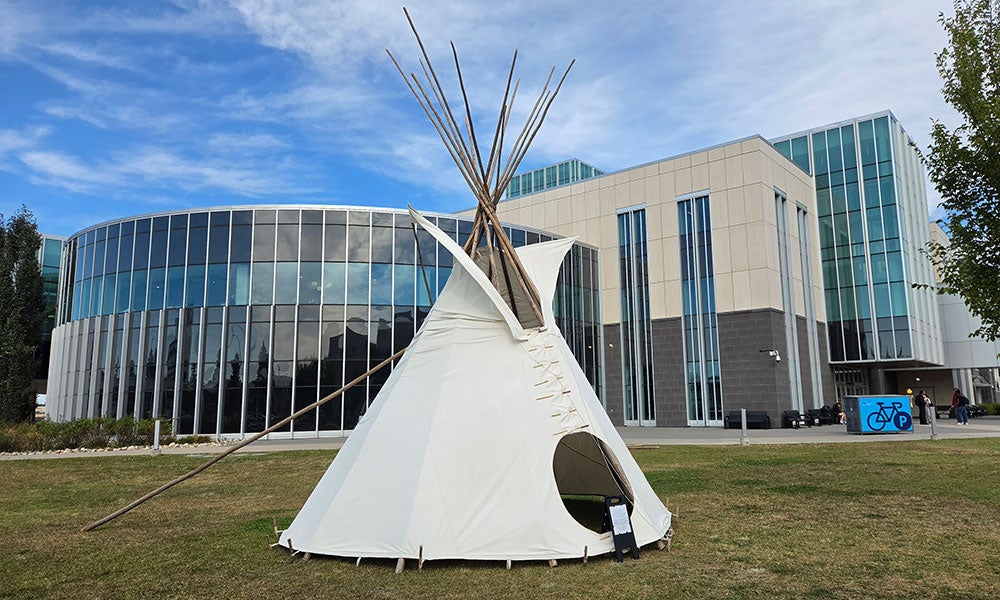
At the start of each fall, the grounds outside NAIT’s Centre for Applied Technology become an impromptu construction site. Dozens of students and staff, with a handful of visitors, set to work with a collection of 15 poles, a circle of canvas and a few lengths of heavy cord.
As much as they’re assembling and raising a tipi, they’re creating a community of Indigenous and non-Indigenous people to celebrate culture and belonging.
“To me, it’s symbolic that we’re building this home together,” says Camille Louis, manager of programs and services at the Nîsôhkamâtotân Centre at NAIT.
In many ways, that’s the point of this annual event. It’s known on campus as NAIT Treaty Days, a name that draws partly from history and largely from the need to foster connection for students who may find the campus experience unfamiliar, and to welcome others who may be unfamiliar with Indigenous culture.
Off campus, says Louis, such celebrations are not unusual in Indigenous communities. Among the Treaty promises – including those of Treaty 6, signed in 1876 – is that the Crown pays annuities to each person affiliated with a First Nation that signed. The amount was $5 per person.
Indigenous Services Canada still administers these payments each year, in exactly the same amount.
“It’s more about honouring the Treaty relationships,” says Louis, a mixed-heritage Cree woman from Montana First Nation in Maskwacîs. What’s more, for many First Nations communities, the day that payment is made is “an opportunity just to come together in culture as well.”
Getting together tends to include ceremony, food, dancing, games, music and, overall, a lot of fun, all of which the staff at the Nîsôhkamâtotân Centre work into the three-day festival that has become a mainstay of NAIT campus life.
“There’s a lot of anticipation around it,” says Louis. “Something that has come up consistently from students – and it’s ongoing – is this desire for culture, access to culture, opportunity to participate in culture.”
Seen and heard, valued and celebrated
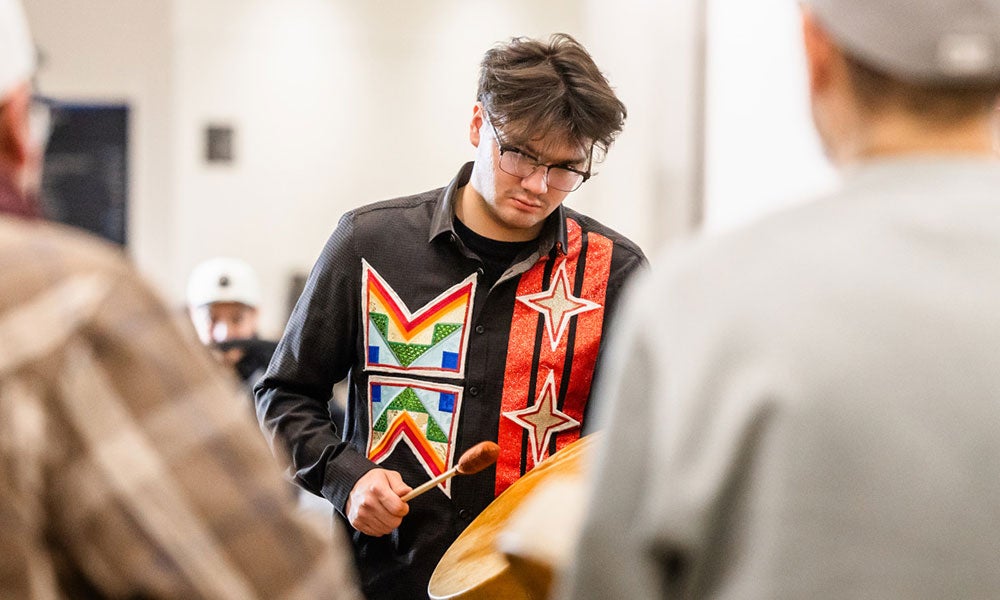
Architectural Technology student Michael Arnott-Morin, from Enoch Cree First Nation, sees the event as an opportunity for the campus community to also learn about culture. Treaty is for everyone who lives within its defined territory; similarly, NAIT Treaty Days is for everyone who studies, teaches or works at the polytechnic.
“A lot of people don't know that they're living on Treaty land,” says Arnott-Morin.
Treaty 6, which includes NAIT, covers almost 310,000 square kilometres across Alberta and Saskatchewan. As much as Arnott-Morin sees NAIT Treaty Days as a chance to celebrate what’s now shared here, he appreciates how the event highlights cultural uniqueness.
“These are our traditions and this is what Treaty is,” says Arnott-Morin. “It’s important to understand that we have different customs.”
And, he adds, it’s essential not to be excluded because of those, which Arnott-Morin has seen and experienced in life. For him, that may mean a post-secondary institute accommodating community obligations that can interrupt a student’s studies. Or acknowledging and honouring different styles of learning. Or being asked by peers, out of respectful curiosity, about Indigenous culture.
All of that underpins the intention of NAIT Treaty Days.
“It's important that Indigenous students feel seen and heard, and also valued and celebrated,” says Louis. That can't happen without presence and visibility. "I find that if we don't go out into the world and take up space, no one is going to give it to us.
"And then for the non-Indigenous folks, [NAIT Treaty Days] is about inviting them into this cultural experience," she adds. "It's about sharing and creating meaningful connections so that we can work toward truth and reconciliation."
That work is ongoing across the polytechnic, year round. But for three days each autumn, it’s the raising of a tipi, the breaking of bannock among students and staff, art, dancing and music – including the sound of powwow drums filling the vast lobby of the Centre for Applied Technology.
“The first hit of the drum, that is so powerful,” says Louis. “People will hear it. They're going to come and gather, and they're going to watch and learn.”
If you enjoyed that article, try these:
Northern Alberta Institute of Technology
Mailing Address:
11762 - 106 Street
Edmonton, AB, Canada, T5G 2R1
At NAIT, we honour and acknowledge that the land on which we learn, work and live is Treaty Six territory. We seek to learn from history and the lessons that have come before us, and to draw on the wisdom of the First Peoples in Canada. Only through learning can we move forward in truth and reconciliation, and to a better future together. Read more
About techlifetoday
Techlifetoday is the source for NAIT alumni and students to discover news about the polytechnic, and insights, advice and inspiration from the NAIT community to help them build successful careers and lead fulfilling lives.
