
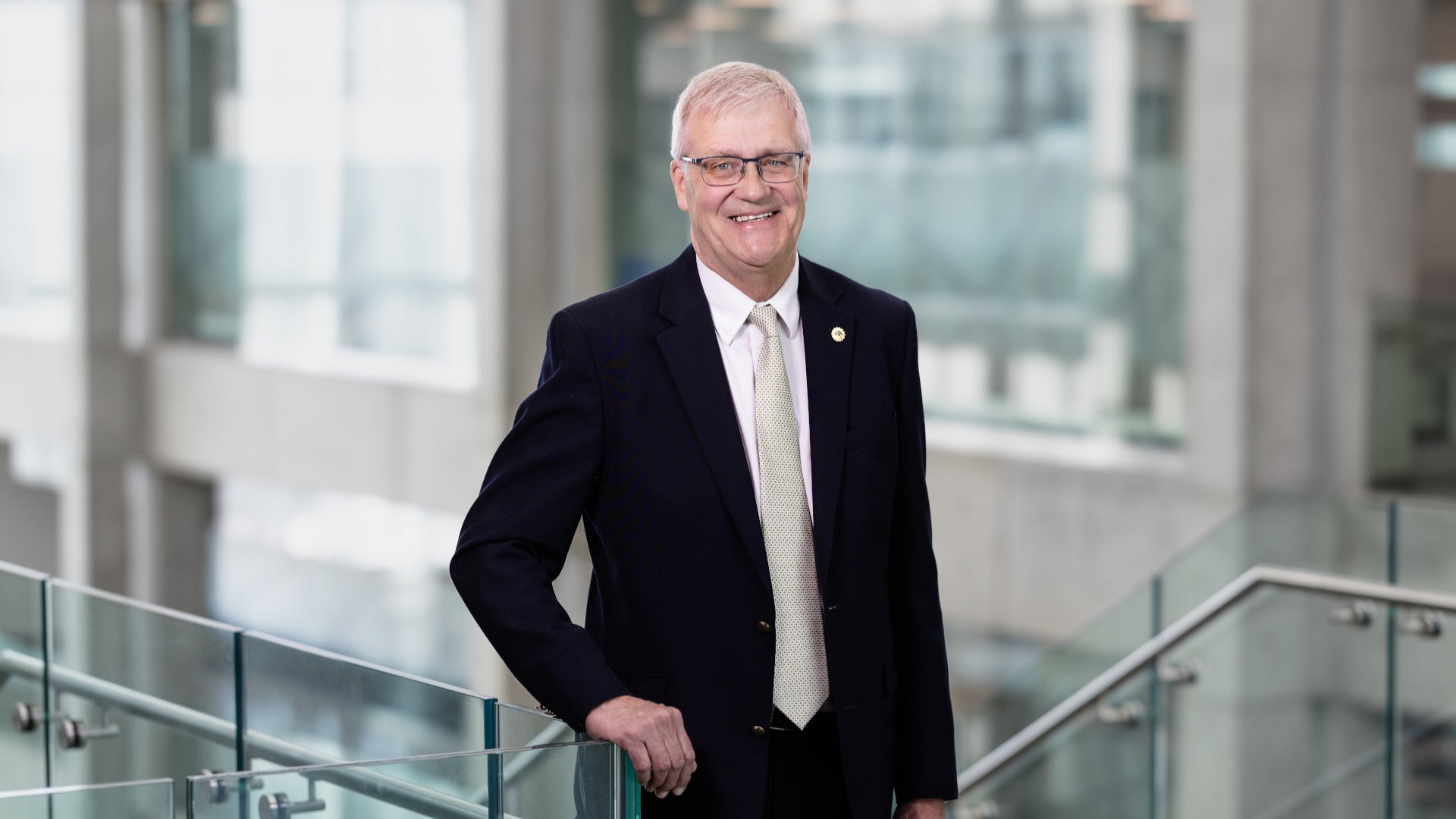
For Winkel, safety continues to be a professional and personal obligation
In Gord Winkel’s early days at Syncrude, the technology – designed to stand up to the harsh conditions of the oil sands – fascinated him most, followed closely by the chance to improve it.
In the late-1970s, the mechanism for getting bitumen from mine to processing plant was pioneering and crude (pun intended). The sandy, oily mix was mined by dragline excavators and enormous bucketwheels before being transported by massive conveyors traveling many kilometres. At every step, the sticky, abrasive bitumen and sand ground down the steel and rubber parts.
“It just wore away before your eyes,” says Winkel, a mechanical engineer by training.
Transporting the bitumen to the plant also consumed enormous amounts of power – which only increased as the mines expanded outward from the plant. “Think of it this way: here you are merrily working on [producing] your first billion barrels only to find that the current methodologies are not sustainable. Would that perhaps ruin your day?”
Not for Syncrude, because it demanded innovation, which Winkel and his fellow research engineers relished.
Their response was a revolutionary technology that mixed crushed oil sands into a slurry at the mine site before piping it to the plant. En route, turbulence in the pipeline kickstarted separation of bitumen from sand and water, eliminating the need for certain infrastructure and processes at the plant, saving energy and money.
“That was a game changer,” says Winkel. Hydrotransport, as it’s known, transformed the industry, with the technology being widely adopted.
But it changed the game for Winkel, too. His knack for improvement caught the eye of the executive team, particularly vice-president Jim Carter (Honorary Bachelor of Technology in Management ’25) who asked him to join and then lead mine maintenance.
“Now I was responsible for keeping this stuff running,” he says. “So, I got to work with people and technology.”
That led to a new fascination, and further innovation. At the intersection of people and technology sits safety, for which Winkel developed a passion that has placed him among Alberta’s most respected thinkers, practitioners and leaders in the field.
A moral obligation
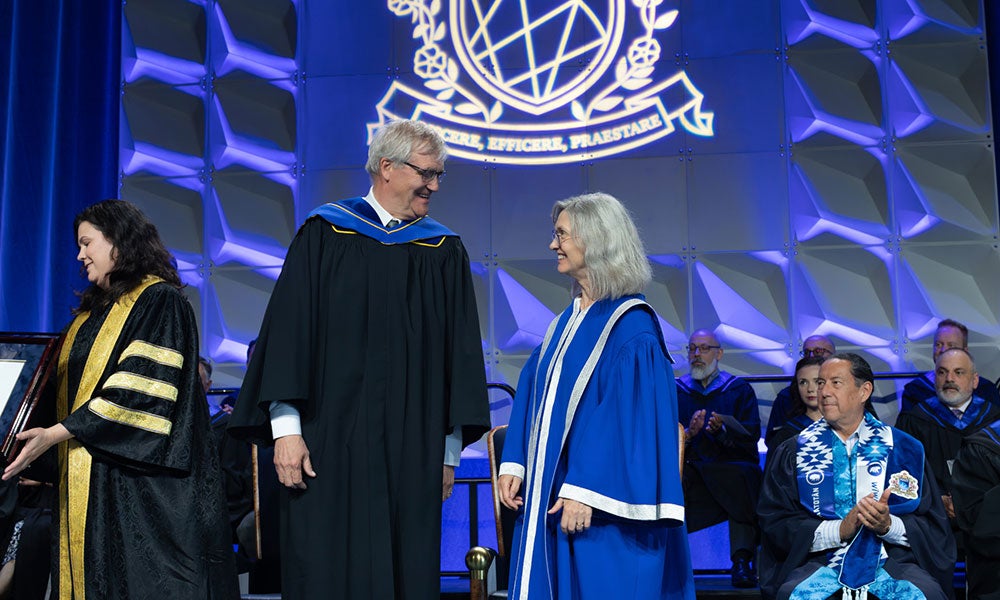
The 1980s galvanized Winkel’s belief that focusing on safety was “a moral imperative.”
He remembers the decade as a dark time for safety. Tragedy struck in Bhopal, India, in the Soviet Union at Chernobyl, in Alaska’s Prince William Sound with the Exxon Valdez oil supertanker spill, and elsewhere. And closer to home, a blaze occurred at Syncrude’s processing plant due to substandard components.
“It was a wakeup call for industry and us,” says Winkel. “And that's when my learning curve in safety really started to take a much steeper trajectory up, thanks to Syncrude leadership.”
That learning helped make Syncrude measurably safer overall than the average major industry in Alberta, even with record production. As Carter points out, “[Winkel’s] focus went beyond reducing long-term injuries to looking at the big picture to understand how organizations can avoid injuries in the first place.”
In the 1990s, Winkel’s involvement in safety began to extend outside of Syncrude as well. He became the first distinguished lecturer for the Canadian Institute of Mining to deliver a talk on the subject, appropriately titled The Safety Imperative. (Winkel would go on to win several awards from the organization for his expertise.)
Central to his message was his belief that “putting safety ahead of all other parameters was simply a moral obligation and the right thing to do.” The initial lecture, shared with 13 mining operations and sites across Canada, marked the beginning of a future career transition.
In 2010, Winkel retired from Syncrude operations and joined the University of Alberta Engineering department as an industrial professor in safety and risk management. He did so with a condition.
“I made it very clear that my vision for safety and risk management was for it to become a core competency for all engineering disciplines, not just an elective.”
It did, for every engineering student at the university, through the establishment of the David and Joan Lynch School of Engineering Safety and Risk Management in 2016, which Winkel led.
“I had extremely high expectations of Gord,” says Dr. David Lynch, then U of A dean of Engineering. “Suffice it to say, he achieved and significantly exceeded every expectation and also many, many more.”
Living to make a difference
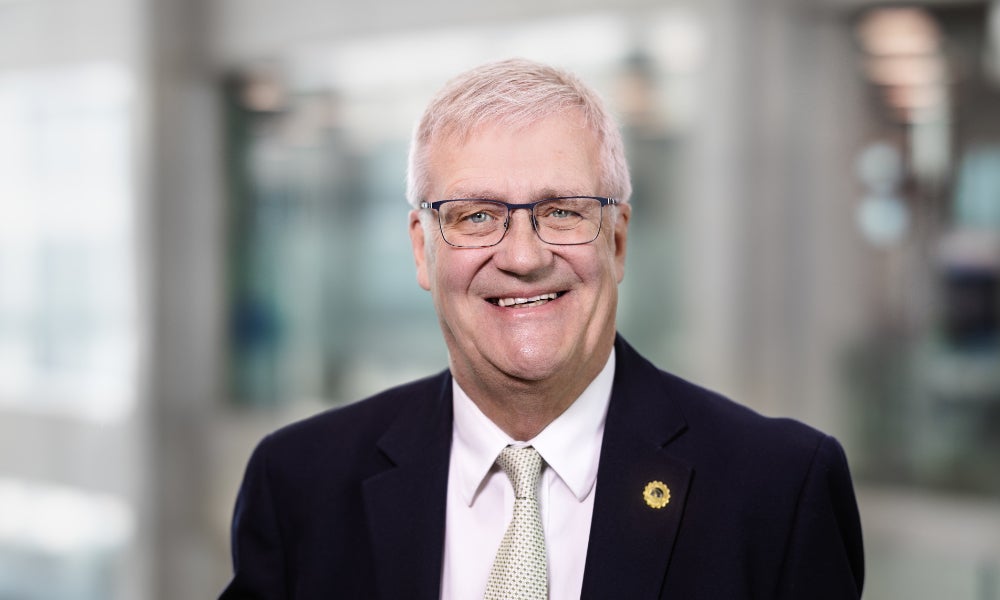
Since then, “Winkel’s contributions to safety and risk management over the years have had a profound impact on industries and organizations across the country,” notes Carter.
In the mid-2010s, Winkel served on the Alberta Health Services board, introducing risk management programming and practices as part of its quality and safety committee. Among them was a safe-surgery checklist, “which was essentially the equivalent of what we would have called a field-level risk assessment for mechanics, welders and electricians,” Winkel says.
Later, he helped form AgSafe Alberta, a provincial health and safety association. It led to adoption of practical farm and ranch safety programs and training, with agricultural industry safety improving over time. Winkel continues to serve as an adviser.
Among other beneficiaries of his expertise and insight are the board of Careers: The Next Generation, where he contributed to safety and risk management strategy and to the promotion of trades careers among youth. He also joined Commissionaires Canada, initially providing safety support at the local level and moving on to become chair of their national board, helping to provide meaningful employment for veterans across the country.
Between and beyond, Winkel has helped improve safety performance at mining organizations, in oil and gas, construction, the University of Alberta itself, churches and more. Winkel recently retired from the university, though he still volunteers there.
“I live to contribute and make a difference,” he says. And he believes promoting a culture of safety is a way to do that.
“Every person is a person that we can set up for success. And that's what we need to do. We owe that to every student. We owe that to our colleagues, to our families. We owe that to all we meet, and everyone under our watch.”
If you enjoyed that article, try these:
Northern Alberta Institute of Technology
Mailing Address:
11762 - 106 Street
Edmonton, AB, Canada, T5G 2R1
At NAIT, we honour and acknowledge that the land on which we learn, work and live is Treaty Six territory. We seek to learn from history and the lessons that have come before us, and to draw on the wisdom of the First Peoples in Canada. Only through learning can we move forward in truth and reconciliation, and to a better future together. Read more
About techlifetoday
Techlifetoday is the source for NAIT alumni and students to discover news about the polytechnic, and insights, advice and inspiration from the NAIT community to help them build successful careers and lead fulfilling lives.
