
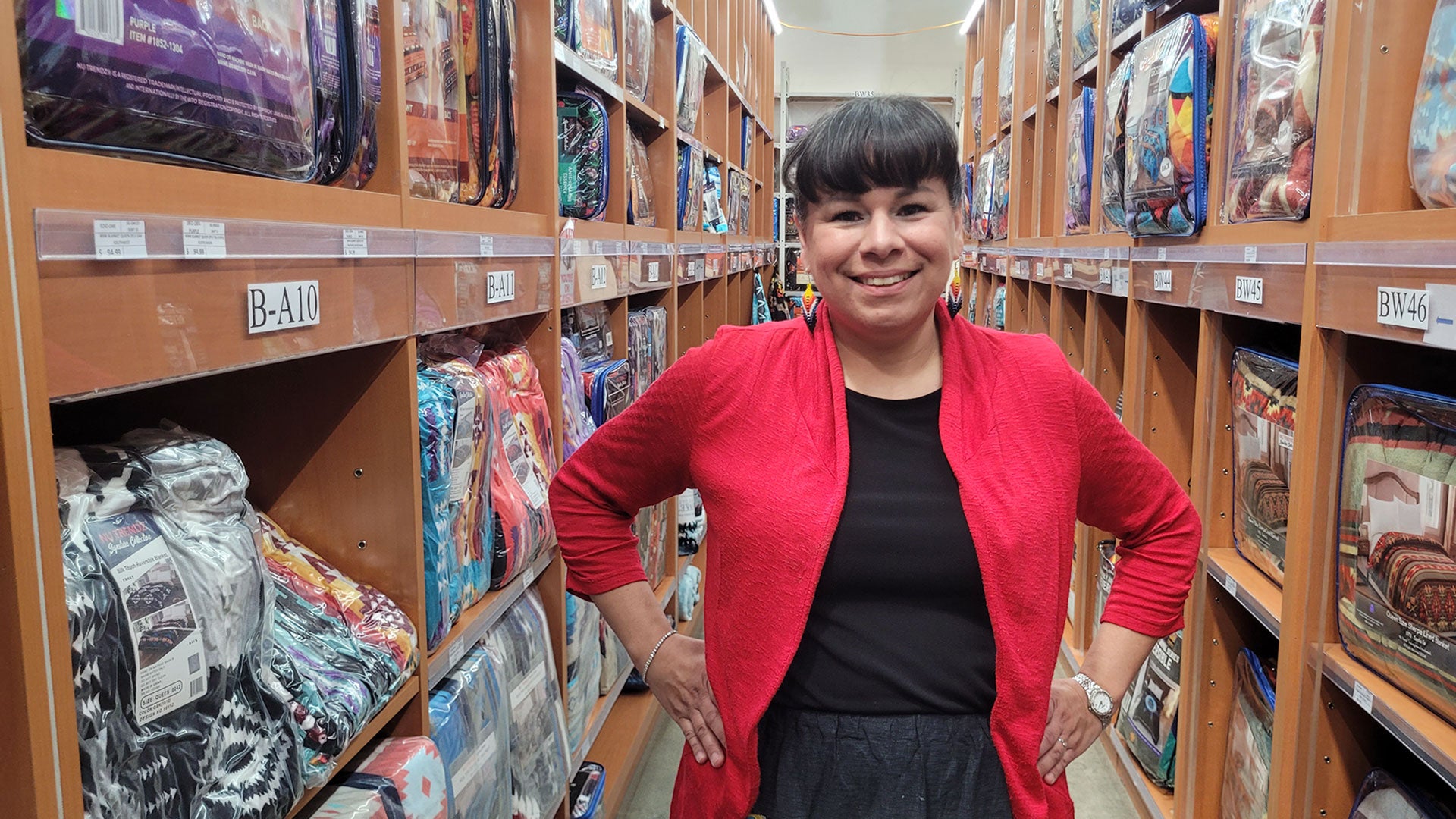
Grad becomes first Indigenous owner of Western Varieties, Canada’s largest business of its kind
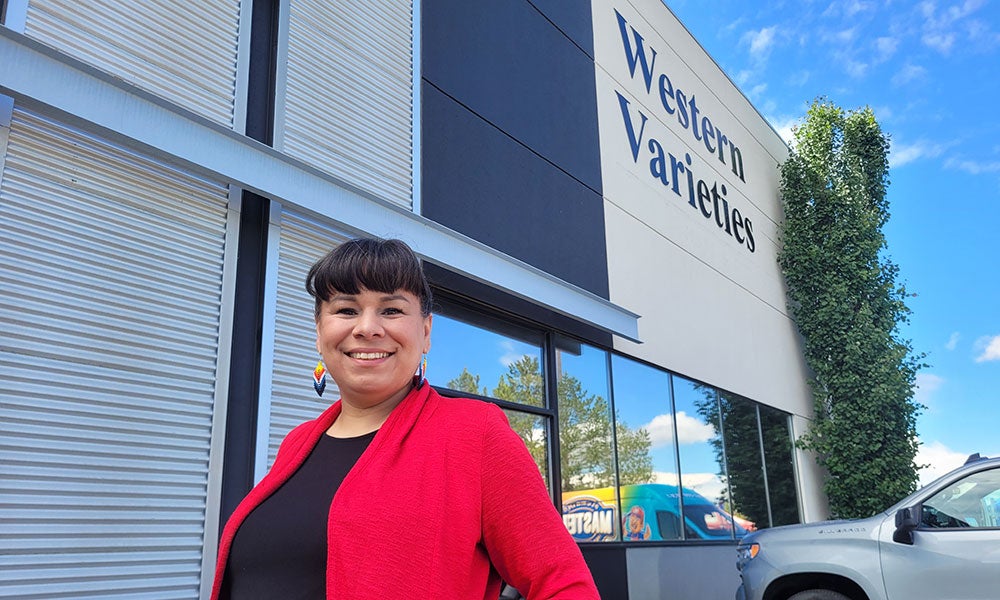
About half way through National Indigenous History Month, Veronica McRae (Bachelor of Business Administration ’17, Accounting ’11) sits for a break in her office and tells me her plans for the end of June. She hopes, more than anything, to sleep.
“I need like 10 hours of sleep to be a rockstar the next day,” says McRae, owner since November 2025 of Western Varieties, retailer and wholesaler of all manner of Indigenous goods.
These days, she’s not getting those 10 hours. For National Indigenous Peoples Day 2026, on the 21st, McRae wants to turn the south Edmonton shop and warehouse into the site of a party to mark the occasion: music, dancers, a barbecue, giveaways, the works. This is on top of actually running the business, Canada’s largest supplier of Indigenous goods and an employer of 20 full-time staff.
But if McRae is as tired as she says, it’s tough to tell. Her memories of what led to this role, a role so new the walls of her office are still bare, are vivid. She speaks in sentences that flow so fast they can race away from her, causing her to pause to consult the roadmap of her thoughts.
“Where am I going with this?” McRae asks herself more than once.
But she’s always driving toward the same destination, which is to use her nascent and unexpected entrepreneurship to create opportunities for others that she never had.
Western Varieties, where she started working 14 years ago as an accountant, spans 20,000 square feet. Her vision for it is far bigger.
Unexpected entrepreneurship
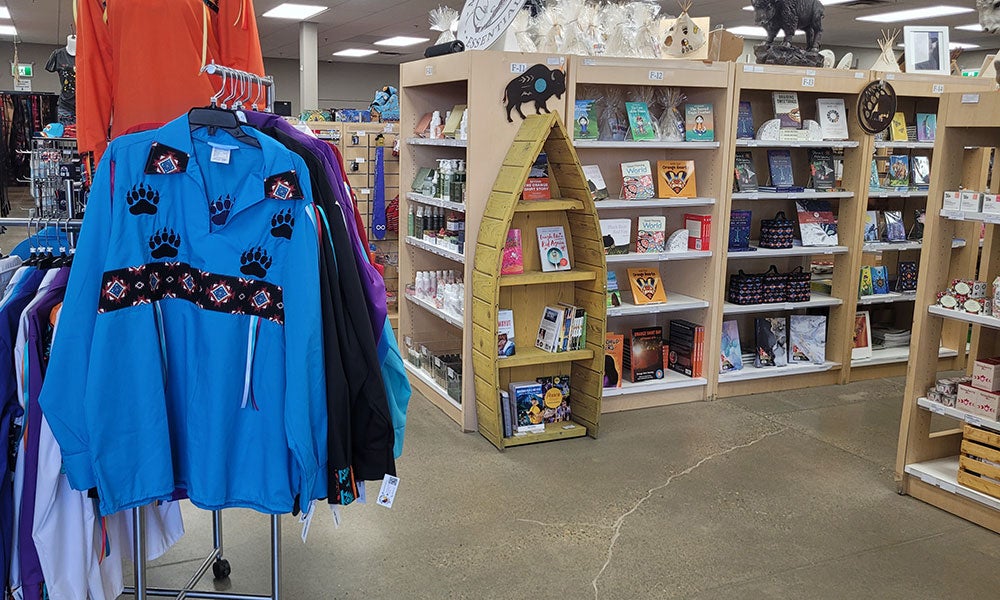
Western Varieties is like a department store dedicated to both celebrating and meeting the needs of the First Nations and Indigenous Peoples of Canada.
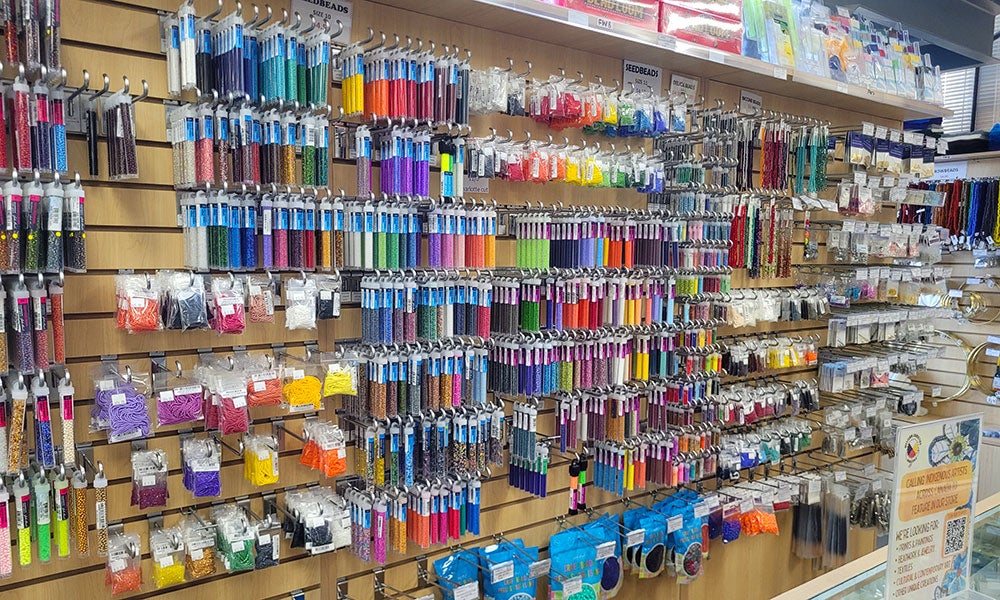
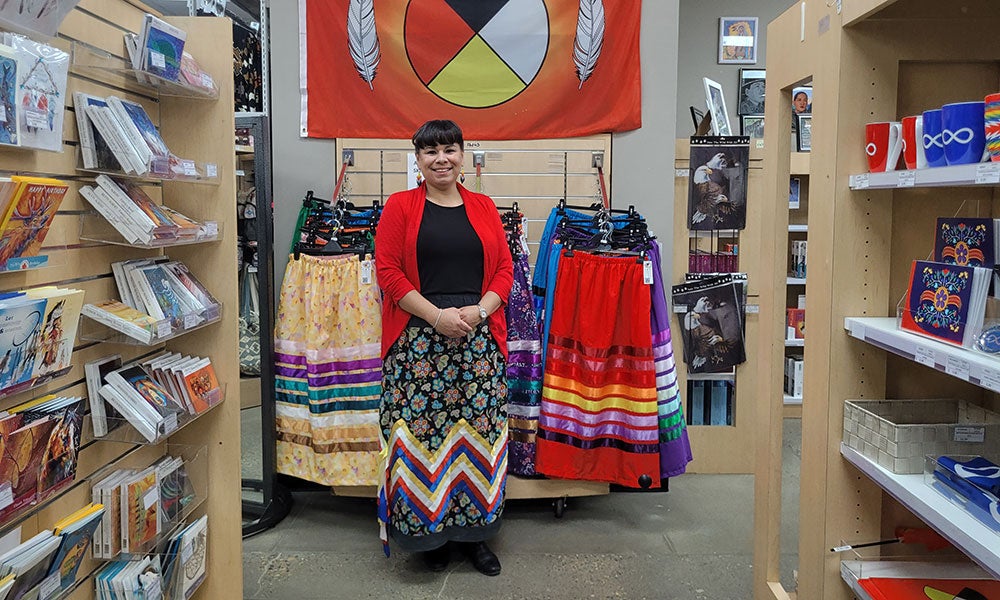
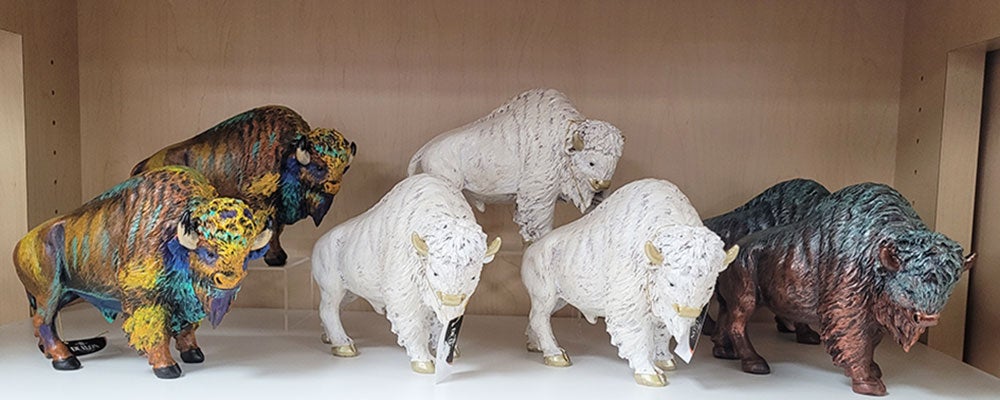
A nook by the front door features a rainbow of beads, threads and feathers. An aisle is stocked with Indigenous-authored books and home decor, and it ends in a rack of colourful ribbon skirts. Indigenous medicines are arranged in glass cases near shelves filled with works by local artisans. Beyond the shop’s warehouse entrance, traditional blankets are stacked to the rafters.
There’s even a kids' section, featuring everything from GI Joe to board games to science toys.
In the age of Amazon, disruptor of bricks-and-mortar commerce, McRae is perfectly suited to running such a business. “I love progress and growth and change,” she says. “That is my nature outside of entrepreneurship.”
But one change McRae wasn’t ready for was, in fact, taking the lead at Western Varieties.
The company is 70 years old but only began in the late-2000s to focus exclusively on Indigenous goods, she explains. It did so under non-Indigenous owners, who recently came to acknowledge the cultural misalignment. They made an offer to McRae. She knew the business financially and otherwise, having recently broadened her capacity by moving into a community engagement role.
“I said, ‘Absolutely not,’” recalls McRae. “'I do not want to manage people. I don't want to manage inventory.'”
But, like it or not, life pushed her toward the opportunity.
Months earlier, McRae had signed up for a leadership retreat at the Banff Centre for Arts and Creativity, and had been wondering what she’d focus on. Her husband and now business partner, Curtis McRae (Welder ’10), encouraged her too, thinking the purchase could be good for their family, which includes four daughters.
And she’d already begun dabbling in entrepreneurship, building a social enterprise she calls The Good Place. It’s part of her effort as a Cree-Métis woman, and a member of the Métis Nation of Alberta, to strengthen Indigenous community through initiatives in cultural reclamation, food security and history.
While all of this factored into her decision, it may have been an earlier trip to Italy that ultimately sealed the deal on Western Varieties.
A connection McRae had made at a conference invited her to join an art research trip to the Vatican in fall 2024. There, she encountered The Resurrection, a fresco completed in 1494 by Renaissance master Pinturicchio, soon after Columbus arrived in the New World. It’s thought to be the first European depiction of First Nations people, a small group dancing near Christ’s vacated coffin.
“Their faces are kind of otherworldly, their eyes are vacant, they're kind of ghostly shaped,” says McRae. “And they were portrayed to be ‘less than.’”
The discovery left McRae wrestling with her thoughts on all the ways that the idea of “less than” has manifested in her life, her mother’s, grandmother’s and great-grandmother's.
Pinturicchio’s painting seemed like a symbol of enduring colonial damage that, for her, included the legacy of residential schools and lost culture, some tougher memories from growing up in low-income housing in north Edmonton and, later, a misspent youth that saw her leave home at 15.
“Where is my responsibility in it?” thought McRae, as if determined to prove the old picture wrong. Then, with the benefit of advice from peers, family support and confidence from her own experience, she acted.
“My response to that is taking on Western Varieties and showing, ‘No, we are not less than. We are more than enough. Watch this.’”
Confidence, community and culture
On her second day as owner last November, McRae swept through the office like a boss. Aspects of its configuration did not match her vision or ambition, and that would change.
“Why are these storage rooms?” she asked of packed, windowed spaces down the hall from what’s now her second-floor corner office. “This is event space that is being misused. It's beautiful. We're gutting this. This is where community [could] come together and learn about culture, celebrate traditions.
“And,” she adds, “that's what it's used for now.”
The day before our interview, McRae used that space to host a gathering of Indigenous women entrepreneurs for networking, discussion and a celebration and exploration of culture. She also led them through a workshop to make their own ribbon skirts, an exercise in creativity McRae has seen build confidence as much as community among participants.
This is the direction in which she plans to take Western Varieties. Or at least one direction.
“Our mission is to be a bridge that connects people with community and culture,” says McRae.
She’s eyeing an expansion into tourism, for example, such as boating tours along waterways important to local Indigenous history. She’s continuing to develop partnerships with the Telus World of Science to help with Indigenous initiatives, and with Bent Arrow Traditional Healing Society, employing youth participants in its Working Warriors program.
McRae is also leveraging her role with the store to stay connected to post-secondary education. When she learns about an upcoming event at the Nîsôhkamâtotân Centre, NAIT’s gathering place for Indigenous and non-Indigenous students, “she'll reach out and say, ‘Hey, do you need an extra volunteer?’” says Camille Louis, the centre’s manager. Or McRae will check to see if the team needs any supplies.
“She is a strong advocate of Indigenous student success,” Louis adds. “It's not performative; she genuinely cares about people and she wants to help.”
One reason for that is because McRae knows how hard being a student can be.
In the late 2000s, Dawn Dayman was a case manager with financial aid at NAIT. She worked with McRae, who’d returned to school with the help of a provincial government grant.
“She was a single mom at the time,” recalls Dayman, now retired. “She was just very brave and dove in to make it work.”
She and McRae would check in regularly about funding and progress but also formed a friendship. McRae invited Dayman to her and Curtis’s wedding, and to a restaurant watch party for MasterChef Canada, in which McRae competed in 2025, partly to strengthen the “food security” pillar of The Good Place initiative.
“What struck me was the wide variety of people there and how she was just this vibrant community connector,” says Dayman. “That whole room was filled with people who were touched by her.”
As an entrepreneur, and an accountant, McRae isn’t losing sight of Western Varieties’ roots. Today, she considers it the “Costco” of Indigenous goods. Eager as ever to challenge the status quo, she’s eyeing “Amazon” status, hoping to become the disruptor by moving into international Indigenous goods.
“That’s a beast,” she says. “That scares me.”
But you can tell how much that excites her, too, which suggests that McRae has found her own good place.
“My ancestors, who did not have the opportunities that I did, prayed for a brighter future,” she says. “I don't want that to be squandered. So that's what motivates me to accelerate what I'm doing.”
And next week, maybe, she’ll sleep.
If you enjoyed that article, try these:
Northern Alberta Institute of Technology
Mailing Address:
11762 - 106 Street
Edmonton, AB, Canada, T5G 2R1
At NAIT, we honour and acknowledge that the land on which we learn, work and live is Treaty Six territory. We seek to learn from history and the lessons that have come before us, and to draw on the wisdom of the First Peoples in Canada. Only through learning can we move forward in truth and reconciliation, and to a better future together. Read more
About techlifetoday
Techlifetoday is the source for NAIT alumni and students to discover news about the polytechnic, and insights, advice and inspiration from the NAIT community to help them build successful careers and lead fulfilling lives.
