
DishZero comes to campus as Bachelor of Technology capstone project
“We want to play our part and be sustainable”
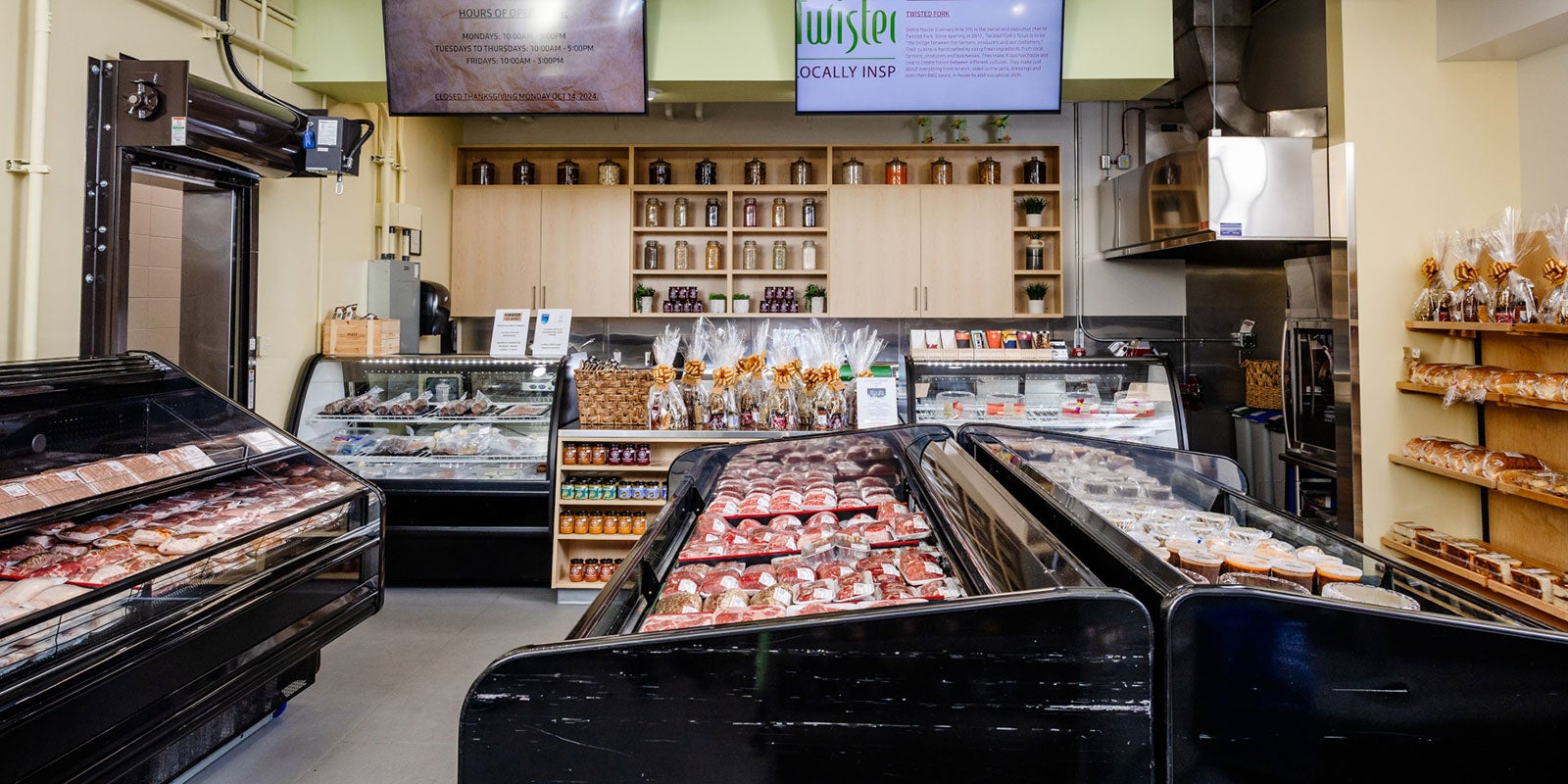
NAIT’s Artisanal Food Market is one of the best loved stores on Main Campus for good reason.
Shoppers can pick up fresh meats prepared by Professional Meat Cutting and Merchandising students. There are breads and treats made by Baking and Pastry Arts students. And Culinary Arts and Cook students and apprentices supply a variety of hearty, grab-and-go meals.
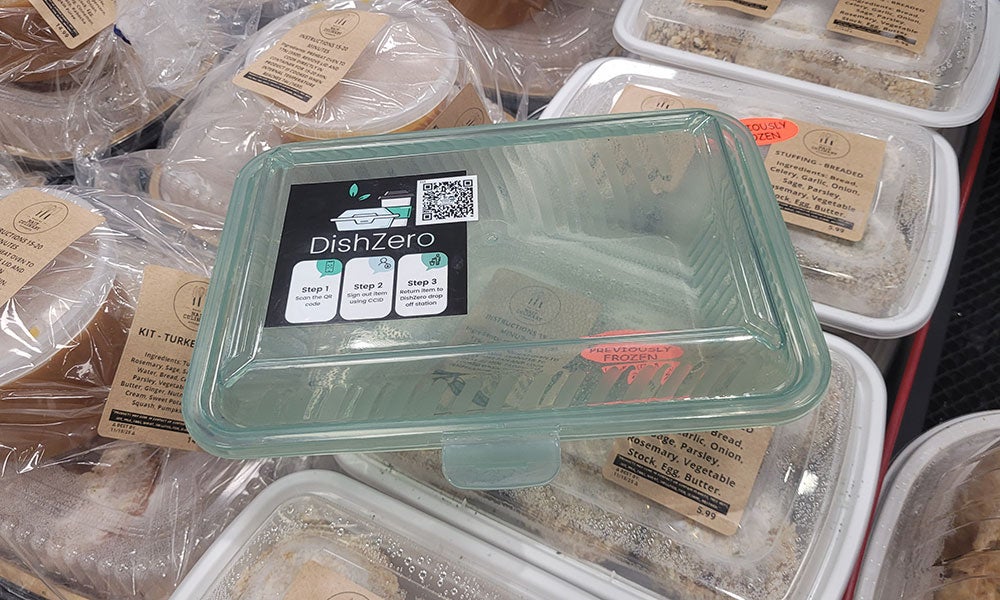
It’s delicious and convenient – with those meals packaged in microwavable plastic containers. Heat and enjoy, without even the trouble of dishes.
That may be the only problem. Those containers are recyclable but likely to end up in a landfill. In 2019, the year of Statistics Canada’s most recent numbers, Canadians discarded 4.4 million tonnes of plastic, recycling only 9% of that.
Edmonton-based DishZero has a reusable response – one that four Bachelor of Technology in Management (BTech) students will help launch at the Artisanal Food Market in late-October.
“We want to play our part and be sustainable,” says Monica Lim, the shop’s supervisor. If all goes well, the approach will set a new standard at NAIT in “thinking beyond single use.”
Learn more about NAIT's Bachelor of Technology in Management program
Same process, different bin
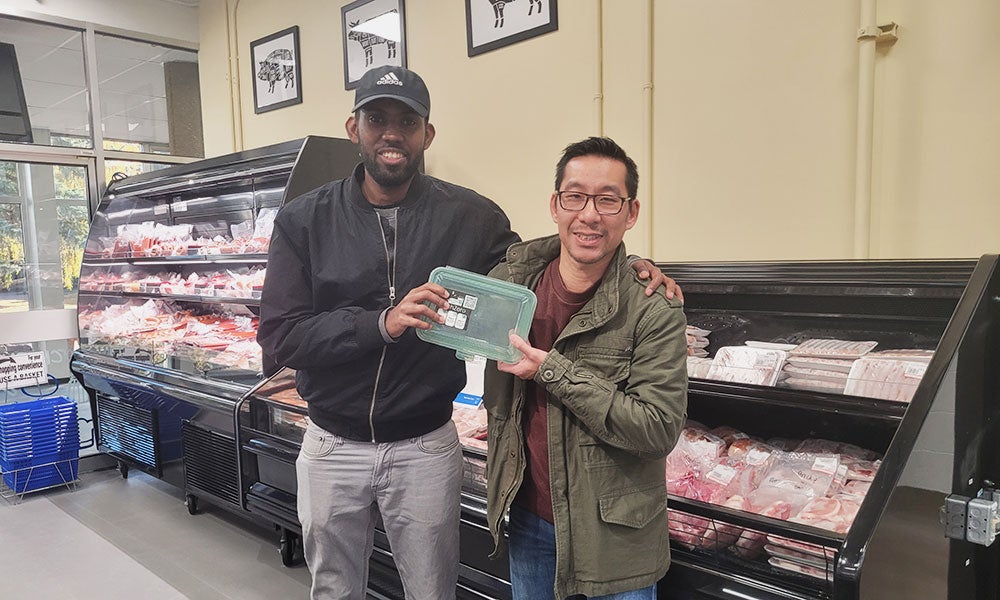
“The whole idea was to make [our plan] similar to the current process,” says Andy Do (Personal Fitness Trainer ’11, pictured below, right), one of the members of the BTech student team, along with Ahmed Maalim (pictured below, left), Taylor Van Velssen and Yaksh Bhardwaj.
That is, they want sustainable to be as easy as unsustainable, or the “current process” of simply chucking a plastic container into the bin. DishZero puts a forward-thinking twist on that.
Officially launched by University of Alberta students at their campus in 2023, the Edmonton-based nonprofit provides vendors with reusable coffee mugs and clamshell containers. Each bears a scannable code, registering it to the customer.
When empty, the containers are still chucked into a bin, but one emptied by volunteers who return units to DishZero’s facility for washing and redistribution.
According to the organization's website, the goal is to “divert at least 20% of all daily single-use takeout container and mug waste in participating pilot buildings.” NAIT is the second of those locations among post-secondary institutes.
In the short term, the BTech students have been tasked with implementing the program at the polytechnic. That includes running an information booth outside the market to chat with visitors to NAIT’s annual Open House on Oct. 25. Official launch is Monday, Oct. 27.
In the long term, the students are working to feed DishZero’s growth. They’ll spend this academic year investigating not just environmental sustainability but the financial impact. The cost of the current container, for example, has risen sharply. Already, the team has identified a Canadian manufacturer as a possible source of a less expensive alternative.
DishZero board member Calyca Greenwald (Bachelor of Business Administration ’25, Marketing ’23), a past participant in a NAIT capstone project to bring DishZero to businesses in Edmonton’s Alberta Avenue neighbourhood, values the support.
“The less we can look at the logistic, research aspect, the more we can look at the long-term goals of the company,” she says. “So it’s incredibly beneficial to the organization to have dedicated capstone students work on the project.”
From Edmonton to Nairobi
Giving DishZero a new view onto its future will be but one measure of the project’s success. Greenwald is also looking at immediate impact. The market will start with roughly 170 containers, each capable of being refilled “hundreds of times,” she says.
“If it’s used properly and there isn’t a very big attrition rate, it will be very significant.”
Rollout for the pilot, which runs until the end of December, has been quick – the students started the project in September. But Do, who ran a fitness business until the pandemic, has enjoyed the challenge. “It reinvigorates that entrepreneurial spirit, and lets me be creative again and find solutions,” he says.
For him, success will be seeing the team’s work help make the program permanent at NAIT.
Maalim, Do’s teammate, shares that perspective, and even looks beyond campus. He hopes that his learnings will prove applicable around the world, where 50% of all plastic produced ends up in the trash.
Just as Canada seeks to address waste, Maalim sees an opportunity for Africa. He was born in Kenya to parents who were refugees from Somalia, and grew up in Nairobi, where he noticed a waste management problem. He believes similar conditions exists in other parts of the continent as well.
“I’ve found this project very important because I'm thinking about how we can reduce garbage and make [Nairobi] a more sustainable, livable city,” he says.
With his experience working with DishZero, he feels he may be in a position to make a contribution that, over time, could add up. If the Artisanal Food Market were to switch entirely to reusable containers for its meals, for example, it could divert around 100 pieces of plastic from the landfill every day.
“It’s a long-time sustainability solution for everyone,” Maalim says, “and for the future.”
Northern Alberta Institute of Technology
Mailing Address:
11762 - 106 Street
Edmonton, AB, Canada, T5G 2R1
At NAIT, we honour and acknowledge that the land on which we learn, work and live is Treaty Six territory. We seek to learn from history and the lessons that have come before us, and to draw on the wisdom of the First Peoples in Canada. Only through learning can we move forward in truth and reconciliation, and to a better future together. Read more
About techlifetoday
Techlifetoday is the source for NAIT alumni and students to discover news about the polytechnic, and insights, advice and inspiration from the NAIT community to help them build successful careers and lead fulfilling lives.
