
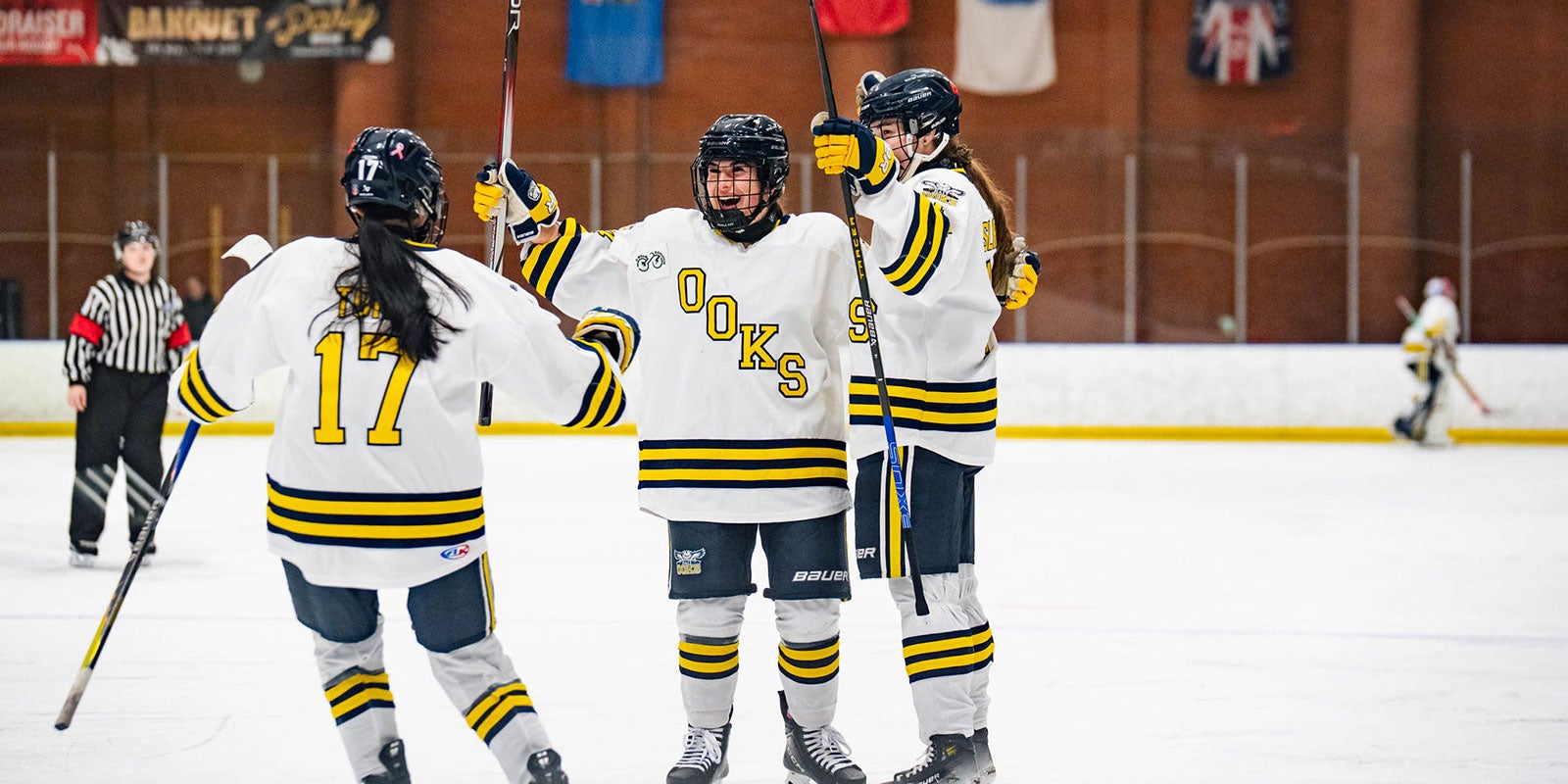
Event in Quebec part of push for ongoing Canadian college competition
“For the growth of the game … it's something that should happen”
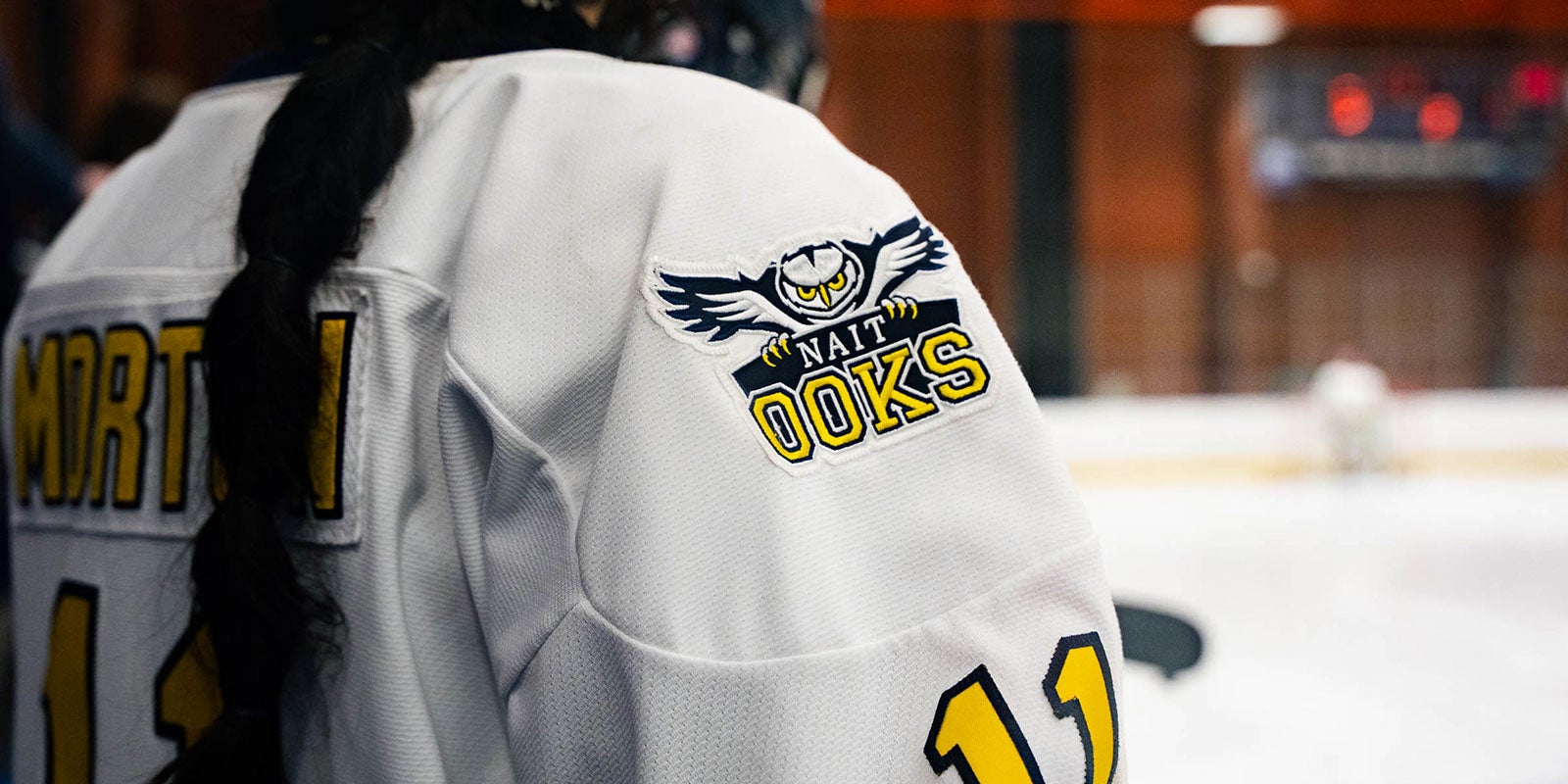
At 22 years old, Ooks captain and defenseman Julianne Crozier has already had an accomplished hockey career.
The Marketing student grew up on rinks in Calgary, playing with the boys until her teens when all-girls squads became available. In high school, Crozier committed to the Ooks, which she’d help win a provincial championship in 2023-24. Then, as part of the team’s 25th anniversary last year, she travelled to play in Germany, Czechia and Slovakia.
“It was truly a once-in-a-lifetime opportunity,” Crozier says.
There may be another opportunity of that caliber on her hockey horizon. It’s one she hopes will extend to future female players.

In January, the women’s Ooks team will visit Quebec City for a unique tournament hosted by the Réseau du sport étudiant du Québec – an equivalent of the Ooks’ Alberta Colleges Athletic Conference (ACAC). Crosier calls it a timely test, with provincial playoffs following in late-February.
Just as importantly, however, the Ooks’ first-ever showing in the event will help strengthen the case for ongoing national attention for women’s hockey and, Crozier hopes, annual competition between Canada’s six college conferences.
“We're going to enjoy it and try to soak in as much as we can,” says Crozier, soon to graduate and in her last year as an Ook. But, she adds, “we’re also paving the way.”
“He wants us to grow”
The last Canadian Collegiate Athletic Association (CCAA) national hockey tournament was in 2001, in Kitchener. Only three of six provincial conferences competed, costs sidelining the others. After the hosting Conestoga men’s team fell 16-1 to Mount Royal in the final – maintaining western dominance dating to the mid-1970s – the event was cancelled altogether.
Women, however, never even got the chance to uphold or disrupt that regional disparity. As the men played that last tournament, female players in Alberta had just ended their inaugural ACAC season.
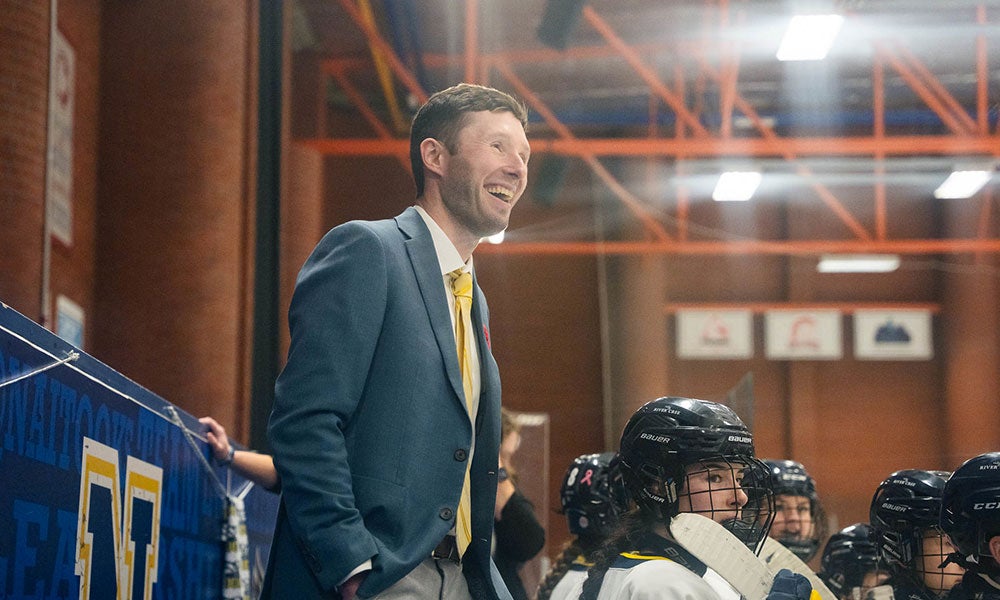
Instead of calling out unfairness, women’s Ooks head coach Brendan Jensen (Bachelor of Business Administration ’20, Management ’18) points to his responsibility to develop student-athletes in all possible ways.
“To go out on the ice with [the women] and try to help them improve, and also see them succeed in the classroom or as they graduate – you know, succeed in life – is something that I'm truly blessed to do,” says Jensen, a past men's Ooks netminder.
“Brendan really cares about us as individuals,” says Crozier. “He wants us to grow.”
For that growth to happen, Jensen needs a variety of opportunities for competition. Some are hard to fund. Attending a non-conference event such as the upcoming tournament, where the Ooks will face any of 11 teams from Quebec, Atlantic Canada and Alberta, involves selling raffle tickets, board ads, jersey sponsorships and more.
Jensen, team staff and players have done this fundraising themselves to help strengthen the event. It’s the second of its kind, following one hosted by Holland College in Prince Edward Island in 2024. Jensen hopes it’s not the last.
“Hopefully in a year to three years there will be a formal national tournament,” he says. “For the growth of the game, and for female hockey to have another avenue within Canada to … gain more recognition, it's something that should happen.”
Rules of the game
Mark Kosak feels that the time is right – at least to get started. “Women's hockey, and women's sport in general, is a hot topic right now,” says the ACAC CEO. “There's lots of support around the country to grow women's athletics.”
Kosak points, for example, to excitement around the ongoing expansion of the Professional Women’s Hockey Association, home to Montreal Victoire captain Marie-Philip Poulin, who played with Réseau du sport étudiant du Québec’s Dawson College in 2008-09.
But Kosak knows enthusiasm alone won’t take this level of hockey national. There are rules.
The CCAA is cheering on the event, but from the stands. For it to consider staging a tournament, that tournament must be attended by three CCAA member leagues (such as the ACAC) for two years running. Also, those leagues must field at least three teams each, and they’d need to be competitive.
“Although [women’s hockey] will meet the first criteria, it is yet to be determined if there will be three conferences with three teams each playing the sport next season,” CCAA CEO Brandon Stone wrote in an email.
Kosak has an athlete’s optimism, strong but measured. Even if Alberta were to host next year (which he openly muses about), that hat trick wouldn’t guarantee the win. Nevertheless, he points out, big events get their start as small ones.
“Every championship at the national level has started similar to this,” says Kosak. It takes “pioneers” like NAIT and the other participating ACAC squads, Red Deer and Lakeland, to make the effort.
“We have to be patient and allow support to germinate [through] tournaments like this.”
Victory in Quebec City
Crozier knows competition in Quebec will be tough. For one thing, the Ooks will play two games a day. “I'll be interested to see how our bodies do,” she says.
For another, the team will enter as a middling squad (eight wins and eight losses at the time of writing). That said, Crozier isn’t in it just to win it.
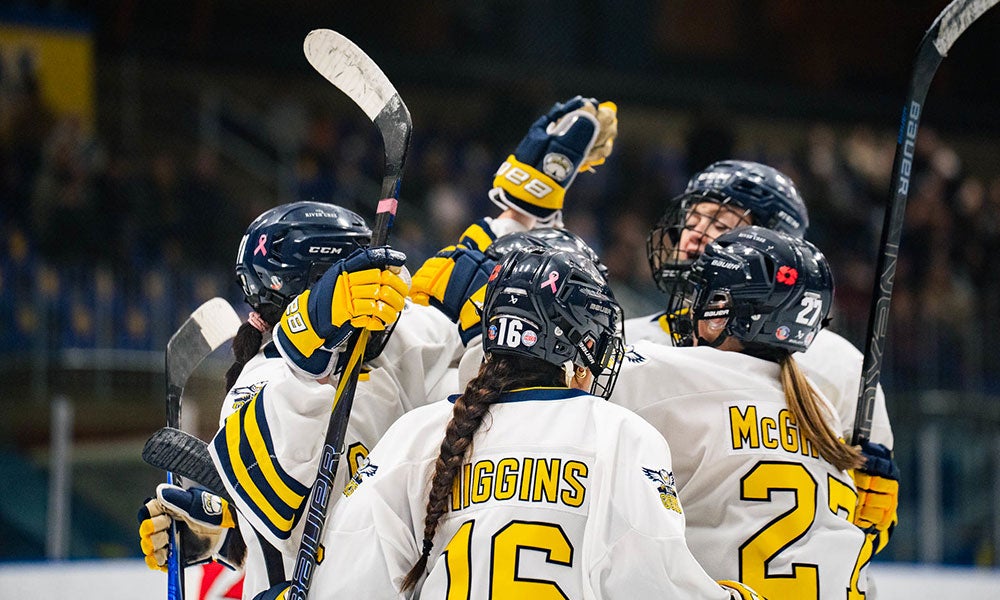
“The goal is to play our strongest hockey, support each other, and represent NAIT with as much pride as we can,” she says. Crozier and what she calls her group of “25 sisters” will “put in our best effort and try to prove that this should be a [recurring] thing.”
No matter who gets the medals, just having been there may be the real victory. Should women’s hockey continue nationally, under the CCAA or bootstrapped by the leagues, “there'll be a level of satisfaction for these women,” says Kosak, “when they look back someday and say, ‘We were the first ones that made that happen for the girls who are playing hockey today.’”
For now, though, Crozier is only looking ahead. Including the tournament, she has about a dozen games left to play in her Ooks hockey career. That is, she’s still racking up accomplishments, inspiring others in real time, and contributing to a movement in student athletics whose time has come.
“It is truly becoming its own sport,” says Crozier. “It's not just male hockey. It's now female hockey. And we’re here to make a statement.”
If you enjoyed that article, try these:
Northern Alberta Institute of Technology
Mailing Address:
11762 - 106 Street
Edmonton, AB, Canada, T5G 2R1
At NAIT, we honour and acknowledge that the land on which we learn, work and live is Treaty Six territory. We seek to learn from history and the lessons that have come before us, and to draw on the wisdom of the First Peoples in Canada. Only through learning can we move forward in truth and reconciliation, and to a better future together. Read more
About techlifetoday
Techlifetoday is the source for NAIT alumni and students to discover news about the polytechnic, and insights, advice and inspiration from the NAIT community to help them build successful careers and lead fulfilling lives.
