
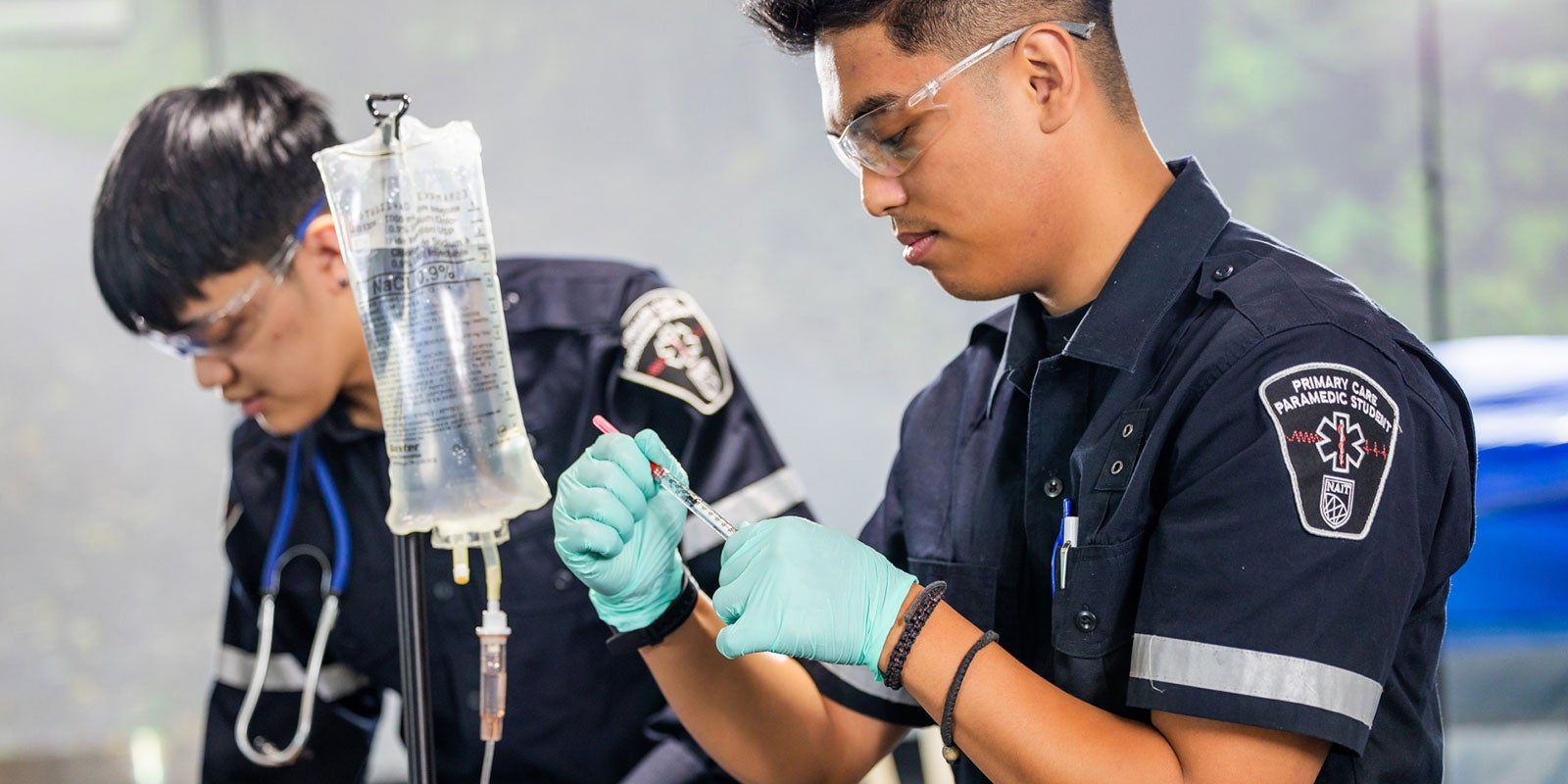
International medical organization highlights paper authored by NAIT staff
Method inspired by Japanese practice of pointing and calling
Sometimes, if not often, simple solutions make a big difference.
That’s the premise behind a study by NAIT researchers Dr. Efrem Violato and Mike Cheung (Emergency Medical Technologist – Paramedic ’10). Together, they introduced Advanced Care Paramedic students to a unique method of reducing on-the-job errors that can compromise patient safety.
It involves no tools or supplies (other than maybe origami, more on that in a moment) and costs little to implement beyond the few minutes spent on teaching it in NAIT classrooms.
Now the method is being shared with the world. The researchers’ recent paper on the subject, entitled “Teaching pointing and calling (Shisa Kanko) to reduce error and improve performance,” was showcased in August as a Must Read by the Johns Hopkins School of Medicine and Bayview Division of General Internal Medicine.
It’s an honour bestowed upon just three or four articles from across health-care education literature each month. This time, it recognizes one that makes the case for what’s essentially a professionalized version of talking to oneself.
Learn more about what you can do with an Advanced Care Paramedic diploma
Point, calling and origami
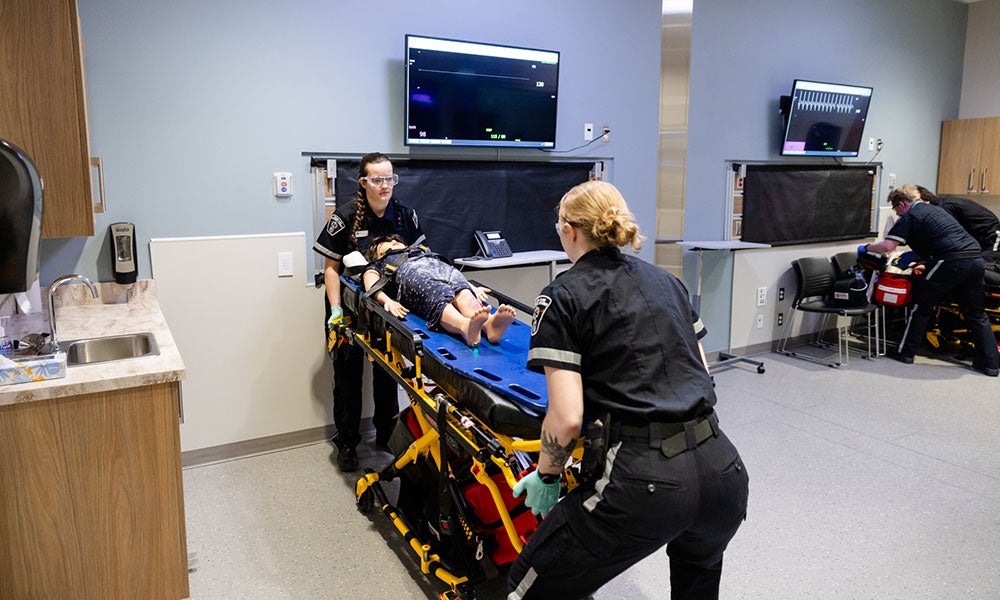
Violato, research associate with NAIT’s Centre for Advanced Medical Simulation, has been intrigued by the practice of “pointing and calling” since grad school, when he saw it in a documentary. It’s been used for years in industry, particularly in improving safety in rail transportation. Violato wondered about its potential in health care, where errors affect thousands of patients each year.
“Pointing and calling” helps individuals remain grounded in the task at hand by talking through steps. For example, a practitioner could verify that the right medication is about to be administered to a patient by 1) pointing to it, and 2) saying aloud how they intend to use it.
In a high-stress environment where competing priorities demand a responder’s attention, the technique “forces you to switch from one task to another,” says Violato, and to do so confidently.
Cheung admits that confidence did not necessarily come immediately to students.
“I'm always looking for new, interesting things that students can try and apply to their own practice,” he says. Because of that, he sometimes has to look for new, interesting ways to teach those things.
To help students overcome self-consciousness about vocalizing their intentions (and ensuring those aren’t misinterpreted as orders by others), students practised folding origami as a team while speaking out loud. One student would deliver instructions and another would respond by pointing to the paper and announcing their intentions before proceeding.
Convinced of its value, students soon embraced the technique, later using it in simulation-based lessons. As Violato and Cheung reported in their paper, pointing and calling is credited with reducing errors in Japanese rail operations by as much as 85%. The practice has also been shown to stimulate regions of the brain associated with carrying out intended actions.
“The goal is to inspire students to learn things that will enhance [their practice] and help them grow throughout their career,” says Cheung. What’s more, he adds, pointing and calling “is something that works, so why not apply it?”
Likely a first in the West
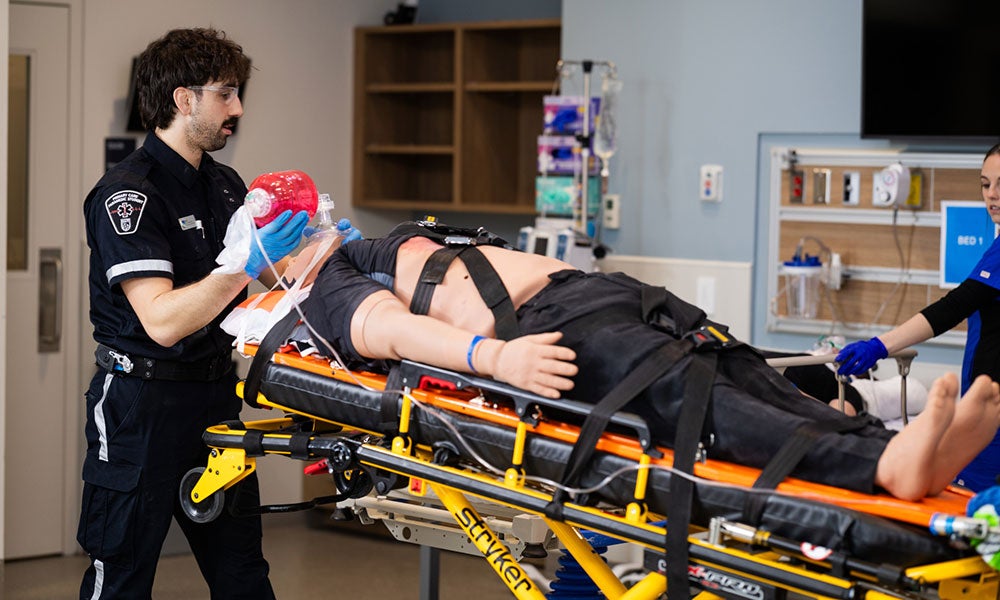
Based on the success in their classrooms, Violato and Cheung were motivated to share the practice more widely.
In his review of existing literature, Violato has seen no record of pointing and calling being introduced into health-care curricula. While he can’t say it has not been done elsewhere, he believes NAIT is likely the first western-world post-secondary to present the results of formally introducing the technique to the classroom.
“If it can be used to reduce errors, increase safety, and improve patient care, and we've done it here, then we should be disseminating this and showing it,” says Violato.
Cheung agrees, and will continue to do his part in the classroom.
Currently, he’s teaching pointing and calling in paramedic courses on emotional intelligence, communications and more. With the recent publication and continued engagement with students, he envisions a time when it will be common for paramedics to provide running narratives of their actions, to the benefit of themselves and their patients.
“It seems to stick with most of them,” Cheung says of the technique. “As multiple years start going out into practice [with the training], it will just grow from there.”
Northern Alberta Institute of Technology
Mailing Address:
11762 - 106 Street
Edmonton, AB, Canada, T5G 2R1
At NAIT, we honour and acknowledge that the land on which we learn, work and live is Treaty Six territory. We seek to learn from history and the lessons that have come before us, and to draw on the wisdom of the First Peoples in Canada. Only through learning can we move forward in truth and reconciliation, and to a better future together. Read more
About techlifetoday
Techlifetoday is the source for NAIT alumni and students to discover news about the polytechnic, and insights, advice and inspiration from the NAIT community to help them build successful careers and lead fulfilling lives.
