
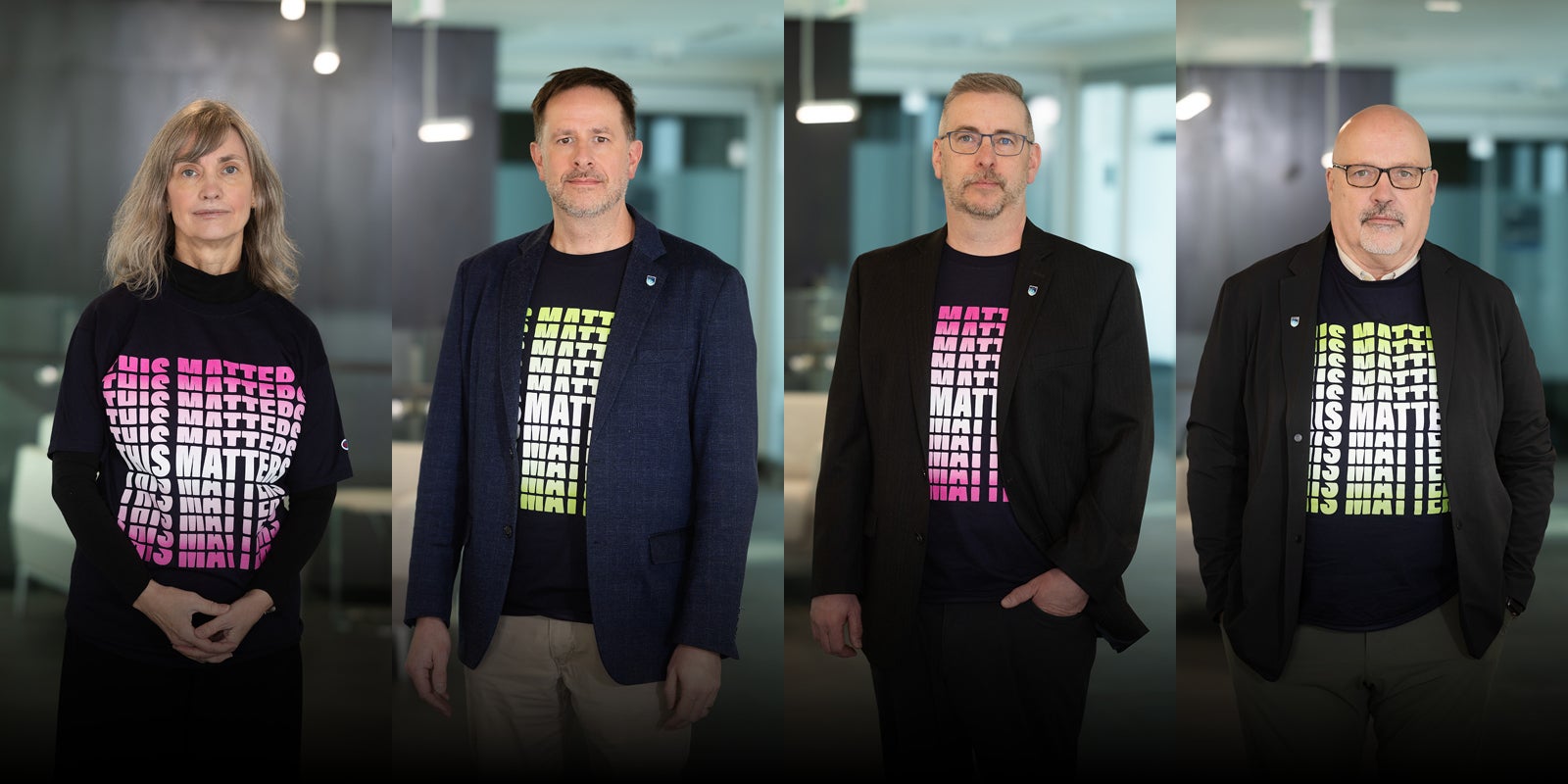
“This Matters” promotes use of online tool for reporting incidents on campus
“We're taking action to ensure that our campus is a welcoming place”
Maybe it’s a suggestive or demeaning comment. Or a catcall from someone in a passing vehicle. Or unwanted physical contact (or worse). No matter what form gender-based and sexual violence takes, Daley Laing and staff at NAIT’s Centre for Community and Belonging (CCB) want people to know it’s not acceptable on campus.
“We care about students and staff,” says Laing, CCB manager. What’s more, they add, “we're taking action.”
That action is the focus of the 2025 “This Matters” campaign, the second staging of NAIT’s initiative to raise awareness of gender-based and sexual violence (GBSV). Activities span the international 16 Days of Activism against GBSV, from Nov. 25 to Dec. 10, bookending a Dec. 5 vigil at NAIT for the National Day of Remembrance and Action on Violence Against Women.
GBSV is an issue on campuses across Canada. Here in Alberta, 50% of post-secondary students have experienced some form of it.
Women, 2SLGBTQIA+ individuals, Indigenous and racialized students, and people with disabilities face even higher rates.
Here’s a look at what Laing hopes NAIT can do about GBSV – including a way to directly engage more survivors – and their hopes for how “we can not only support belonging, but make a safer and more inclusive campus.”
This Matters 2.0
This Matters initially launched at NAIT in fall 2024 with the goal of naming behaviour that no staff or student wants on campus.
Work to raise awareness about GBSV, says Laing, “is unanimously supported from executive to frontline staff.”
The latest iteration of the campaign builds on the momentum generated by the first, says Laing.
At its heart is the intention “to have more conversations about [available] resources – including our anonymous reporting tool.”
The reasons for REES
That reporting tool, Respect, Educate, Empower Survivors (REES), launched online with the initial campaign in 2024. This year, This Matters spotlights the benefits REES can bring to survivors of GBSV, and to the work that Laing, CCB staff, and members of the NAIT community do to provide support.
“[REES] is built from a survivor-centred point of view, and a trauma-informed view,” says Laing. It’s designed to minimize any harm that may come from reporting, such as retaliation or stigma.
Those who report can choose to do so anonymously, creating a record of the event. Alternatively, a REES user can file a formal report directly to NAIT, which will trigger follow-up action, such as an investigation. (A survivor may also choose to reopen and elevate a submission they’d made anonymously.)
Laing wants students and staff to use the tool regardless of how severe they consider an event to have been. “Sometimes folks think it’s not a big deal,” they say of survivors who, for example, may encounter an inappropriate comment. “But it's really important for us to know.”
REES routinely provides CCB with cumulative data that may indicate issues, troubling trends, even potential problem spots on campus. “The data helps us decide what we prioritize in education [and] what conversations need to happen,” says Laing. As important as REES is after an incident occurs, it’s just as valuable to prevention, they add.
Skills for inclusion
Laing sees This Matters as a key part of the broader work CCB does to prepare all NAIT students to go on to foster inclusive, productive workplaces.
“We want to send our graduates into industry with the skills to live in a diverse world, and to be able to address things like gender-based violence at work,” says Laing. By enabling students to identify GBSV in all its forms, they may be better positioned as grads to keep a comment or gesture from “escalating to something else.”
Creating a campus for everyone
Now seeing the current campaign build on the last, Laing hopes there’s more to come.
“I would love it to be annual,” they say of This Matters. Like all CCB’s efforts at promoting and encouraging inclusion, “this is long-term work.”
Ideally, says Laing, the next chapter of the campaign will focus on nurturing a more robust support network across the institute, with a growing number of NAIT community members trained as points of contact for those in need of help.
In the meantime, Laing is confident that being “loud and proud” of recent efforts will enhance an environment where staff and students know that “we have mechanisms in place to support people [and] make this a more accessible place to learn and work.
“It’s really important that people see that this is who NAIT is.”
If you enjoyed that article, try these:
Northern Alberta Institute of Technology
Mailing Address:
11762 - 106 Street
Edmonton, AB, Canada, T5G 2R1
At NAIT, we honour and acknowledge that the land on which we learn, work and live is Treaty Six territory. We seek to learn from history and the lessons that have come before us, and to draw on the wisdom of the First Peoples in Canada. Only through learning can we move forward in truth and reconciliation, and to a better future together. Read more
About techlifetoday
Techlifetoday is the source for NAIT alumni and students to discover news about the polytechnic, and insights, advice and inspiration from the NAIT community to help them build successful careers and lead fulfilling lives.
