
Building Automation Systems Technology models reducing, reusing and recycling
Ideally, the building of the future is smart. It runs itself by collecting and analyzing data to maximize its own energy-consuming systems without forcing everyone to put on sweaters. Automatically striking that balance is important because, with respect to sustainability, buildings have been a problem.
According to a 2025 study by researchers at the University of New Hampshire, buildings are responsible for 30% of energy consumption and 26% of related carbon emissions globally.
“Improving operational efficiency in this sector is therefore essential for meeting … decarbonization targets,” write the authors.
They have numbers that suggest those improvements make an impact.
Between 1995 and 2025, smart systems prevented an estimated 1,401 tonnes of CO2 emissions worldwide, or about what Japan emits in a year. By 2030, the authors see that CO2 mitigation rising to 2,065 tonnes.
That can’t happen without people qualified to look after such buildings. They’re complex systems that involve not just heating, ventilation and air conditioning equipment, but also sensors, controllers, software and network infrastructure to link everything online.
Last September, before the release of the university’s study, NAIT introduced the Building Automation Systems Technology (BAST) diploma to educate people to work on those systems. Since then, program staff have worked to reflect the industry’s growing sustainability in the classroom by eliminating waste, increasing reuse, and ensuring recycling.
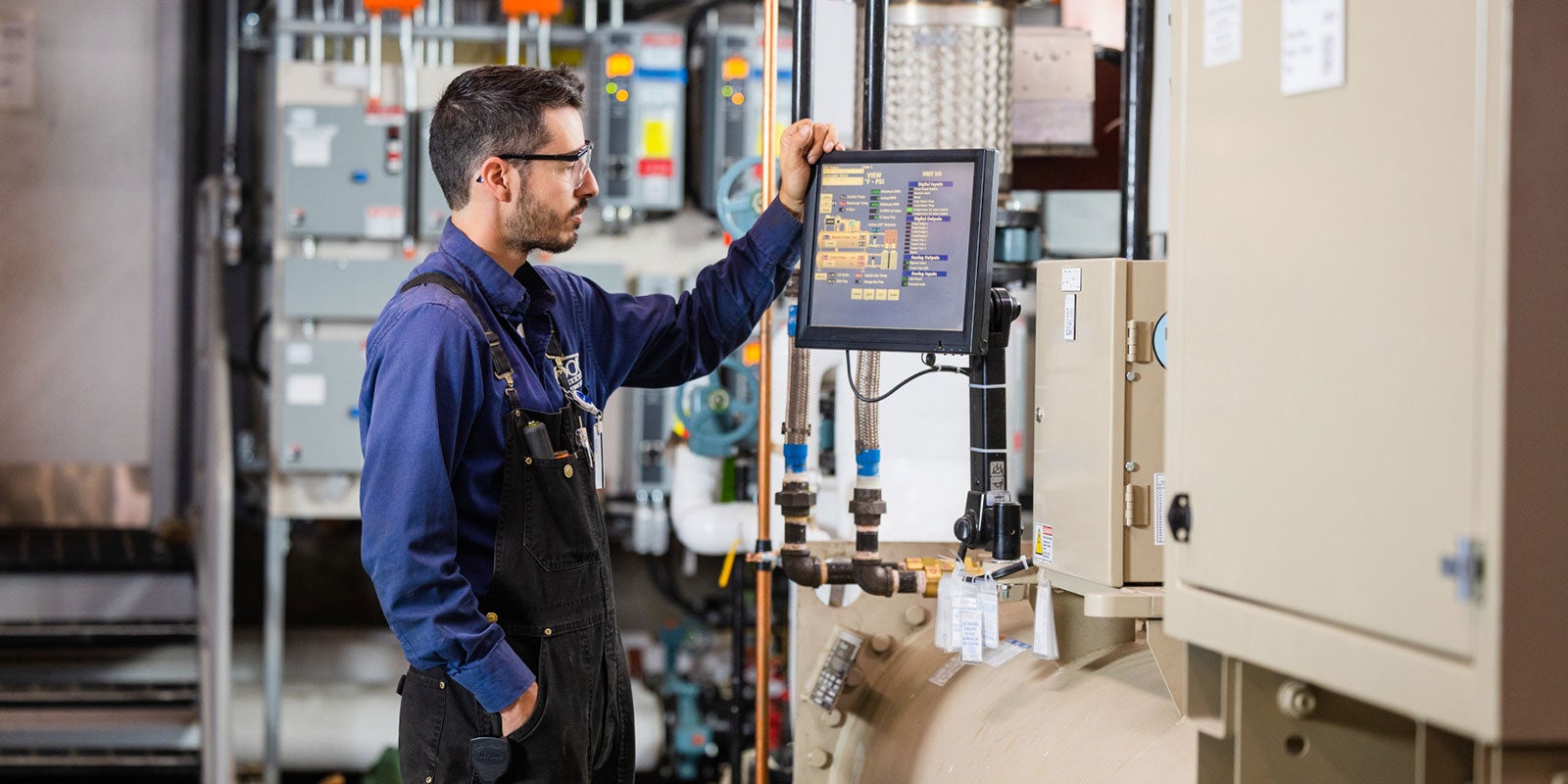
Here, chair Justin Evernden (above) shares ways – most of them designed and implemented by instructor Adam Wallace (Instrumentation Engineering Technology '14) – that BAST is reducing students’ carbon footprint long before they step into buildings designed to do the same.
Learn more about what you can do with a Building Automation Systems Technology diploma
Reduce: Going paperless

Paper represents more than a third of the country’s annual waste, according to National Research Council Canada. To do their part, Evernden and the team take a “Zero Textbook Cost” approach to learning materials.
“Electronic text is the way to do that,” he says. “Last term, we ran 100% zero text cost.”
Some of those materials are available through subscription services provided by the NAIT Library. Others are sourced online, primarily from the American Society of Heating, Refrigerating and Air-Conditioning Engineers, often considered the industry’s “gold standard.”
Tests are administered digitally too, as well as design assignments that use specialized software. Ultimately, students will find that their laptops are as essential to the jobsite as personal protective equipment.
“We are training our students to thrive in that digital environment,” says Evernden.
Reuse: Repurposing equipment
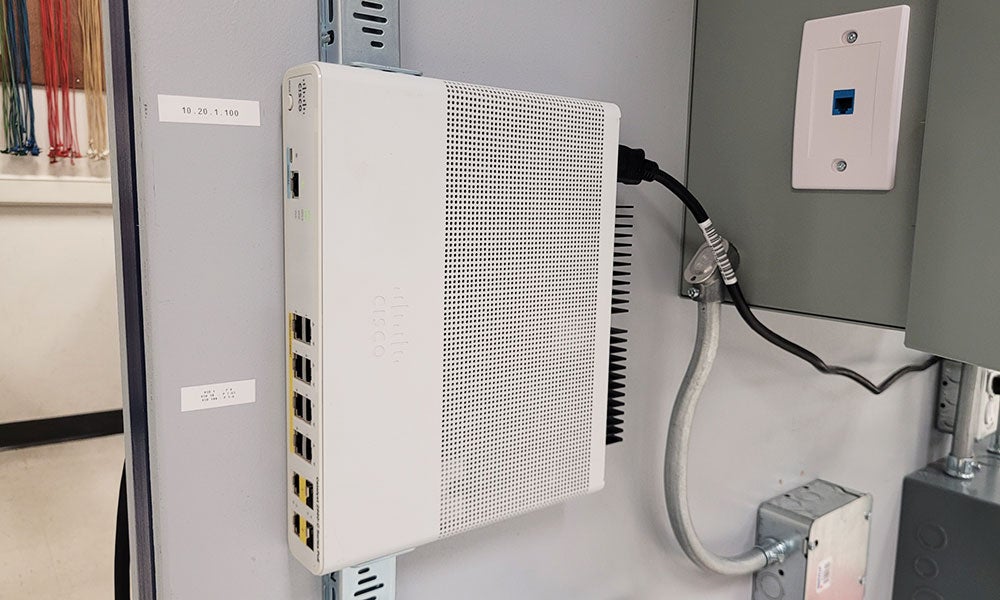
To keep current, some NAIT programs replace equipment frequently. That doesn’t mean earlier models are completely obsolete. “That older equipment is able to be repurposed,” says Evernden.
An electronics program, for example, has passed along oscilloscopes for visualizing and testing electrical circuits. Campus IT services has shared networking equipment it no longer needs. The inherited items “suit our specific needs,” says Evernden. “We’re teaching different things with the same tools.”
That means those tools are rescued from disposal, cost nothing, and come with none of the packaging waste of new devices.
Recycle: Waste management
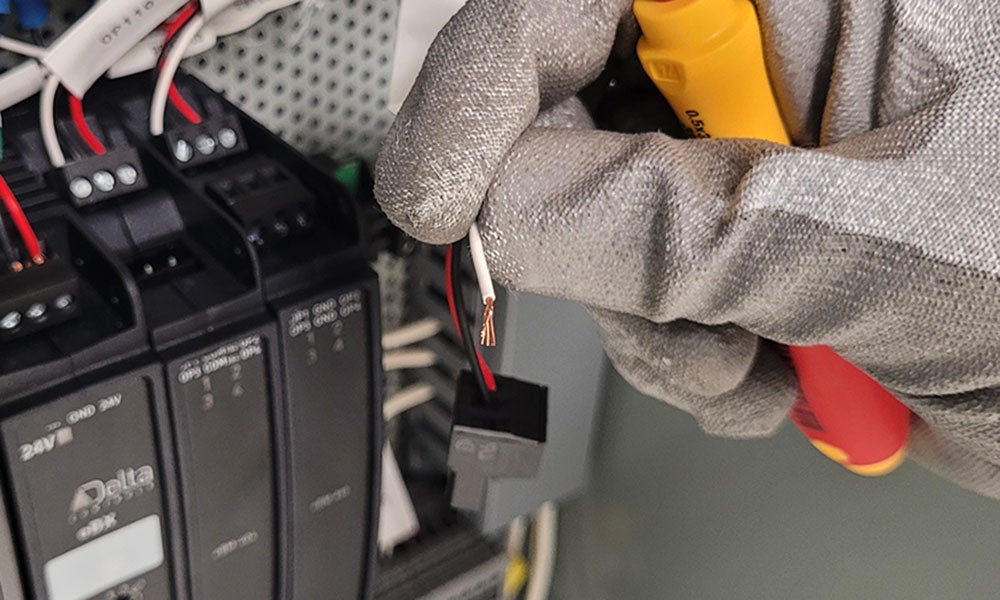
There is one item that BAST students need brand new: wire. “That's really the only major consumable material that we have,” says Evernden.
In class, students size and connect various types of wire between system components and controls. Once it’s cut and placed, it can’t be reused. Instead, “100% of it gets recycled.”
Once the learning is done, instructors remove wires and gather them to be sent to a local business for recycling.
Long-term impact of in-class efforts

LEED, or Leadership in Energy and Environmental Design, is recognized as a global standard in green building certification. It’s granted based on points, many of those earned for equipment, systems and the ultimatey quality of the interior environment.
“The building automation system itself is a key player in being able to maximize the energy in these spaces,” says Evernden.
Teaching techniques and best practices are essential to reaching efficiency targets. But so are the right attitudes, which BAST instructors hope to foster in the classroom.
“We’re trying to champion sustainable ideas,” says Evernden. “We’re teaching our students what sustainability is and integrating it in a way that just becomes part of their everyday lives.”
High-efficiency, hands-on education
While Building Automation Systems Technology students finish with a diploma, it’s delivered via an apprenticeship-style model that is unique among similar programs in Canada. At least 51% of learning happens on the job.
Placed with local businesses in paid positions, students build upon classroom instruction and develop skills in building automation fundamentals, automation control networks, programming and commissioning, HVAC systems and controls, and more.
The time is right for them to start contributing to a more sustainable built environment. “We're seeing such a large shortage of these specialized skills,” says Evernden.
If you enjoyed that article, try these:
Northern Alberta Institute of Technology
Mailing Address:
11762 - 106 Street
Edmonton, AB, Canada, T5G 2R1
At NAIT, we honour and acknowledge that the land on which we learn, work and live is Treaty Six territory. We seek to learn from history and the lessons that have come before us, and to draw on the wisdom of the First Peoples in Canada. Only through learning can we move forward in truth and reconciliation, and to a better future together. Read more
About techlifetoday
Techlifetoday is the source for NAIT alumni and students to discover news about the polytechnic, and insights, advice and inspiration from the NAIT community to help them build successful careers and lead fulfilling lives.
