
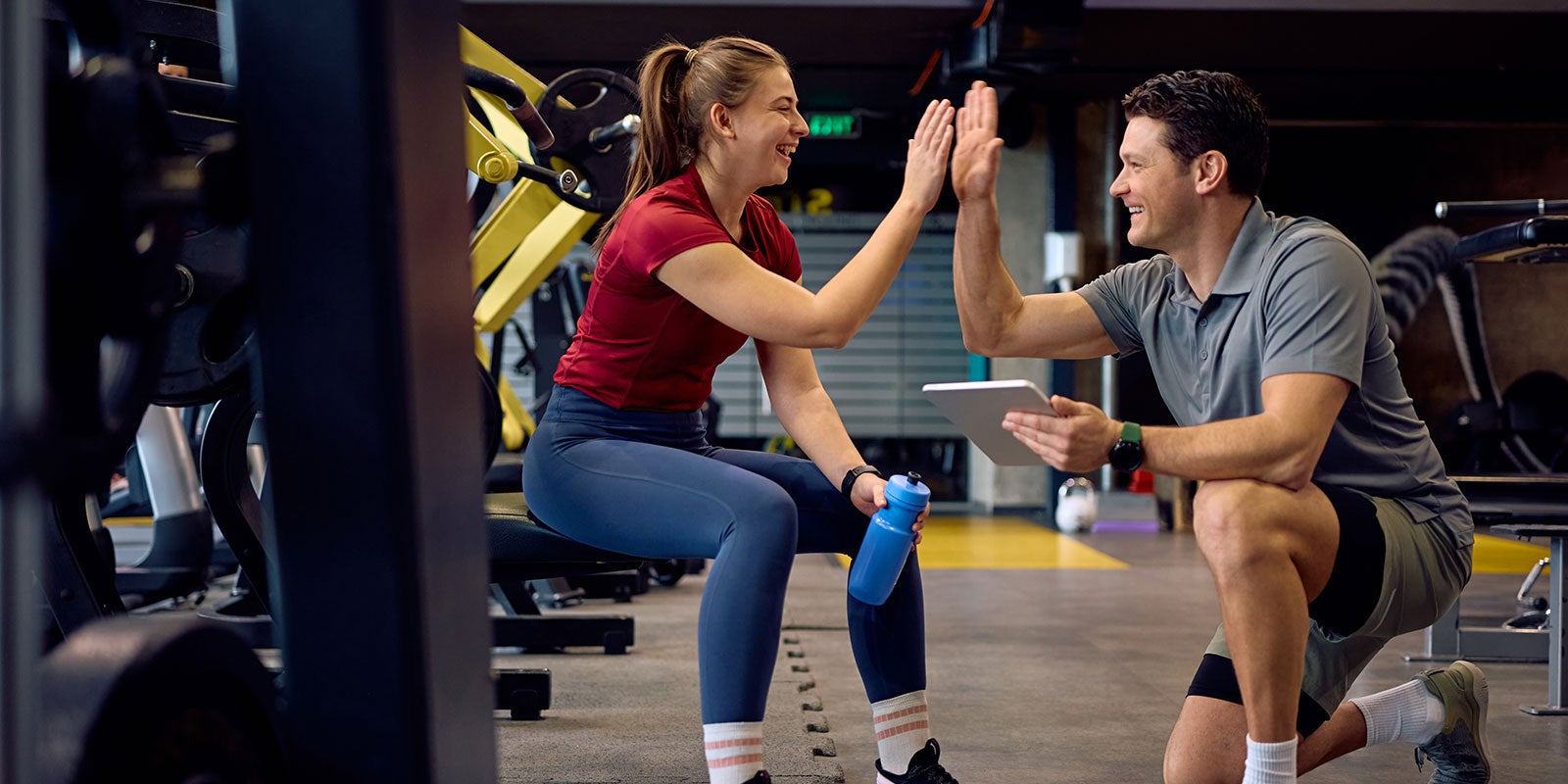
NAIT Personal Fitness Trainer grads share tips and advice
Plan, rest, adapt, succeed
Let’s start by saying this: We believe in you.
If you count yourself among the more than half of Canadians who don’t get the recommended 150 minutes of activity a week, we know you have it in you to avoid being among the 80% of new year’s resolution makers who give up their fitness goals by mid-year.
We know it’s tough. Life can make time for fitness seem like a luxury. Maybe persisting aches and pains slow you down. The kids need so much. Your job is exhausting in every way.
Valid issues, every one. But under the right conditions, they may not lead you to give up. The beauty of those conditions, it turns out, is that you can set many of them yourself.
Here, five graduates of NAIT’s Personal Fitness Trainer program explain how to do that, and, most importantly, how to make the progress that helps you believe in yourself and keep moving forward.
Rest and recover
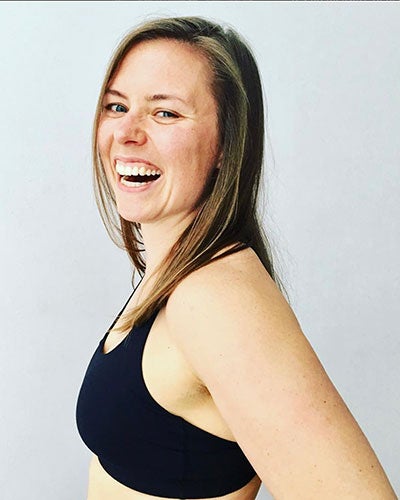
Nikki Dunlop (Personal Fitness Trainer '12)
Owner and trainer, Life Force Movement, specializing in athletic development and holistic health for those looking to sustainably improve performance and health
“While there can be some momentum in January to jump into new workouts and wellness routines, it’s energetically a tough time of year to suddenly increase our output. The days are dark and cold, our recovery from exercise and stress is decreased, and often folks are undernourished and under-slept.
“Take time in January and February to prioritize true rest and recovery so that by the spring you’re set up to go after your fitness or wellness goal.
“Get clear about what you can let go of to make space for the goal and do that – without cutting into sleep, recovery and nourishment. It might be the hour of TV you watch before bed or the scrolling you do throughout the day. The key is making small, sustainable changes over time.”
---
Plan for your workouts

Sarah Provost (Personal Fitness Trainer '21)
Owner and trainer, ProvyFit Personal Training, helping women build strength and consistency through training that respects real life and complex bodies
“An [exercise] plan gives you something to follow when life gets busy. Treat workouts and health habits like appointments, not optional tasks.
“Use a digital calendar or AI scheduler to block workouts the same way you would meetings or appointments. Decide your priorities then plan your week: If family comes first (for example: picking up the kids from school), put that in the calendar first. [Put] your health goals (workouts, meal planning, etc.) at the top of the priority list as well, then schedule the rest.
“Set specific reminders. A reminder to leave the house or to start warming up is often more effective than ‘work out today.’
“Have a plan B. If a full workout isn’t realistic, plan a shorter or lower-effort option so you don’t default to doing nothing.
“When a week doesn’t go as planned, that’s feedback – not failure. [Ask yourself,] do workouts need to be shorter? Do they need to happen at a different time of day? Is recovery or sleep the missing piece? Over time, you can identify patterns and adapt. Long-term success comes from adjusting the plan to fit your life, not waiting for life to calm down.”
---
Don’t overdo it
Ruth MacGillivray (Personal Fitness Trainer '21)

Owner and trainer, 46 64 Fitness, specializing in helping busy adults reach their health and fitness goals through online personal training
“The New Year is a great time to decide to make your health and fitness a priority. To ensure success, make sure that your plan is the right size for you.
“Keep your workouts short and don’t overdo it. Results come from consistency, not extremes. Small, doable habits create long-term success.
“Build on the success of the last workout. Hire a trainer who will give you personalized workouts that fit your life.”
---
Build a routine
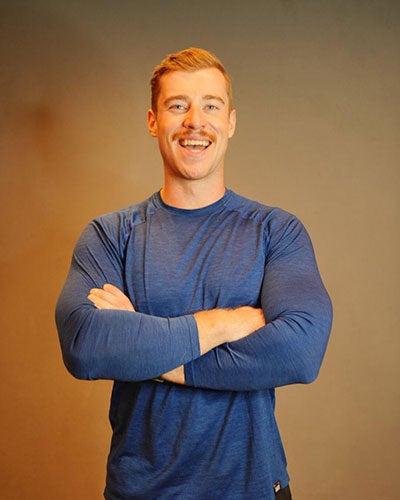
Jarryd Reed (Personal Fitness Trainer '21)
Owner and trainer, JR Travel Fitness, focusing on helping people stay strong and mobile while traveling
“Motivation becomes a problem when people wait for it to show up.
“I’ve learned that being consistent isn’t about finding motivation. Motivation is rarely consistent and almost never convenient. Consistency is built through routine. Discipline is not about pushing hard every day; it’s about making honest decisions and following through.
“When you learn to show up without overthinking it, confidence builds. Training starts to feel like part of who you are. At that point, motivation matters less because consistency is no longer dependent on how you feel that day.
“There will be days when rest feels easier than effort. Sometimes rest is necessary. The key is learning the difference between recovery and avoidance. Missing one workout does not undo progress. What matters is not letting one missed session turn into a pattern. Tomorrow is a new day, and it’s the present and future that matter most.”
---
Be patient

Mark Kay (Personal Fitness Trainer '06)
Owner and trainer, Iron Fit Personal Training, focusing on all aspects of training, including weight-related, sports, youth or injury work
“Long-term goals are great. It’s easy to set a goal to be a certain something by next year, but what happens when it gets hard a couple months in and you haven’t hit that goal?
“You need to set smaller goals along the way to help keep you motivated. If you do, you have a better chance of succeeding and achieving your bigger goal. This will help with the instant gratification, and to continue to reach for that next goal.
“If this was easy, everybody would be doing it and seeing success. But it takes a change of mindset. You need to realize it’s likely going to take a little time. But it’s going to be worth it.”
If you enjoyed that article, try these:
Northern Alberta Institute of Technology
Mailing Address:
11762 - 106 Street
Edmonton, AB, Canada, T5G 2R1
At NAIT, we honour and acknowledge that the land on which we learn, work and live is Treaty Six territory. We seek to learn from history and the lessons that have come before us, and to draw on the wisdom of the First Peoples in Canada. Only through learning can we move forward in truth and reconciliation, and to a better future together. Read more
About techlifetoday
Techlifetoday is the source for NAIT alumni and students to discover news about the polytechnic, and insights, advice and inspiration from the NAIT community to help them build successful careers and lead fulfilling lives.
