
Centre for Advanced Medical Simulation reveals art of educational illusion
Thomas Waring thinks of a well-designed simulation as a combination of a movie set, theatre stage and escape room.
It’s partly scripted, says the NAIT simulation technologist, and includes actors. The scene is carefully thought out and constructed.
But what happens is ultimately up to the students who enter that artificial scenario as preparation to eventually join the world of first-response health care.
“What are you going to do?” asks Waring. “You’ve got to figure it out.”
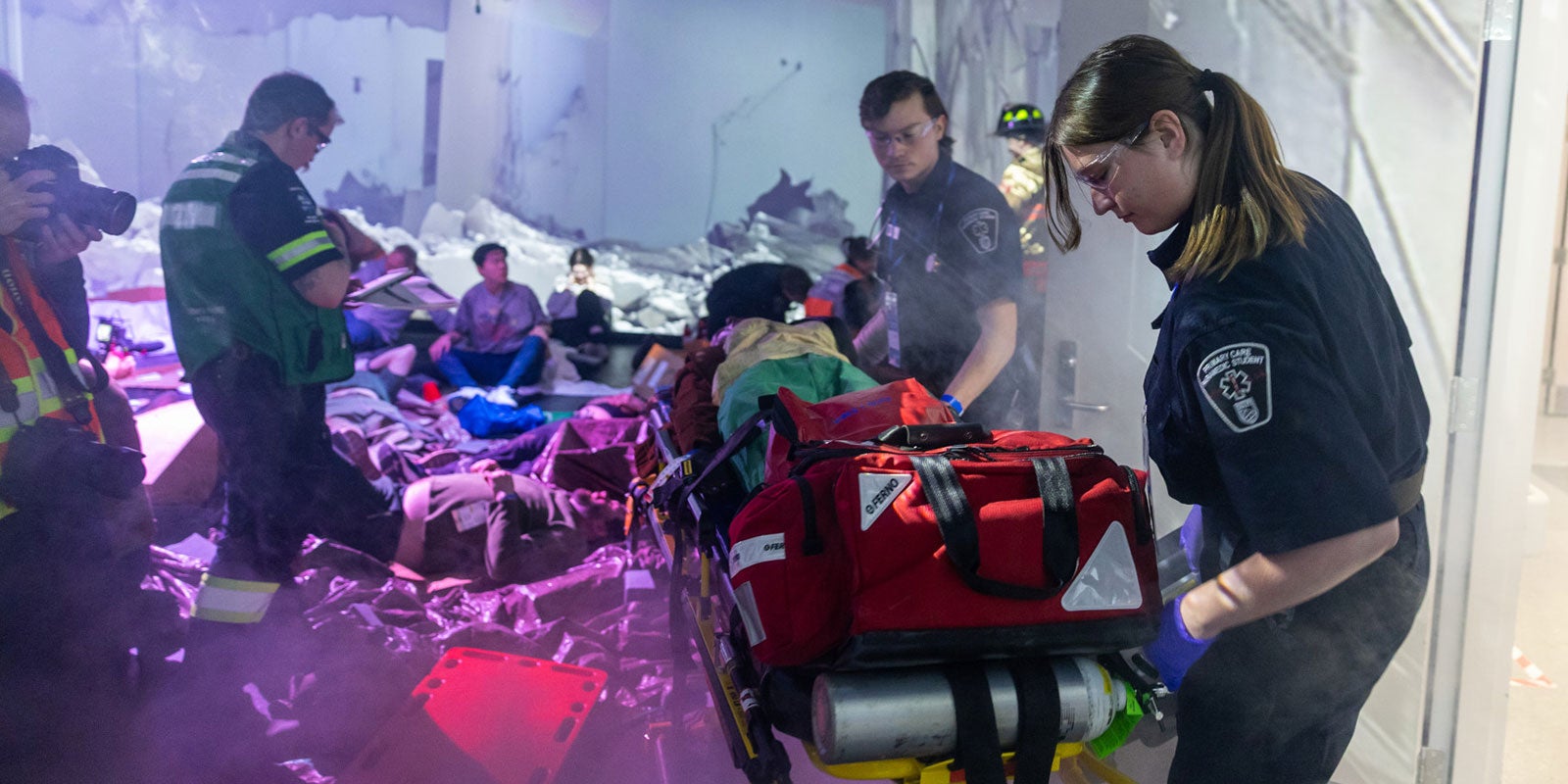
On Saturday, March 28, figuring it out meant dealing with an imitation building collapse replicated entirely within NAIT’s Centre for Advanced Medical Simulation (CAMS).
Twenty-five “victims” of the disaster (17 humans, eight educational manakins) had to be assessed, evacuated and treated in hospital, either in the local “rural” area or the nearby city.
The simulation was part of an annual series of mass casualty incidents (MCI) staged at NAIT, and the largest yet. It involved 200 people, including more than 115 students from five Alberta post-secondary institutes (including NAIT’s School of Health and Life Sciences) and 10 disciplines, from paramedics to medical lab techs to nurses.
Just like a theatrical event, the emphasis was on relationships and communication. As part of the school’s Interprofessional Education efforts, MCIs help students learn to interact with colleagues from different fields. Clinical skills come second.
“[It’s] the patient-centred care that we’re trying to get at more than any technical aspects,” says Waring. “It’s why we do our jobs. We want the best outcome for our patients.”
That’s also why Waring and CAMS colleagues go to great lengths to craft a scenario like the mall collapse. It takes months to plan and design, and hours to set up. Here, we pull back the curtain on a creative process that would suit a Hollywood production, and the impact it makes on student and patient outcomes alike.
The plot
According to a NAIT NewsWatch television report from the mall in the (fictional) town of “Anchorhead,” shoppers could hear “banging prior to the roof collapsing.” Twenty to 30 people were injured.
Produced by Media Communications and Production – Television and Media students, the video provided student participants the backstory they needed before entering the scene. It also helped prepare them for what they would see. According to the reporter, emergency responders called it “the worst accident they’ve seen in years.”
Cast of characters
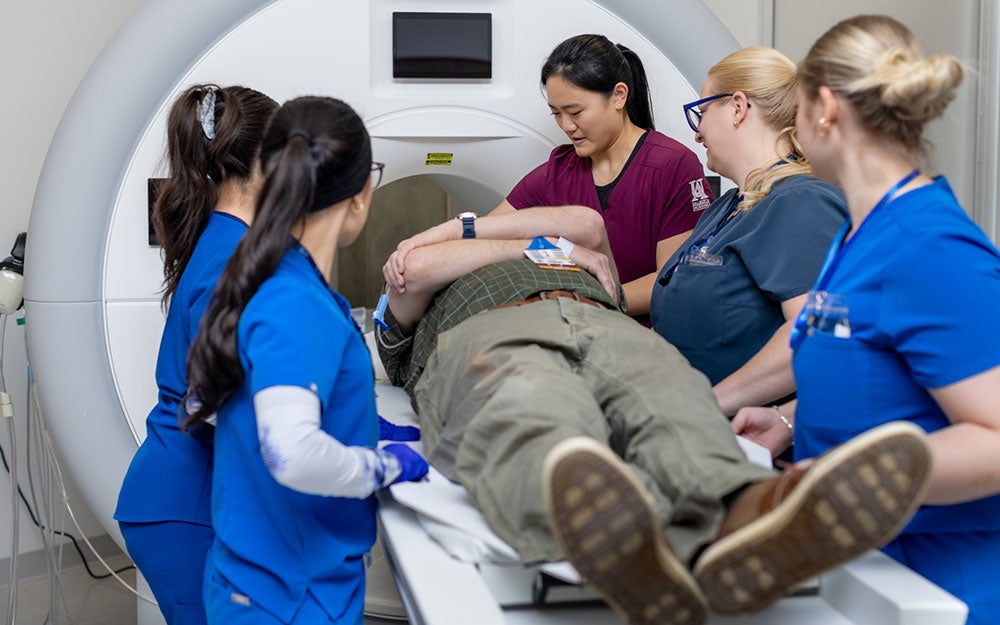
This year’s simulation was also the largest in scope, with the inclusion of additional educational ailments.
“We backwards-engineered new [patients] specifically for the new professions that we added,” says Waring. CAMS techs worked with doctors, paramedics and NAIT instructors to ensure the accuracy of cases to involve more disciplines such as medical diagnostics.
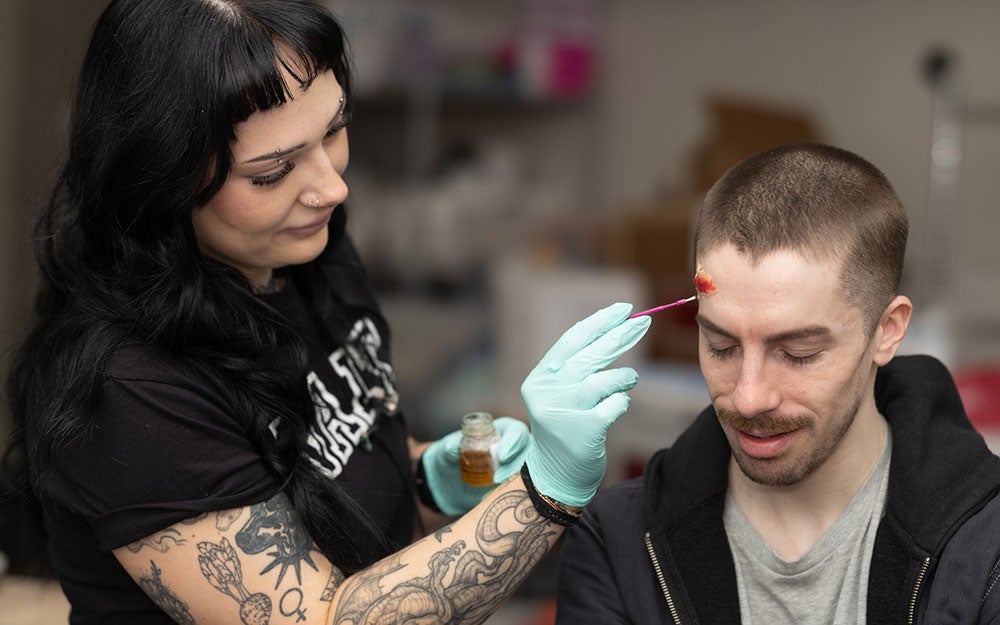
That also meant manufacturing injuries, ranging from bruises to compound fractures expertly rendered in makeup and silicone, to nudge students toward appropriate treatments and dispatch destinations, depending on severity and facility capacity.
But the patients were more than walking, talking injuries (some, of course, could neither walk nor talk). Full backstories that included relationships to others on the scene – spouses, parents and kids, for example – also had to be considered by students.
“They’re worried about each other,” says Waring. “Do you send them together?”
Set design
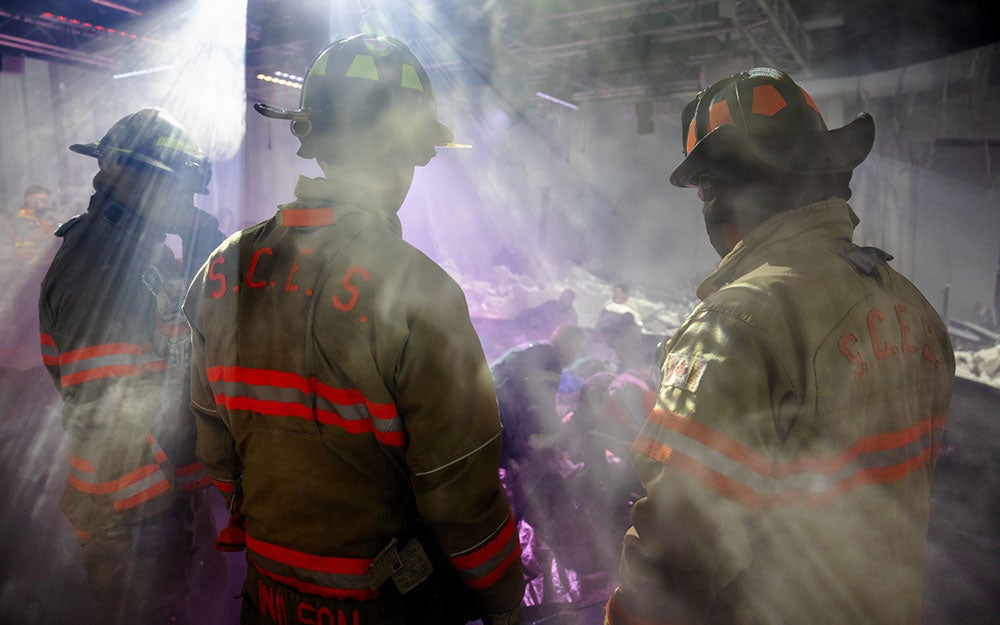
Despite happening in the safe, controlled environment of CAMS’ purpose-built, 360-degree multimedia theatre, a simulation is meant to feel like “chaos,” says Waring.
Paramedics arrive to find the paths to patients blocked by resourceful debris. A large chunk of foam packaging material stands in for broken concrete; old coffee grounds substitute for shifting grit on the floor. A smoke machine mimics a haze of settling dust.
Real firefighters (from Strathcona County Emergency Services) are onsite to do their part, like they would for an actual disaster. Real ambulances (provided by industry partner Medavie Health Services) whisk patients away – that is, from one door to another – to CAMS’ permanent hospital room or a classroom outfitted with the beds and equipment found in a rural medical clinic.
Facilitators assist students with technical aspects of care. Flow is key, the lesson focused on processes such as handing off patients from one profession to another, or on forming multifunctional teams for interventions – things that are difficult to stage in a classroom.
“We’re hoping for a lot of aha moments,” says Waring.
The fine art of faking it
The simulation is a dense, sensory experience. No overwhelming detail is overlooked by its creators.
In the theatre, the sound of sirens loops endlessly, punctuated by an unnerving creaking of the surrounding unstable structure, its remains projected on every wall of the low-lit room. Patients moan, says Waring, in “all degrees of mental distress.”
To lessen that distress for patients (but likely amplify it for students), 36 phone lines are active for students to call peers elsewhere in the facility to prep for x-rays, blood work and so on.
Scent also ramps up realism. Concentrates simulate fuel or burnt material in the theatre, and antiseptic clings to the air in the hospital rooms. Heavily present, blood has a noticeable odor too, says Waring. “It’s an ‘iron’ scent.”
The big finish
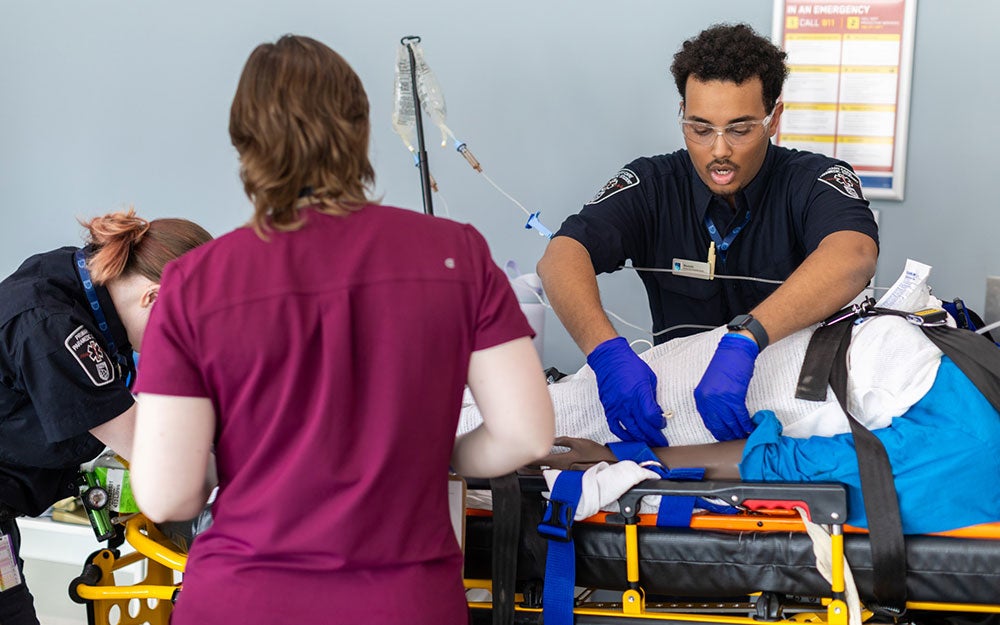
With so many variables, “it’s a unique experience for every student,” says Waring.
The end result, however, is the same across disciplines. To augment practical skills acquired throughout the year in classes and labs, students learn the importance of being able to communicate effectively with one another while applying them.
A debrief and mental-health check-in with participants follows, a cool down from the creativity Waring and the team put into the event. The beauty of a good movie, play, and even escape room is the way it temporarily supplants reality. The more care put into its making, the more it stays with you.
“All of the sims are designed to be challenging,” says Waring. “It’s going to be tough. It is in real life.”
If you enjoyed that article, try these:
Northern Alberta Institute of Technology
Mailing Address:
11762 - 106 Street
Edmonton, AB, Canada, T5G 2R1
At NAIT, we honour and acknowledge that the land on which we learn, work and live is Treaty Six territory. We seek to learn from history and the lessons that have come before us, and to draw on the wisdom of the First Peoples in Canada. Only through learning can we move forward in truth and reconciliation, and to a better future together. Read more
About techlifetoday
Techlifetoday is the source for NAIT alumni and students to discover news about the polytechnic, and insights, advice and inspiration from the NAIT community to help them build successful careers and lead fulfilling lives.
