
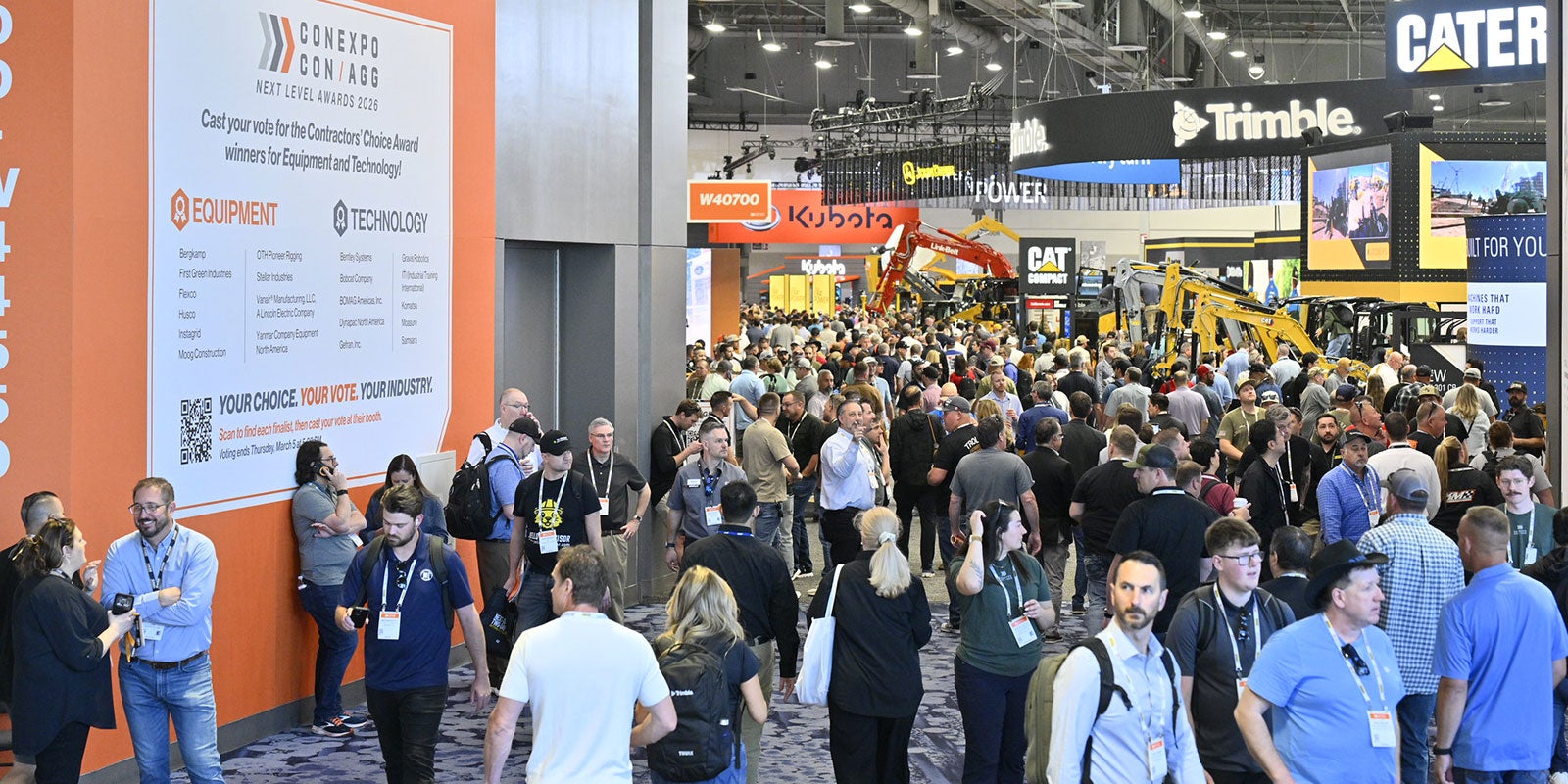
A Crane and Hoist instructor’s takeaways on retention, leadership and accountability from ConExpo 2026
I touched down in Las Vegas, Nevada on March 2nd for the biggest professional event of my life, CONEXPO-CON/AGG 2026, an international construction tradeshow that only happens once every three years.
The scale of the week-long event mirrors the overstimulating nature of Vegas itself. Spread across more than 3 million square feet, this year ConExpo brought together some 2,000 vendors and more than 140,000 attendees.
Everywhere you looked there was another booth, another piece of equipment, another conversation waiting to happen. In five days, I walked more than 75 kilometres taking it all in.
I attended as a NAIT Crane and Hoist Equipment instructor and at the invitation of Liebherr Canada, part of one of the world’s largest construction equipment companies. In spare moments, I had the chance to check out some incredible new crawlers and other mobile cranes.
For someone who genuinely loves this industry, moments like that are hard to beat.
But the moment that stayed with me most didn’t come from a crane. It came from a presentation by Katie Kelleher, a crane operator from London, England and prominent voice in the industry. I’ve known Katie for years but only through the internet. She’s even hosted me on her podcast, Tales from the Hook. CONEXPO was the first time we met in person. Otherwise, we’ve supported each other’s work from across the Atlantic.
In a way, the idea of support was at the heart of Katie’s presentation, “Beyond Recruitment: Retaining Talent to Build a Resilient Workforce.” For a few important reasons – many of which I have experienced myself – construction sites can be hard on people. As Katie asked that afternoon in Vegas, how do we change them so more of those people will stay? The answer is part of the solution to the looming labour shortage.
Everyday leadership
One of the first issues Katie raised was leadership – not the kind outlined in a company’s values but that shows up in everyday decisions that have a direct effect on the job site. These influence whether people stay or go. In fact, research has shown that two out of five people to have quit jobs in Canada did so because of a bad manager.
“People don’t leave because of one bad day,” said Katie. “They leave because they can’t see a future.”
That isn’t a problem that can be solved by policies back at the office, she added. “Culture isn’t built in documents. It’s built in daily behaviour.”
Better behaviour
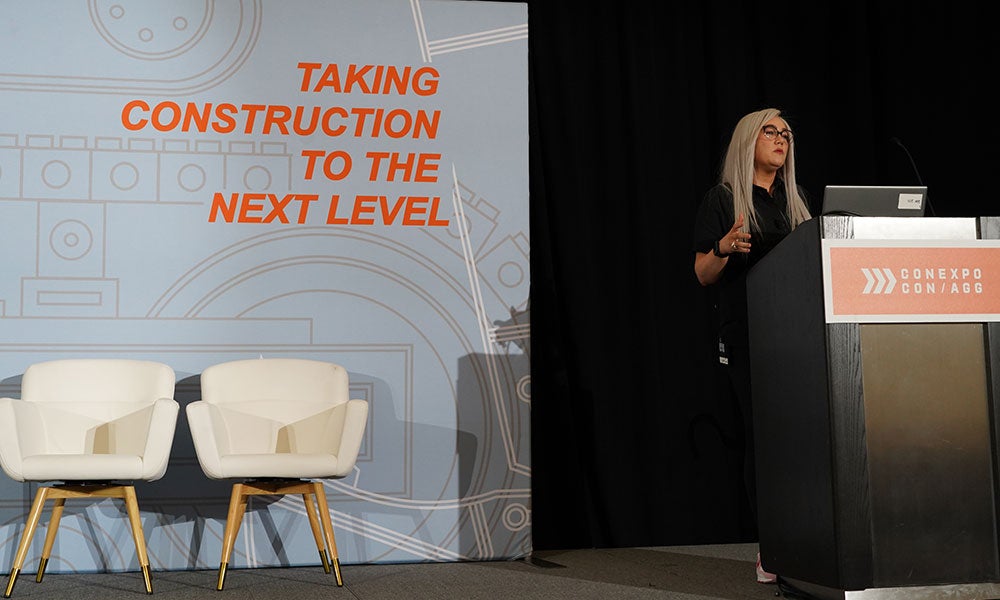
What does that behaviour look like? It can be the attitude a supervisor takes when holding a safety meeting or how they handle an uncomfortable incident. Or maybe it’s the things a leader chooses to ignore. “We say culture is what we promote,” said Katie.
“It’s not. Culture is what we tolerate.”
Katie shared a story about a young woman who reported homophobic comments made by a crew on site. Instead of confronting the behaviour, leadership chose to move her to another site. It was less disruptive to relocate one person than to hold many accountable.
But that decision sent a clear message to everyone involved: Convenience matters more than accountability, and avoiding discomfort matters more than doing what’s right. Over time, prioritizing short-term stability over accountability erodes trust and alienates talent.
For women, for everyone
Katie then shifted her focus to women, describing them as “the early warning system.” They’re often the first to encounter barriers to inclusion. When a system fails women, it rarely stops there; it eventually fails others, too. A workplace that only functions for one type of person isn’t resilient.
Women make up only about 5% of Canada’s on-site construction workforce in trades roles. That lack of representation makes cracks in workplace culture more obvious when they appear, because those cultures are often informed by just one type of experience and perspective.
And those cracks don’t suddenly emerge mid-career. As Katie pointed out, exits from the industry often begin much earlier, in classrooms and apprenticeships, through segregation, exclusion, and the slow accumulation of moments where behaviour goes unaddressed and signals are ignored.
That all adds up. Ignore the early warning signs, and people give up on fighting to stay.
Mental health matters
Katie closed by addressing mental health, a topic the industry struggles to talk about openly.
Across Canada, nearly half of tradespeople report their mental health as fair or poor, with stress, anxiety, and burnout becoming increasingly common. In general, suicide rates in construction are among the highest of any industry.
As Katie pointed out, that’s not just a wellness issue; it’s a workforce stability problem. And when people are burning out or carrying stress they don’t feel safe talking about, no amount of recruitment can cover the losses that follow.
Mental health in construction is linked directly to leadership and culture. Psychological safety isn’t created by posters or one-off campaigns. It’s built through consistent behaviours that tell people they matter beyond their output.
---
More hiring isn’t the answer
How do we create environments where the people we already have can actually stay? As Katie’s talk suggested, industry can’t just hire its way through the problem of losing people at predictable pressure points such as education, early career, after incidents on site, when progression stalls, or when accountability falters.
Walking back out onto the ConExpo show floor after the session, the contrast was hard to ignore. Some of the most advanced cranes in the world towered above me. And yet what stuck with me most had nothing to do with machines.
The future of this industry won’t just be built by better equipment alone. It will be built by a stronger focus on workplace culture and stronger leadership.

Banner and image above BY-ND 4.0
If you enjoyed that article, try these:
Northern Alberta Institute of Technology
Mailing Address:
11762 - 106 Street
Edmonton, AB, Canada, T5G 2R1
At NAIT, we honour and acknowledge that the land on which we learn, work and live is Treaty Six territory. We seek to learn from history and the lessons that have come before us, and to draw on the wisdom of the First Peoples in Canada. Only through learning can we move forward in truth and reconciliation, and to a better future together. Read more
About techlifetoday
Techlifetoday is the source for NAIT alumni and students to discover news about the polytechnic, and insights, advice and inspiration from the NAIT community to help them build successful careers and lead fulfilling lives.
