
Sauerkraut, pickles and more are trending for good reason
Harness the simple science of making sauerkraut, pickles and more
Canning? More like can’t-ing. Making jelly? Not your jam. Then how about fermenting?
Fermentation is the latest, old-is-new-again method of preserving foods to make sauerkraut, kimchi and even hot sauce. It’s also an easy and gut-healthy way to preserve summer’s bounty of fresh vegetables for those long months of winter ahead.
Fermenting doesn’t require a lot of complicated equipment or timing, or even cooking. It’s mostly about adding salt and letting nature do its thing.
“It’s a great way to use up vegetables and it’s not difficult to do,” says Peter Keith (Cook ’12) who co-owns Meuwly’s, an artisan food market specializing in charcuterie and preserves.
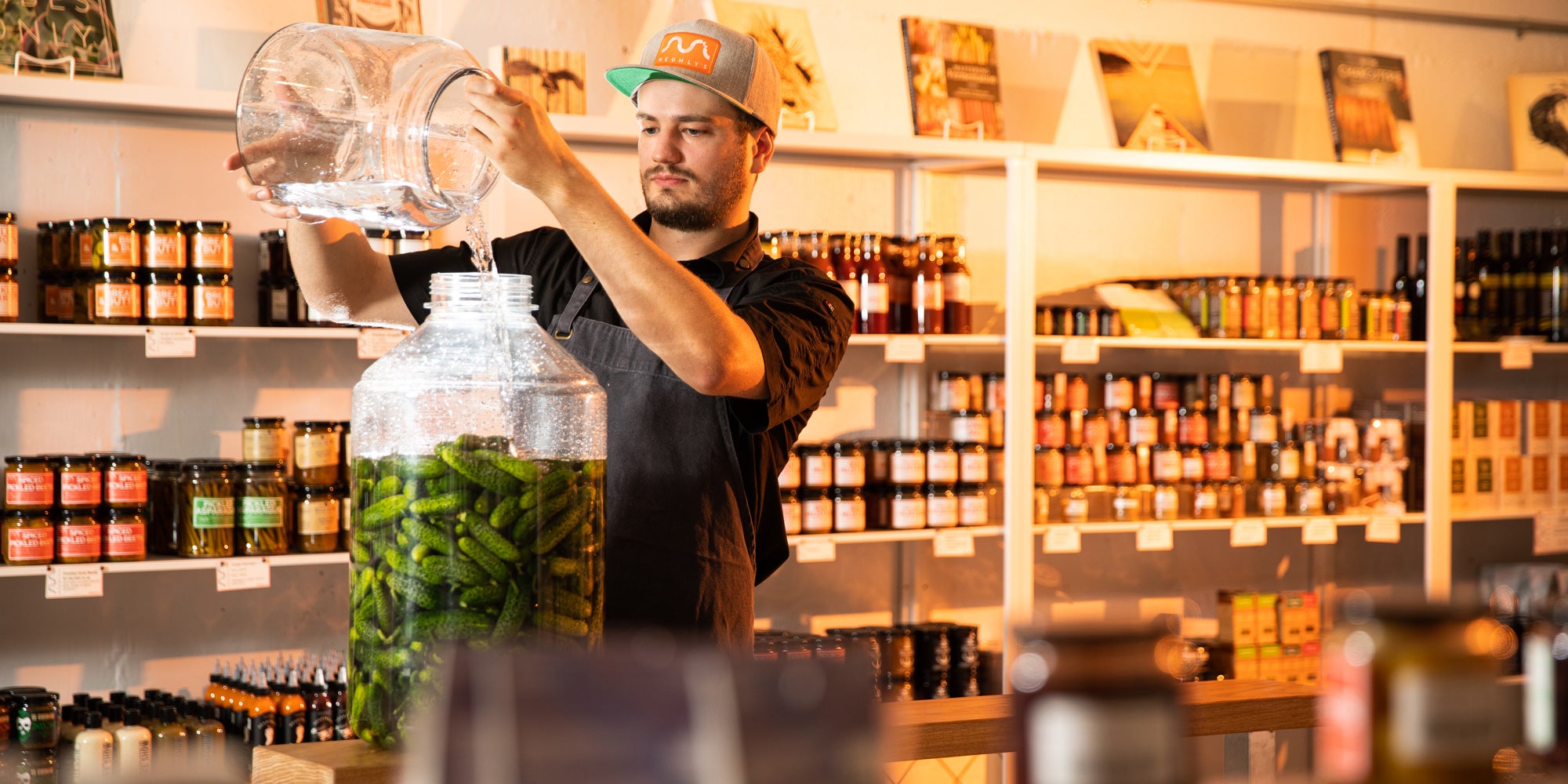
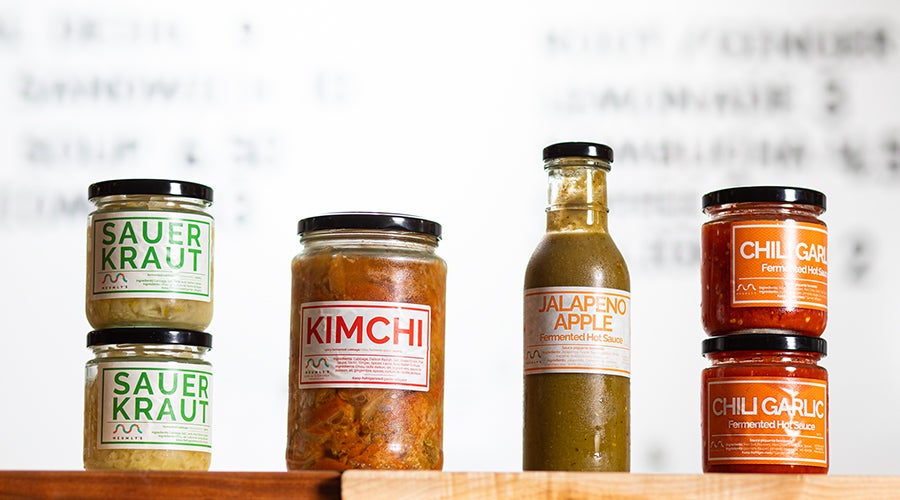
As summer draws to a close, he’s busy pickling everything from cucumbers to grapes, and fermenting cabbages and hot peppers to create Meuwly’s signature sauerkraut and kimchi. He also makes red chili hot sauce and jalapeno hot sauce by fermenting hot peppers, onions and garlic, then pureeing them. Between filling jars, Keith took a few minutes to share some facts on fermentables.
Pickling popularity
Historically, fermentation fell out of favour as people gained access to refrigeration, freezers and processed foods, says Keith. These days, he’s seeing increasing demand for pickled (preserved in brine) and fermented (modified by good bacteria) foods in stores and on restaurant menus, and growing interest in making such foods at home.
“I think more people are getting back to some of these old-world techniques,” he says. “There’s a general interest now in getting food [from] closer to the source again – for health benefits, for environmental benefits.”
The techniques can be fairly simple, and are based mostly on creating the right conditions for natural processes to occur.
Cucumber pickles, for example, can be made the original way, through fermentation in barrels that’s brought on by the addition of salt. Naturally occurring bacteria in that environment feed on the sugar and starch in the food, creating lactic acid, which has a similar pickling effect to vinegar, which is more commonly used now in pickling.
“The salt kills certain bacteria but allows other ones to grow, which are the healthy probiotics that end up preserving the vegetable,” says Keith.
Fermenting also contributes to flavour, he adds, particularly with something like hot sauces.
“The acidity created by the fermentation helps balance out the flavour a bit and also preserves the sauce ... without having to cook it.”
Here are some of Keith’s tips for fermenting vegetables at home.
A pickling primer
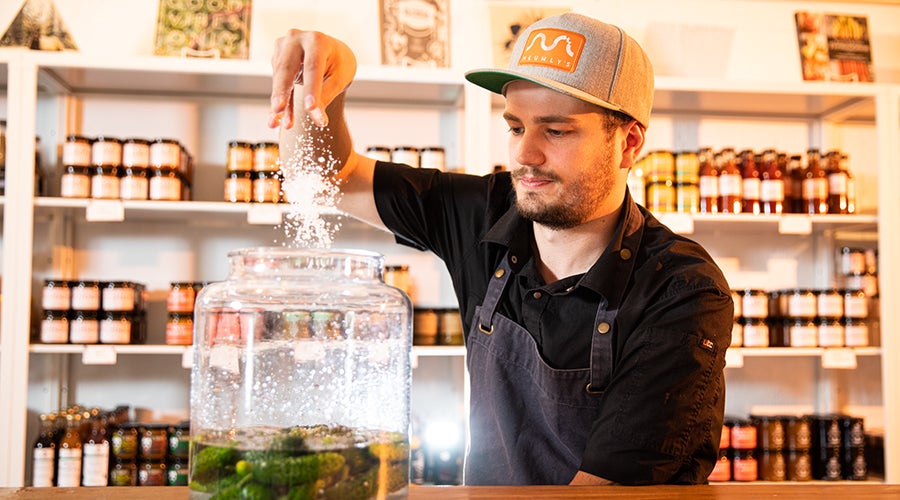
- Use a recipe to ensure you’re using the right ratio of salt to vegetables. Keith recommends a cookbook called The Art of Fermentation, but there are lots of good recipes online too. A YouTube series from Bon Appetit called “It’s Alive with Brad” focuses on fermented foods and is so popular that it has more than four million subscribers.
- Don’t worry if it seems too salty at first. Once the vegetables ferment, the lactic acid will balance out the flavour. Plus a lot of the salt will end up in the brine.
- Make sure the vegetables are submerged in liquid. You may need to weigh them down using a smaller ceramic or glass dish or food-safe pie weights wrapped in cheesecloth. You can also buy special fermentation weights.
- Use good food hygiene. “Ensure you have a clean work surface, really clean hands, clean knife, give the vegetables a good wash. You don’t want any foreign contaminants ending up in your pickles or your sauerkraut.”
- Sterilize your container. The classic choice for a fermenting vessel is a ceramic crock or a large mason jar, but any food-safe container with work. You can buy special containers online too.
- Use high-quality vegetables. “You can’t make amazing pickles out of bad vegetables,” says Keith. Fresh, flavourful, peak-season produce is best, preferably from a farm, farmers market or your own backyard.
Belly benefits
From kefir to kombucha to kimchi, eating fermented foods is among the latest health trends.
“The science is still growing in the area, but they definitely have positives,” says Nick Creelman, a registered dietitian at NAIT.
Cultures around the world have long eaten fermented foods like miso and tempeh (from fermented soybeans) and kimchi and sauerkraut (from fermented cabbage). In North America, the most common one is yogurt, though products like kombucha (fermented tea) are growing in popularity.
Most fermented foods contain probiotics, which encourage the growth of good gut bacteria, helping to build immunity, digest food more easily, and combat auto-immune disorders, says Creelman. People who want to incorporate more fermented foods in their diets can start with simple switches, like substituting yogurt for sour cream on a baked potato or stirred into soup, or adding sauerkraut to spice up a sandwich, he adds.
“I think people are so hyper-aware of their health now that they’re trying to find whatever edge they can to make it better,” he says. “Fermented foods can be a piece of the puzzle, but it’s not the whole puzzle. It’s another way to get more whole foods in your diet and add some unique flavours to your food.”
Northern Alberta Institute of Technology
Mailing Address:
11762 - 106 Street
Edmonton, AB, Canada, T5G 2R1
At NAIT, we honour and acknowledge that the land on which we learn, work and live is Treaty Six territory. We seek to learn from history and the lessons that have come before us, and to draw on the wisdom of the First Peoples in Canada. Only through learning can we move forward in truth and reconciliation, and to a better future together. Read more
About techlifetoday
Techlifetoday is the source for NAIT alumni and students to discover news about the polytechnic, and insights, advice and inspiration from the NAIT community to help them build successful careers and lead fulfilling lives.
