

Become the morning person you've always wanted to be
Forget the worm. The early bird packed its lunch the night before
Beep! Beep! Beep! That’s your alarm and you need to get up – now. You set it as late as possible, like every morning, to squeeze in as much sleep as you can. Now you’re in a rush, and stressed.
A healthy morning routine can help reduce early-morning panic and boost productivity and mood throughout the rest of the day, says Amy Eversley (Personal Fitness Trainer ’10), NAIT's health and wellness coordinator.
When helping clients establish their own routines, she recommends focusing on behaviours they can control, rather than on what they can’t, such as traffic or weather. Nick Creelman, NAIT’s registered dietitian, takes a similar approach to fuelling up for the day ahead.
Here are their tips for making every day great from the start.
1. Start the night before
“One question I always get is: How do you get a non-morning person to be a morning person?” says Eversley. “I think it always starts the night before.”

Prep for the next day before you go to bed, she says. Pick out your clothes, get a towel ready for the shower, pack a lunch. The more you can do in advance, the less you have to worry about in the morning.
2. Drink some water before you hit the shower
“Drinking water in the morning gives us that opportunity to get a head start on rehydrating our bodies,” says Creelman.
A glass of water right after you wake up, after going six to eight hours without fluids, can have many benefits, he adds, including
- promoting cardiovascular health
- regulating your body temperature
- keeping your muscles and joints working optimally
- carrying nutrients to cells
- flushing bacteria from your bladder
- preventing constipation
Consider keeping a bottle or glass of water next to your bed for the morning, says Creelman.
Are you drinking enough water? Read more
3. Get the blood pumping
Stretching in the morning can reduce stress by relieving physical tension and relaxing muscles. It also improves flexibility and helps your muscles perform better during the day, says Eversley.
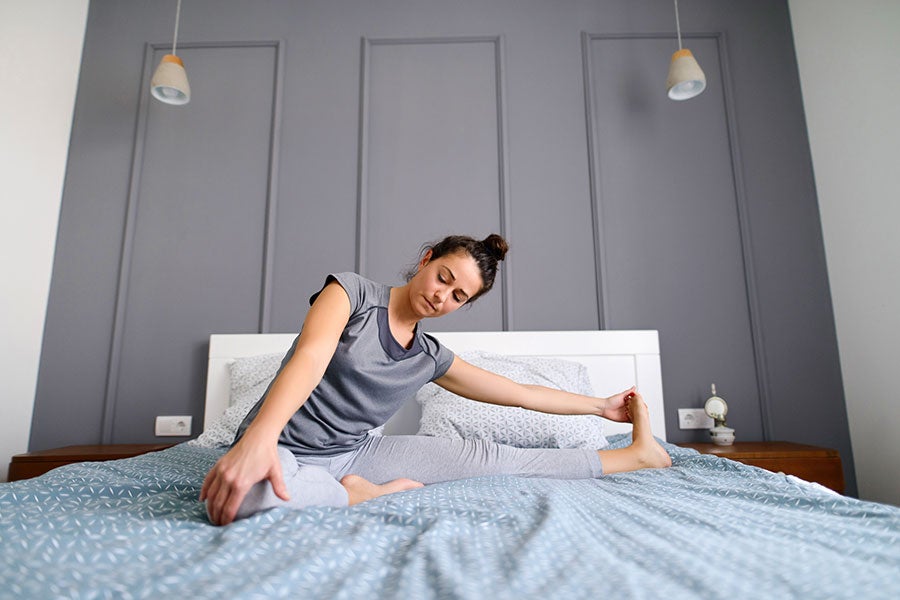
She recommends doing some simple stretches, like ones you can do from bed. Stretch your quads, bring your knees to your chest, stretch your arms out wide to engage the shoulders and chest.
Eversley also recommends having a playlist that you can start right after your alarm goes off. Go for something upbeat, she recommends – between 120 to 140 beats per minute. Pop music is typically a good choice.
4. Give your body the fuel it needs
Breakfast is important, but only if it’s made up of high-quality foods.

“If your breakfast is going to be a bowl of Cornflakes or Froot Loops or something like that, I’d rather you just skip breakfast,” says Creelman.
Instead of those carb-heavy options, Creelman recommends protein to help you feel fuller throughout the day. Try eggs, or Greek yogurt or oatmeal with nuts and seeds.
If you skip breakfast entirely because you’re pressed for time, refer back to tip #1. “You could take 10 or 15 minutes the night before and prep something so it’s ready to go in the morning,” says Creelman. Pop a parfait of nuts, berries and yogurt in the fridge before bed.
5. Stick with it
Eversley knows that a new routine will seem difficult at first. But once it becomes habit, it’s easier to manage those aspects of life that you can control and, in turn, manage your stress. Here are her tricks to sticking with it.

- Start small. “If you’ve been waking up at 8 a.m., hitting the snooze button three times before you finally get out of bed, don’t expect to make the change overnight to getting up at 6 and feeling wide awake and ready to go,” says Eversley. “Start with 15 minutes earlier, then 30 and then an hour until you reach the goal.”
- Reward yourself. Treat yourself for completing your morning routine. Get a new water bottle, workout shirt or anything else that will make you excited to get up in the morning.
- Stay accountable. “Tell someone about your goal and ask them to check in periodically,” says Eversley. If the routine includes a workout, ask a friend to join you and hold each other accountable. Keeping your promise to them will be the same as keeping the one you’ve made to yourself.
Northern Alberta Institute of Technology
Mailing Address:
11762 - 106 Street
Edmonton, AB, Canada, T5G 2R1
At NAIT, we honour and acknowledge that the land on which we learn, work and live is Treaty Six territory. We seek to learn from history and the lessons that have come before us, and to draw on the wisdom of the First Peoples in Canada. Only through learning can we move forward in truth and reconciliation, and to a better future together. Read more
About techlifetoday
Techlifetoday is the source for NAIT alumni and students to discover news about the polytechnic, and insights, advice and inspiration from the NAIT community to help them build successful careers and lead fulfilling lives.
